Thinking about upgrading the solar system in your caravan or motorhome?
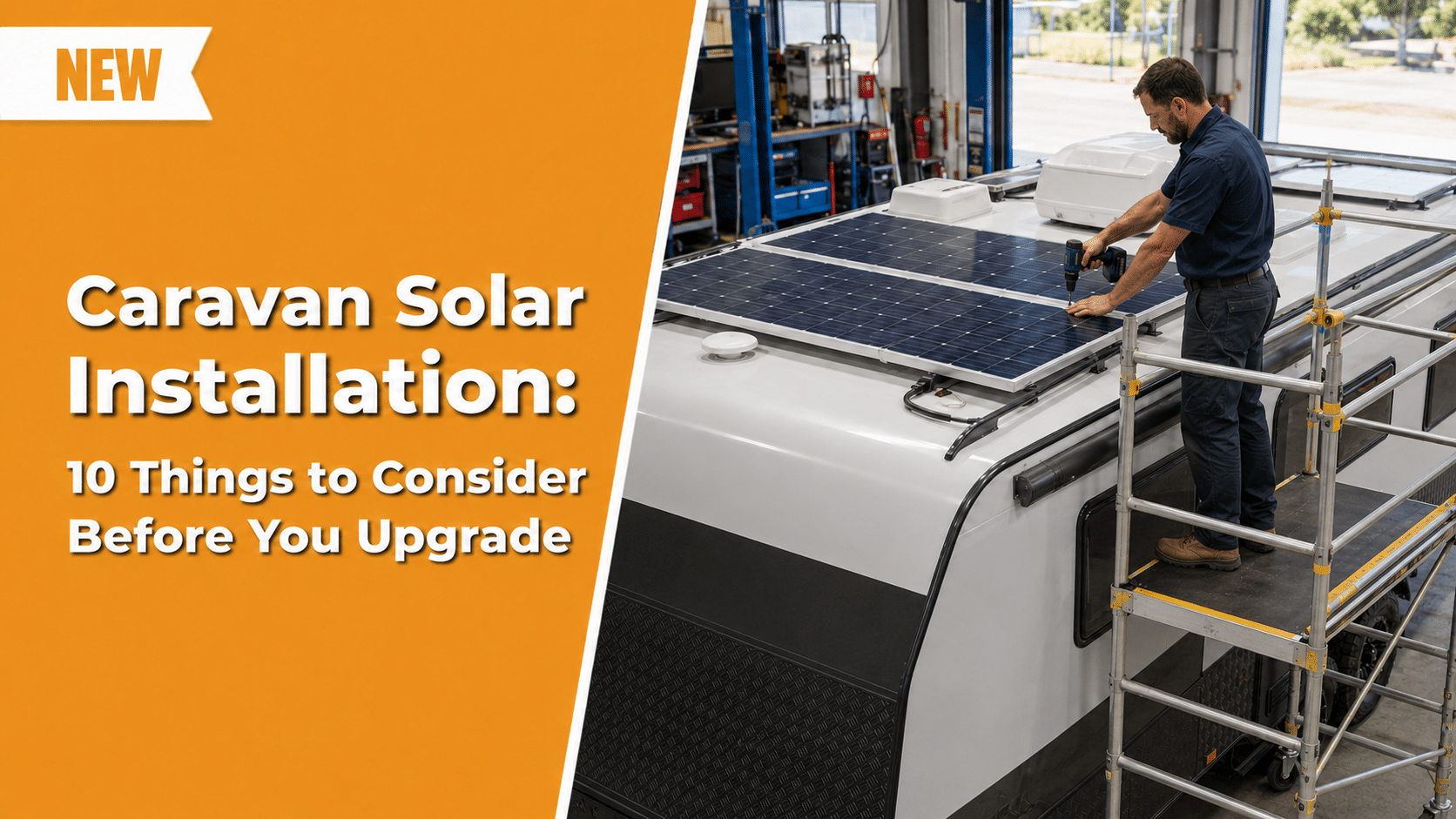
It is tempting to begin by asking how many panels will fit on the roof. However, the best caravan solar installation starts with understanding how you travel, what you want to run and how every part of the electrical system will work together.
A complete caravan solar system may include panels, batteries, a solar controller, DC-to-DC charging, a 230/240V battery charger, an inverter, cabling, protection devices and a battery monitor. If one component is undersized, poorly matched or incorrectly configured, the whole system can underperform.
Before spending money on a caravan solar upgrade, consider these ten important factors.
1. How Much Power Do You Actually Use?
Start by listing every appliance you expect to use and how long it will operate each day. Common 12V loads include a compressor fridge, lights, water pump, fans, television, phone charging, diesel heater, Starlink and CPAP machine.
Then include any 230/240V appliances you want to run through an inverter, such as a coffee machine, microwave, induction cooktop, hair dryer or air conditioner. Wattage alone does not show daily consumption: a small appliance running continuously can use more energy than a large appliance used for five minutes.
A proper power audit converts these loads into estimated daily watt-hours. This provides the starting point for sizing solar generation, usable battery storage and charging capacity. Without it, the system may be too small—or unnecessarily large and costly.
2. What Type of Travel Are You Planning?
A system designed for powered caravan parks may be unsuitable for extended off-grid travel. Consider whether you free camp for one night or a week, travel year-round, park in shade, work from the road or regularly use high-demand appliances.
A couple using lights, a water pump and device charging has very different needs from a family operating a compressor fridge, Starlink, laptops and inverter appliances.
Queensland conditions matter too. High panel temperatures can reduce output, while shade, storms and seasonal weather affect daily solar generation. Design the system for your normal travel conditions—not only a perfect summer day in full sun.
3. Is Your Battery Bank Large Enough?
Solar panels generate energy; batteries store it for use at night and during poor weather. A larger battery bank can extend off-grid time, but adding batteries without enough charging capacity can leave you with a system that rarely recovers fully.
Size the bank using usable energy rather than the advertised amp-hour figure alone. Battery chemistry, manufacturer limits, temperature, age and desired reserve all affect usable capacity.
If you are considering a lithium upgrade, review the entire system. Existing chargers, solar controllers, monitors, fuses, cable sizes and battery locations may not be suitable just because a lithium battery fits in the old compartment. Learn more on our caravan lithium battery upgrades page and our guide to AGM versus lithium caravan batteries.
4. How Much Solar Can the Roof Accommodate?
Roof space is often the limiting factor in a caravan solar installation. Air conditioners, hatches, antennas, vents, dust-reduction systems and existing panels all compete for space.
Panels must not prevent other equipment from operating or being serviced. They also need secure mounting, appropriate wind resistance and properly sealed cable penetrations so the installation does not create a future water-ingress problem.
Partial shade from an air conditioner or hatch can noticeably reduce output. Several well-positioned panels may use the available area better than one large panel. Roof condition, structural loading, mounting method, cable entry points and future access should all be assessed before installation.
5. Will the Panels Produce Enough Energy?
Advertised panel wattage is measured under controlled test conditions. Real-world output changes with season, cloud, shade, dirt, panel temperature, orientation, cable losses, controller efficiency and battery state of charge.
A 600W array will not deliver 600W throughout the day. The installer should compare expected daily consumption with realistic daily solar production and allow a margin for poor weather and future loads.
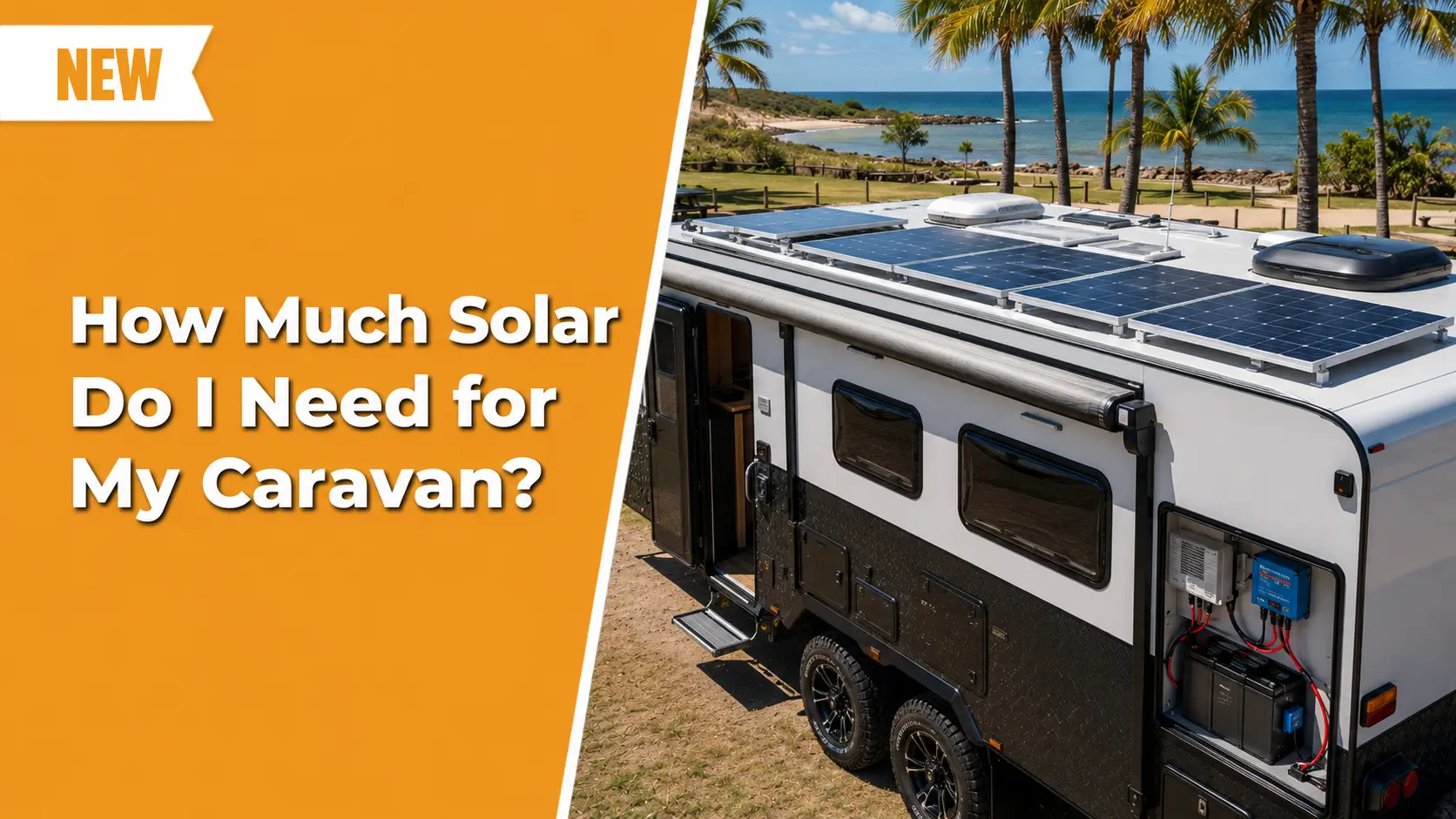
If you want to calculate a practical starting point, read How Much Solar Do I Need for My Caravan?
6. Is the Solar Controller Correctly Sized?
The solar controller regulates energy from the panels and applies the required battery-charging profile. Many modern systems use a maximum power point tracking, or MPPT, controller.
The controller must suit the array’s maximum open-circuit voltage and current, battery-bank voltage, battery chemistry, panel configuration, operating temperature and any planned expansion. Adding panels without checking the existing controller’s limits can cause poor performance or equipment damage.
Charging settings must also follow the battery manufacturer’s requirements. Incorrect settings can cause incomplete charging, battery-protection shutdowns or reduced battery life.
7. How Will the Batteries Charge While Driving?
Solar is only one charging source. Many caravan owners use a DC-to-DC charger to obtain controlled charging from the tow vehicle or motorhome alternator, particularly with modern variable-voltage alternators.
The charger, vehicle supply, wiring, fuses and connectors must all support the required current. Long cable runs and undersized cabling can cause voltage drop, heat and disappointing charging performance.
Treat the tow vehicle and caravan as one connected charging system. A charger cannot deliver its advertised output if the upstream alternator supply, cable size or connections cannot support it.
8. Do You Need an Inverter?
An inverter converts battery-supplied DC power into AC power for compatible 230/240V appliances. Choose it around the appliances you genuinely need, allowing for both continuous load and starting surge.
A large inverter can draw very high current from a 12V battery system. The battery bank, battery-management system, cables, fuses, isolation, ventilation and equipment location must all support that load. Installing a powerful inverter does not automatically mean the caravan can comfortably operate air conditioning or induction cooking—the energy must also be replaced.
For additional background, see our guide to a lithium battery system and inverter.
9. Is the Whole System Safe and Compliant?
A caravan electrical system is exposed to vibration, heat, dust, moisture and movement. Design should cover cable size and voltage drop, fusing, circuit protection, isolation, abrasion protection, battery restraint, equipment clearances, labelling, ventilation, roof sealing and service access.
Australian recreational-vehicle electrical installations are addressed by the AS/NZS 3001 series, including AS/NZS 3001.2:2022. Lithium battery location, enclosure, mechanical protection and separation requirements can affect the design. Product availability does not prove that an installation is suitable or compliant.
Any work involving the caravan’s 230/240V installation must be completed and tested by an appropriately licensed electrical worker. The Queensland Electrical Safety Office notes that alternate supplies such as batteries, solar and inverters increase installation complexity and electrical risk; applicable standards and manufacturer instructions must be followed. See its guidance on electrical installations with alternate supplies.
10. Can the System Be Expanded Later?
Your needs may change after a few trips. You might add Starlink, another fridge, more battery storage, electric cooking or greater air-conditioning capability.
Planning for likely expansion can avoid premature replacement. That may mean selecting a controller with headroom, allowing space for another compatible battery, installing suitable cable pathways or choosing a battery-management system that integrates several charging sources.
Future-proofing does not mean buying the biggest components available. Weight, roof space, installation space and budget still matter. The aim is a practical pathway for upgrades you are reasonably likely to make.
A Caravan Solar Installation Should Work as One System
Reliable caravan solar upgrades are designed around energy use, not individual products. Panels, batteries, controllers, chargers, inverters, cabling and protection devices must all be compatible.
Before approving a system, ask the installer to explain your estimated daily consumption, usable battery capacity, likely daily solar production, alternative charging sources, inverter limitations, safety requirements and expansion options. A good installer should explain plainly what the system can—and cannot—reasonably do.
If you are planning a new system or want an existing installation assessed, visit our caravan solar installation, repairs and upgrades page.
Frequently Asked Questions
1. How Much Solar Do I Need for My Caravan?
The answer depends on your daily energy use, travel style, battery capacity, available roof space and other charging sources. A small system may support lights, pumps and device charging, while an off-grid setup running refrigeration, Starlink and inverter appliances may require substantially more solar and battery storage. A power audit is the best starting point.
2. Can I Add More Solar Panels to My Existing Caravan System?
Possibly, but the existing controller, cabling, connectors, fuses and panel configuration must be checked first. The combined array must remain within the controller’s voltage and current limits. Roof space, shading and mounting locations also need to be assessed.
3. Should I Upgrade to Lithium Batteries at the Same Time?
Lithium batteries can provide more usable capacity and lower weight than an equivalent lead-acid battery bank, but they are not a simple drop-in upgrade in every caravan. Chargers, solar controllers, monitoring, cabling, protection and battery location must be checked for compatibility and compliance.
4. Can Caravan Solar Run an Air Conditioner?
It may be possible with a suitably designed solar, battery and inverter system, but air conditioning uses substantial energy. The inverter and battery bank must safely support the load, and the system needs enough charging capacity to replace the energy consumed. Runtime depends on the equipment, weather and other loads.
5. How Much Does a Caravan Solar Installation Cost?
Cost depends on the required solar capacity, battery chemistry and size, inverter, chargers, monitoring equipment, cable runs, roof layout and condition of the existing installation. A modest charging upgrade costs less than a complete off-grid system. Define what you want to run and obtain a tailored recommendation.
Plan Your Caravan Solar Upgrade With AllBrand
Not sure how much solar, battery storage or inverter capacity you need? The AllBrand Caravan Services team can assess your current setup, discuss how you travel and recommend a properly matched caravan solar system.
Get a Quote Online →