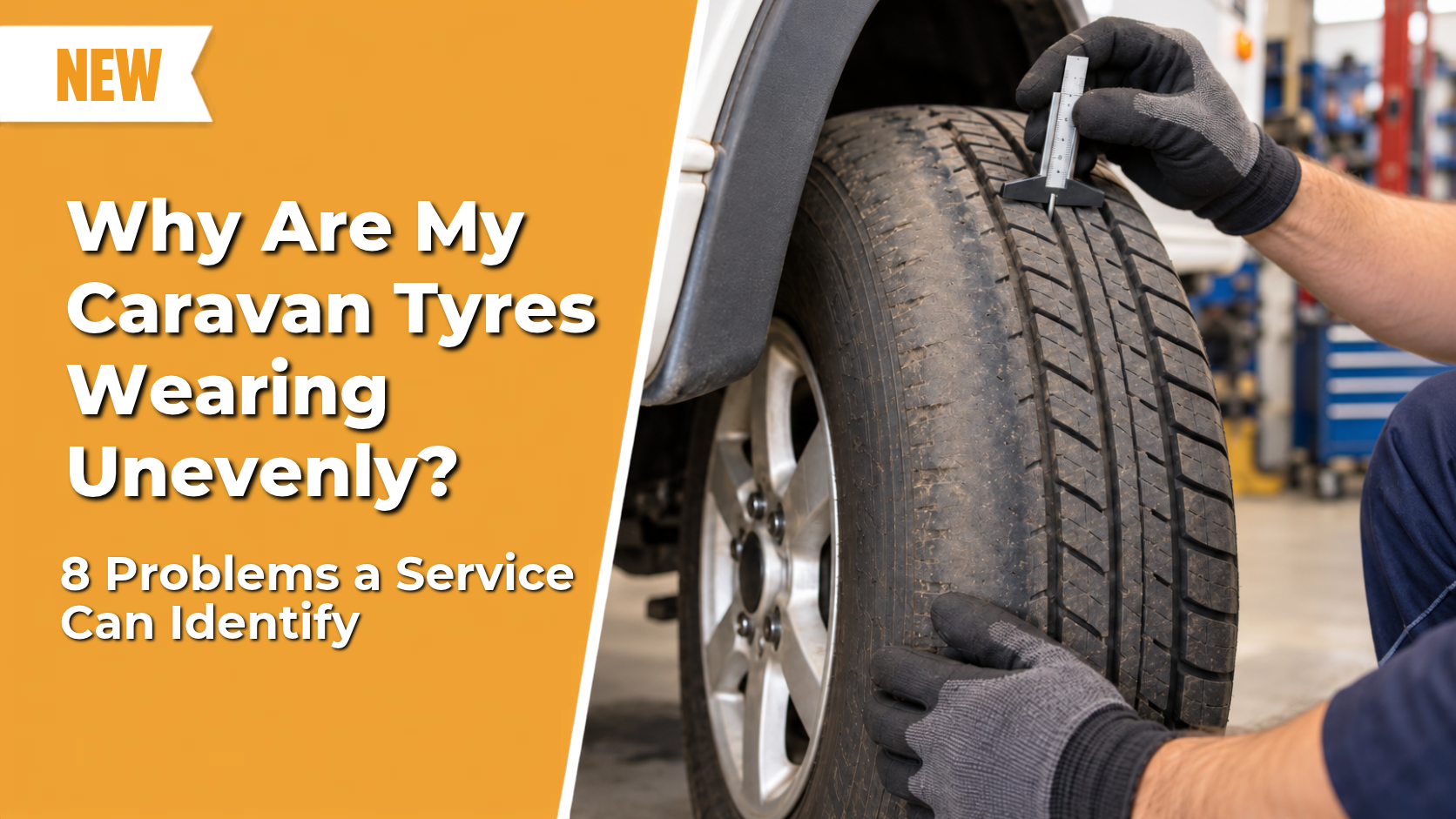
Why Are My Caravan Tyres Wearing Unevenly? 8 Problems a Service Can Identify
Uneven caravan tyre wear can signal pressure, alignment, suspension or loading problems. Learn eight causes a caravan service can help identify.

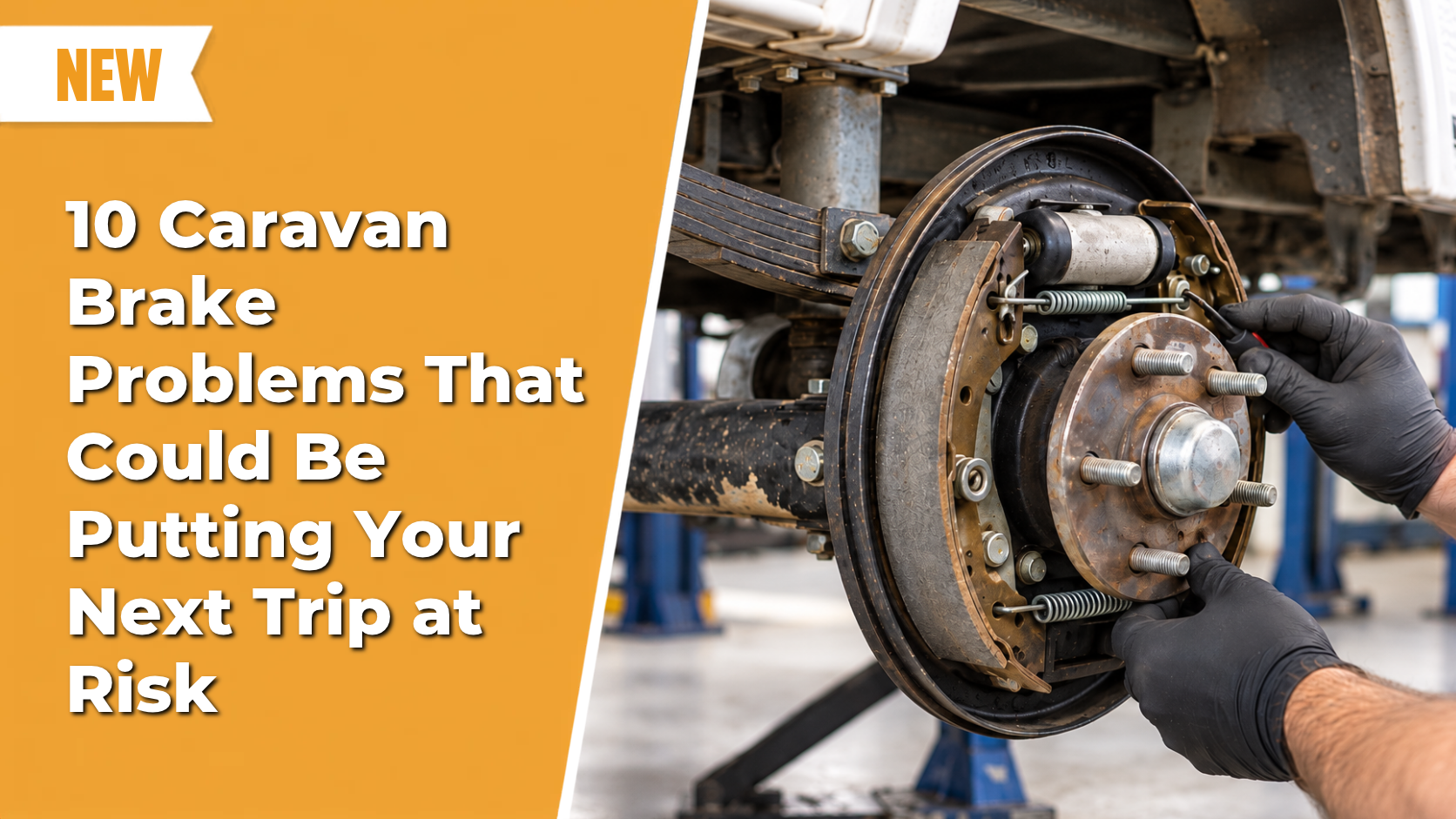
Caravan brake problems often develop gradually. You may compensate by increasing the controller gain, braking earlier or accepting that the van “just feels heavy”. That can hide wear and adjustment problems until an emergency stop, steep descent or wet road exposes them.
If braking behaviour has changed, arrange an inspection. The tow vehicle, controller, trailer plug, wiring, breakaway equipment and wheel-end brake assemblies must work together.
Friction material becomes thinner with use. Worn shoes provide less effective braking and can damage drums if allowed to deteriorate far enough. Wear may not be visible without removing the drum.
Electric drum brakes need correct adjustment. Excessive clearance can delay application and reduce effectiveness; over-adjustment can create drag, heat and rapid wear.
The magnet contacts the rotating drum to activate the brake mechanism. A worn face, damaged lead or electrical fault can weaken braking at that wheel. Magnets and drums should be inspected together.
Heat and wear can change the drum surface. Scoring, glazing or distortion may cause poor, noisy or inconsistent braking. Machining or replacement must stay within the component manufacturer’s limits.
Trailer wiring lives in a harsh environment. Corroded joins, damaged cables and poor earths create resistance and voltage drop, leaving one or more brakes underpowered.
Controller gain and response should suit the loaded caravan and conditions. A setting that worked before a load or towing-setup change may no longer provide balanced braking. Repeatedly increasing gain can mask a fault elsewhere.
Loose pins, corrosion, heat damage and poor contact can interrupt the brake circuit. If braking changes when the plug moves or warning messages appear intermittently, the connection needs investigation.
A caravan that pulls, jerks or has one unusually hot hub may have unequal adjustment, contamination, wiring differences or mechanical wear. Compare all wheel positions rather than treating only the obvious side.
A seal problem or incorrect greasing can contaminate braking surfaces. Cleaning alone may not restore safe friction material; the cause and affected components must be assessed.
A flat battery, seized switch, damaged cable or wiring fault may leave the emergency system inoperative. The box being fitted is not proof that it works.
Any sudden braking change deserves investigation before another long trip. Excessive heat, smoke, grinding, a wheel that will not rotate normally or a loss of braking requires immediate attention.
The correct process depends on the system, but it may include removing drums, inspecting shoes, magnets and hardware, measuring components, checking seals, adjusting brakes, inspecting wiring and connections, testing the controller and confirming breakaway operation. Learn more about AllBrand’s electric brake controller and towing preparation services.
Water, batteries, accessories and travel gear change the demands placed on the brakes. The caravan must remain within its ratings, and controller settings should be assessed for the actual towing configuration. Brakes cannot compensate for overloading or poor weight distribution.
Not sure what condition your caravan is in? Book a professional caravan service with AllBrand Caravan Services in Brisbane before your next trip.
You may feel the caravan assisting the tow vehicle and see normal controller indications, but that does not confirm equal performance at every wheel. A workshop inspection and electrical testing are the reliable ways to assess the complete system.
Possible causes include controller settings, brake adjustment, contamination, mechanical wear or electrical behaviour. Because several faults feel similar from the driver’s seat, diagnosis should cover both the controller and wheel-end components.
Follow the caravan, axle and brake manufacturers’ schedules. Usage, load, road conditions, water exposure and storage can justify more frequent checks. An annual service and a pre-trip inspection before extended travel are common practices, but the applicable manufacturer schedule takes priority.
Owners should only perform work they are competent and authorised to do, using the correct procedure and safety equipment. Incorrect adjustment can create drag or inadequate braking. A professional service also checks wear, wiring and other causes that adjustment alone cannot fix.
No. A controller may detect some connection problems but cannot necessarily identify worn linings, incorrect adjustment, a weak individual magnet or mechanical damage. Normal lights on the controller do not replace physical inspection.
📞 Call us: 07 3869 2969
📍 Visit us: 101 Connaught Street, Sandgate Qld 4017
📧 Email: [email protected]