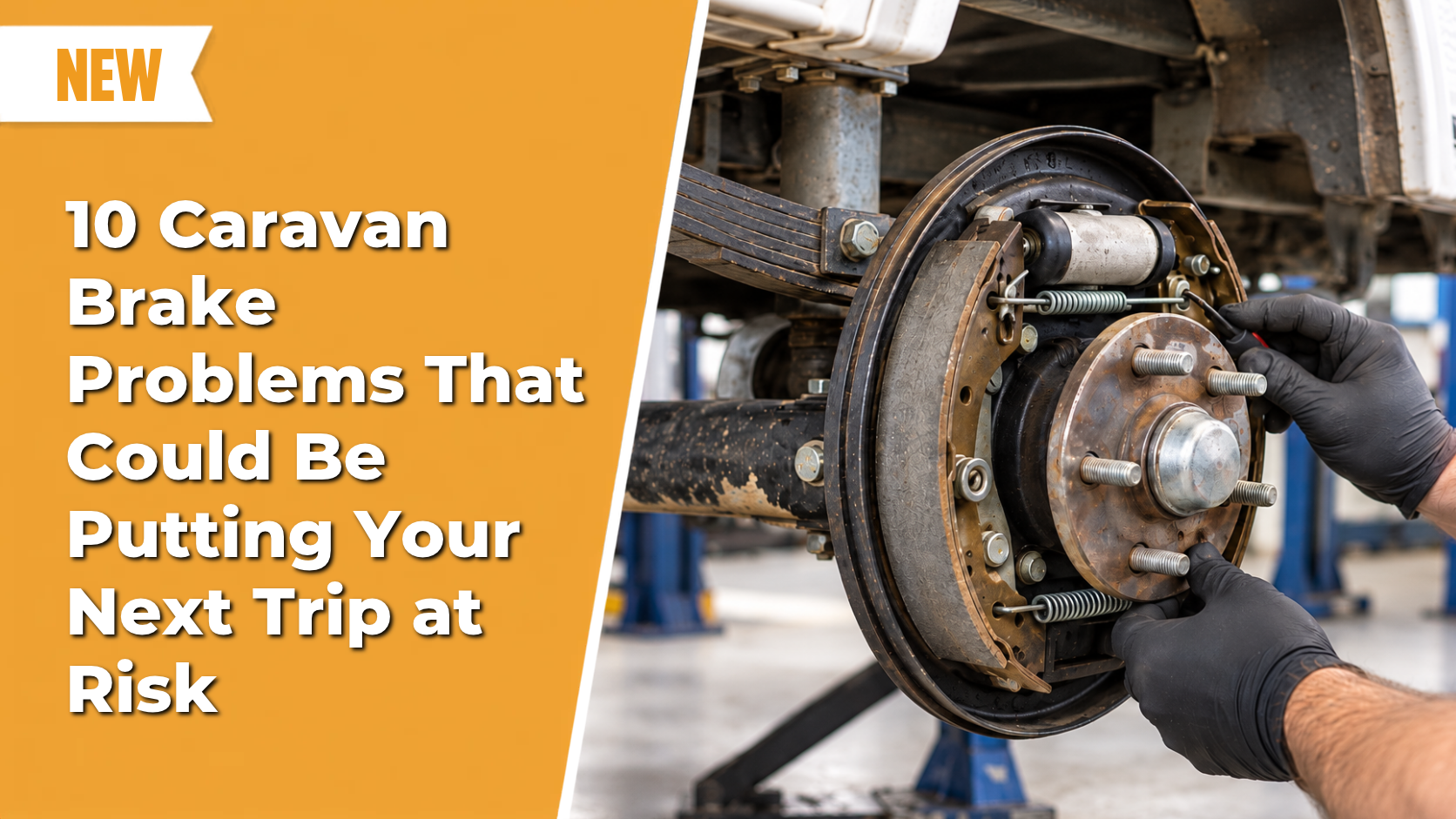
10 Caravan Brake Problems That Could Be Putting Your Next Trip at Risk
Recognise ten common caravan brake problems, from worn shoes and magnets to wiring and controller faults, and learn when to book a brake inspection.

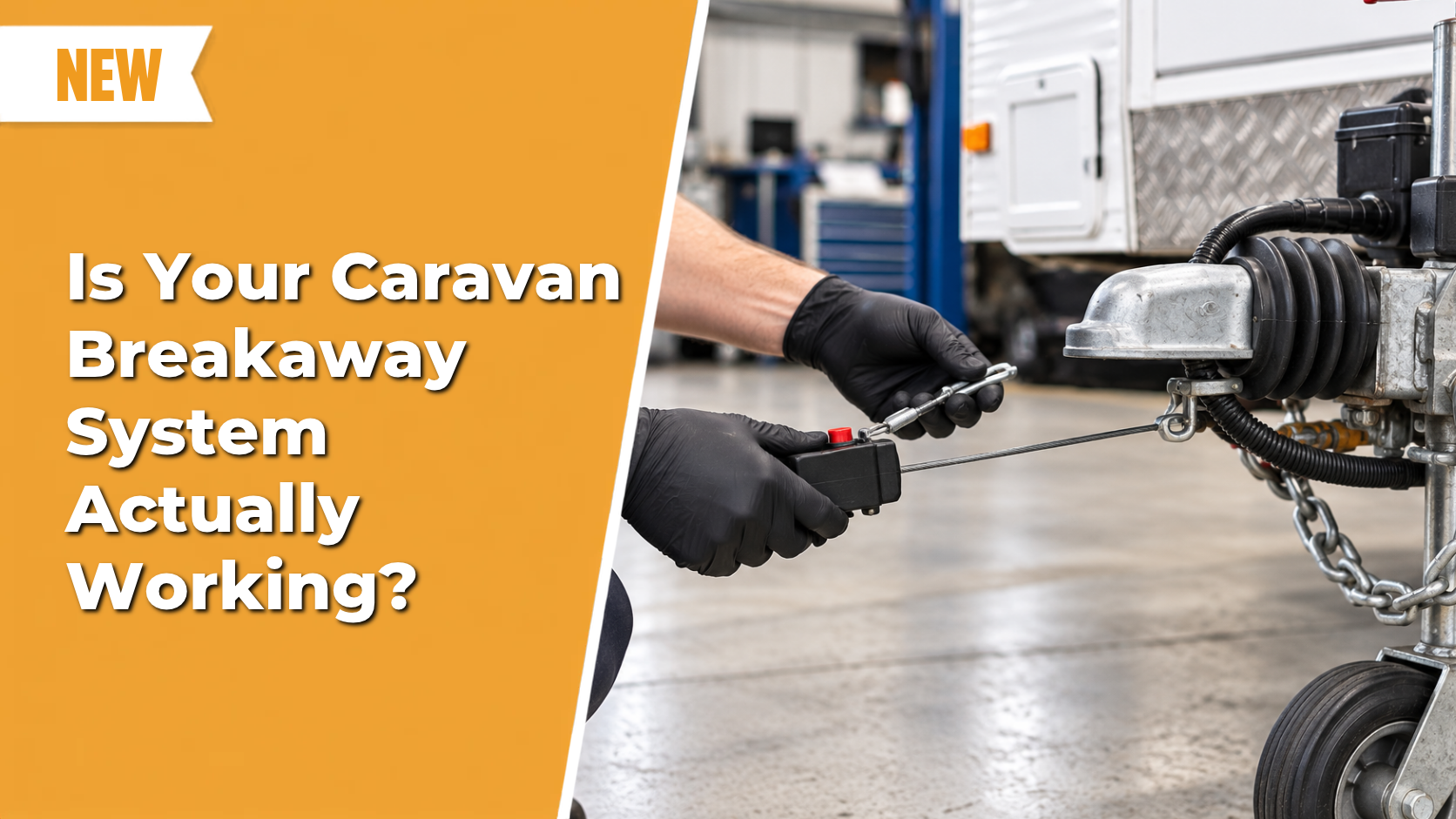
A caravan breakaway system is intended to apply the caravan’s brakes if the trailer separates from the tow vehicle. Because it normally sits unused, many owners assume the system is healthy simply because the box, cable and switch are present. The real question is whether it can detect a separation, supply power and apply the caravan brakes when required.
Breakaway requirements depend on the caravan’s mass, jurisdiction and applicable standards. For a van that requires one, an inoperative system is both a serious safety concern and a potential compliance issue.
The system generally uses a dedicated or suitable onboard power source, a switch fitted to the caravan and a pull pin connected by a cable. If the caravan separates, the cable pulls the pin and the switch sends power to the electric brakes. Every stage must work: the cable must be attached correctly, the switch must operate, the battery must deliver power, the wiring must carry it and the wheel brakes must be mechanically capable of applying.
An ageing battery may appear charged with no load yet collapse when asked to power the brakes. A meaningful test considers battery condition and performance under load, not only an indicator light.
A failed charger, blown fuse, wiring problem or incorrect connection can leave the breakaway battery slowly discharging between trips. Confirm the charging arrangement suits the battery type and operates from the intended source.
The switch is exposed to weather and road grime. Corrosion, impact or long periods without movement can stop it operating correctly. The pin should be retained securely during normal towing but release as designed in an actual separation.
The cable must be connected to an appropriate point on the tow vehicle so it can pull the pin if the coupling and safety chains fail. Looping it around an unsuitable component or attaching it where it cannot pull cleanly may defeat its purpose. Follow the system and vehicle manufacturer’s instructions.
A perfect breakaway switch cannot overcome worn magnets, poorly adjusted brakes, corroded joins or broken wiring. Testing should confirm that the system actually energises the brakes—not merely that a light illuminates.
Testing must follow the component manufacturer’s procedure. Pulling the pin while electrically connected to the tow vehicle can damage some brake controllers or circuits, and leaving the pin out for too long may overheat magnets or flatten the battery. A technician can isolate the correct circuits, check voltage and current, assess the battery under load and confirm mechanical brake operation.
The breakaway system is an emergency backup; it does not compensate for inadequate day-to-day braking. The brake shoes, magnets, drums, bearings, controller, trailer plug and wiring still need routine inspection as part of caravan servicing.
Lithium conversions, battery relocations, chargers and rewiring can change how the breakaway system receives power. After an upgrade, confirm the breakaway supply, protection, charging and battery monitoring still meet the equipment and caravan requirements.
Not sure what condition your caravan is in? Book a professional caravan service with AllBrand Caravan Services in Brisbane before your next trip.
Follow the system manufacturer’s instructions and include it in routine pre-trip checks and servicing. Test more often if the caravan is stored for long periods, the battery is ageing or the charging system has been modified.
Some installations use an appropriate onboard supply while others have a dedicated battery. The arrangement must remain available during separation and comply with the system’s specifications and applicable requirements. Have any non-standard setup checked professionally.
Use an attachment point and routing that comply with the breakaway system, tow vehicle and regulatory requirements. It must be able to activate if separation occurs and should not be arranged in a way that prevents it pulling correctly.
The battery may have lost capacity, the charger may not be operating, or there may be a fuse, connection or monitor fault. Voltage and load testing can separate a weak battery from a charging or wiring problem.
Only use the manufacturer’s specified test procedure. Some controllers should be disconnected first, and the pin should not remain out longer than directed. If you are unsure, have the system tested during a brake or caravan service.
📞 Call us: 07 3869 2969
📍 Visit us: 101 Connaught Street, Sandgate Qld 4017
📧 Email: [email protected]