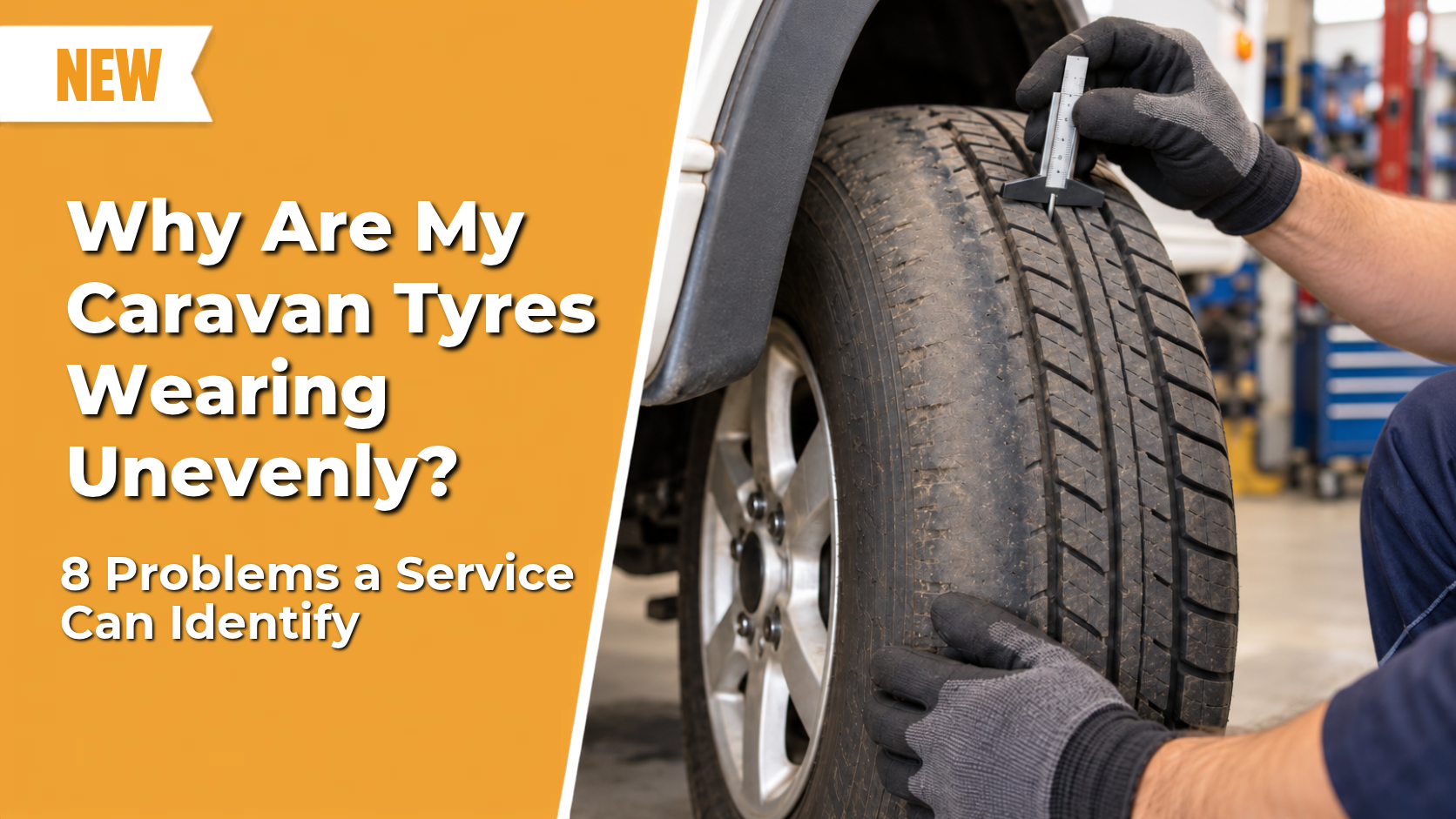
Uneven caravan tyre wear is not just a tyre problem. It can be an early warning that the caravan is overloaded on one side, the wheels are not tracking correctly or suspension components are moving under load. Replacing the tyres without finding the cause may only restart the same wear pattern.
Check the tyres before every trip and arrange an inspection if you notice rapid wear, different patterns from side to side, vibration, heat or a change in towing behaviour.
What different tyre-wear patterns can mean
Wear on both shoulders often suggests under-inflation, while pronounced centre wear can be associated with over-inflation. Wear concentrated on one edge may point to alignment, camber, axle or suspension issues. Cupping or scalloping may occur when a tyre is bouncing or a wheel assembly is not being controlled properly. These patterns are clues—not a diagnosis—because load, tyre construction, road conditions and multiple faults can produce similar results.
Eight problems behind uneven caravan tyre wear
1. Incorrect tyre pressure
Pressure that is too low increases flex and heat and can wear the shoulders. Excessive pressure can reduce the contact area and change the wear pattern. Use the caravan and tyre manufacturer’s guidance, taking actual load into account rather than copying the tow vehicle pressure.
2. The caravan is overloaded
Operating above the caravan’s ratings places additional load on tyres, bearings, brakes and suspension. Even when the overall weight is within the limit, one axle or wheel position can carry more than expected. A loaded weighing assessment provides better information than relying on tare weight.
3. Uneven side-to-side loading
Heavy batteries, water tanks, toolboxes and storage compartments can concentrate weight on one side. The overloaded tyre and suspension may run hotter and wear faster. Moving loose items may help, but fixed equipment and tank locations may require professional advice.
4. Wheel alignment or toe problems
If the wheels point slightly towards or away from one another, the tyres scrub as they travel. Kerb strikes, potholes, off-road use, loose components and manufacturing tolerances can all contribute. Alignment should be measured with equipment suited to caravan axles and the underlying cause corrected.
5. Bent or misaligned axles
An axle can be affected by impact, severe overloading or previous repair. Edge wear that persists after tyres and pressures are corrected deserves further investigation. Do not assume an axle should simply be bent back into position without assessing its condition and the manufacturer’s repair requirements.
6. Worn suspension bushes, shackles or mounts
Worn components allow the axle to move and can alter wheel position while towing. Look for cracked bushes, elongated holes, loose bolts, metal-to-metal contact and rust marks around mounting points. A professional caravan suspension inspection can determine which parts require attention.
7. Damaged springs or unequal ride height
A sagging or broken spring changes how weight is shared. The caravan may sit lower on one side, the tyre may approach the wheel arch and handling may deteriorate. Springs should be assessed as a system rather than replacing one visibly damaged item without checking the rest.
8. Wheel, hub or bearing problems
A bent wheel, excessive bearing movement or hub problem can affect how the tyre runs. Heat, noise or looseness at the wheel requires prompt attention. Continuing to tow may damage more components or lead to failure.
What a caravan service can check
During an appropriate caravan service, technicians can examine tyre condition and age, pressures, wheel security, bearing condition, suspension wear and visible axle or chassis concerns. A specialist alignment or weighing assessment may be recommended when measurements are required.
When should you stop towing?
Do not continue simply because tread remains. Stop and seek advice if you find exposed cords, a bulge, severe cracking, rapid air loss, excessive heat, wheel movement, contact with the body or wear that has suddenly accelerated. A spare tyre does not solve the mechanical issue that damaged the first tyre.
Book Your Caravan Service
Not sure what condition your caravan is in? Book a professional caravan service with AllBrand Caravan Services in Brisbane before your next trip.
Q. Why is one caravan tyre wearing faster than the others?
One wheel position may be carrying more load, running at a different pressure or affected by alignment, bearing, axle or suspension wear. Compare all tyres and have the caravan inspected before fitting a replacement.
Q. Can incorrect tyre pressure cause wear on only one edge?
Pressure commonly affects the centre or both shoulders, although real-world patterns vary. Consistent one-edge wear more strongly suggests geometry, loading or component movement and should be professionally assessed.
Q. Does a normal caravan service include wheel alignment?
Usually not unless it is specifically listed. A service can identify wear patterns and loose or damaged components, but accurate alignment needs the appropriate measuring equipment and may be a separate service.
Q. Should caravan tyres be replaced because of age even if the tread looks good?
Age, storage, UV exposure, heat and condition all matter. Inspect the date code and follow the tyre and caravan manufacturers’ guidance. Cracking, deformation or other damage warrants earlier professional assessment.
Q. Can caravan weight distribution damage tyres?
Yes. Uneven or excessive loading can overload individual tyres and suspension components even when the van appears level. Weighing individual wheel positions provides the clearest picture of side-to-side distribution.
It’s probably one of the questions I’ve been asked more than any other over the past couple of years. “What do you think about the Chinese caravans?” Sometimes it’s followed…
If you’ve towed a caravan through Queensland – especially long stretches between Brisbane, the Sunshine Coast, or out toward the inland highways – you’re relying on one of the smallest…
Queensland touring is hard on brake systems. Between long highway runs, stop-start traffic around Brisbane, heat coming off the bitumen and coastal humidity, your brakes are working more than you…
Todd McArthur is CEO of AllBrand Caravan Services and Managing Director of McArthur Industries in Brisbane, with over 30 years of experience in the caravan and automotive industry.

 Call us: 07 3869 2969
 Visit us: 101 Connaught Street, Sandgate Qld 4017
 Email: