Decoding Your Caravan’s Chassis & Suspension
Understand how the structure beneath your caravan affects stability, wear and maintenance planning.

Caravan & motorhome suspension specialists — Sandgate
For caravan independent suspension repairs in Brisbane, talk to a workshop that can assess the complete running gear. AllBrand provides inspection, diagnosis, servicing, repair and fitment support for caravans and motorhomes at Sandgate.
Assessment before assumption
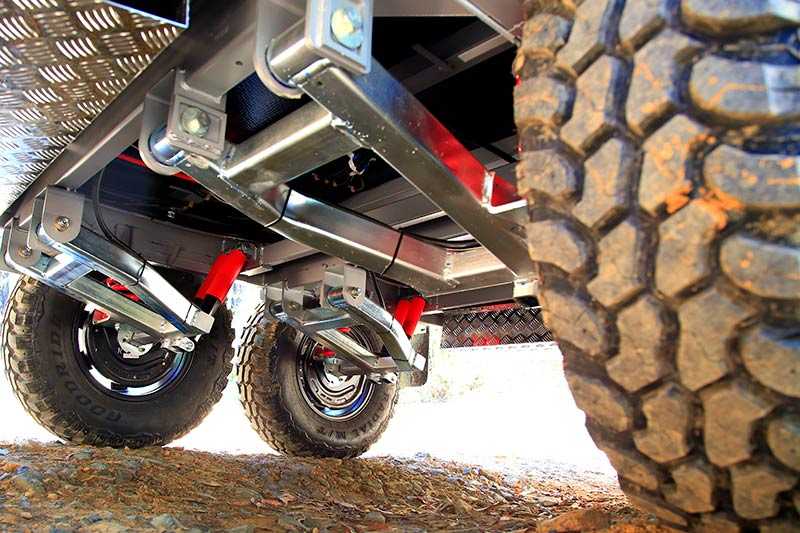
Independent suspension has to carry the caravan correctly, keep the wheels tracking as intended and respond consistently over changing road surfaces. Wear, impact, loose hardware or incorrect setup can affect tyres, ride height, braking behaviour and how confidently the caravan follows the tow vehicle.
Not every symptom means the complete system needs replacing. A proper assessment helps separate normal wear from damaged components, setup concerns and problems that may extend into brakes, bearings, wheels or chassis mounting points.
Scalloping, rapid wear or a pattern that differs noticeably from side to side.
The caravan sits low, unevenly or no longer appears level under its normal load.
New noises or visible movement around arms, bushes, mounts or fasteners.
A change in tracking, steering correction or the way the van settles after bumps.
Concerns after a pothole, kerb strike, rough-road event, collision or component contact.
You want to understand whether a different independent suspension setup is suitable for the van.
Repairs, servicing & fitment
Independent suspension is not one standard design. Components, service points and adjustment methods vary between manufacturers and models, so the repair path needs to suit the actual system fitted to the caravan or motorhome.
Depending on the assessment, work may involve worn bushes or hardware, shock absorbers, springs, arms, mounting points, fasteners, wheel-end components or other related running-gear concerns. Fitment and upgrade recommendations also depend on chassis suitability, weight ratings, available space, intended use and manufacturer requirements.
The exact work included is confirmed after inspection. Further testing, measurements or controlled disassembly may be needed before hidden wear or damage can be properly scoped.
Assess symptoms, visible wear, movement, ride height and related running-gear concerns.
Address serviceable components and worn parts where supported by the system and parts supply.
Assess impact or road-related damage and determine whether repair or component replacement is appropriate.
Replace authorised components where the inspection, manufacturer information and parts availability support it.
Review suitable independent suspension options against the caravan, intended use and technical requirements.
Coordinate relevant brake, bearing, wheel, electrical or fabrication work when it forms part of the agreed scope.
A clear workshop process
Call or send the van details, suspension information, symptoms and useful photographs.
We inspect the system and relevant running gear to understand the likely cause and repair scope.
We explain the proposed work, any limitations and whether parts or further input are required.
Approved servicing, repairs or fitment are completed and the relevant areas checked.
The inspection is tailored to the symptoms and suspension design. It may consider:
Hidden damage or wear cannot always be confirmed before access or disassembly. If the problem followed a collision or insured event, see our separate information about caravan suspension damage insurance repairs.
See the type of suspension and running-gear work handled by the AllBrand workshop.
Mechanical, electrical and fabrication concerns can be coordinated when they form part of the approved work.
The workshop works specifically with caravans and motorhomes, not only passenger vehicles.
AllBrand is part of McArthur Industries, a Brisbane family business established in 1973.
The proposed repair or fitment is based on the actual system, condition and vehicle requirements.
Ask whether relevant caravan servicing can be completed while the van is in the workshop.
Find us at 101 Connaught Street, Sandgate, with access from Brisbane and Moreton Bay.
Brisbane Northside
AllBrand Caravan Services is located at 101 Connaught Street, Sandgate QLD 4017. The workshop assists caravan and motorhome owners from Brisbane Northside, Moreton Bay, Redcliffe, North Lakes, Brendale, Caboolture and surrounding areas.
You do not need to diagnose the problem before contacting us. Tell us what has changed, what system is fitted if you know, and whether there has been an impact or recent work. We can explain the most useful next step.
Call before moving the caravan. Describe the lean, noise, movement or visible damage and we will help you decide how to proceed.
Detailed answers to common questions about caravan independent suspension costs, servicing, repairs, upgrades, tyre wear and off-road use.
Caravan independent suspension allows the wheel on each side of the caravan to move with less direct effect on the wheel opposite it. Depending on the design, the system may use trailing arms, coil springs, airbags, rubber elements or shock absorbers to control wheel movement. The aim is to help the wheels follow uneven road surfaces while supporting the caravan’s weight. Each system has its own service points, adjustment methods, load ratings and replacement parts, so it should be inspected and repaired according to the manufacturer’s specifications.
Neither system is automatically best for every caravan. Independent suspension can provide better wheel movement over uneven surfaces, improved ground clearance and more adjustment on some designs. Leaf-spring suspension is generally simpler and may be easier to service in remote areas. The better option depends on the caravan’s chassis, weight, tyre clearance, intended roads, payload and the availability of parts and technical support. A suspension upgrade should be selected as a complete engineered system rather than on ride comfort or appearance alone.
The cost of a caravan independent suspension upgrade varies considerably. The suspension system itself is only part of the job. Pricing can also be affected by the caravan’s weight rating, number of axles, chassis condition, required fabrication, brakes, hubs, wheels, alignment, certification and labour. Some caravans are straightforward candidates, while others require substantial modification or may not be suitable. AllBrand needs to identify the existing setup and inspect the caravan before providing an accurate recommendation and quote.
Independent suspension can be retrofitted to some caravans, but it is not a universal bolt-on upgrade. The chassis must be suitable for the mounting loads and there must be enough space for the suspension, tyres, brakes and full wheel travel. The proposed system must also suit the caravan’s ATM, axle configuration and intended use. Changes may affect ride height, entry steps, plumbing or other components beneath the van. An inspection is required before AllBrand can confirm feasibility, scope the work and identify whether engineering input or certification is needed.
Follow the service schedule supplied by the caravan and suspension manufacturer, because intervals differ between systems. Usage matters as well: corrugated roads, water crossings, dust, heavy loads and long-distance touring can justify more frequent inspections. A suspension service may include checking mounting bolts, bushes, pivot points, shock absorbers, springs or airbags, wheel bearings, brakes, tyre wear and alignment indicators. New or recently disturbed components may also require early rechecks. If the service history is unknown, arrange an assessment before a long trip rather than waiting for a symptom to appear.
Warning signs include uneven or rapid tyre wear, a caravan leaning to one side, reduced ride height, clunks or squeaks, leaking shock absorbers, cracked or worn bushes, loose fasteners and visible movement around mounting points. You may also notice that the caravan tracks differently, feels less settled after bumps or needs more steering correction than usual. These symptoms can overlap with tyre, wheel, bearing, brake, loading or chassis problems, so a proper inspection is important. Stop towing and seek advice if a wheel appears misaligned or the caravan looks unsafe.
Uneven caravan tyre wear can be caused by incorrect toe or camber, worn suspension bushes, loose components, bent arms or stub axles, wheel-bearing movement, incorrect tyre pressure, overloading or uneven weight distribution. The wear pattern provides useful clues, but replacing the tyres alone will not correct an underlying suspension or alignment fault. The complete running gear should be assessed, including tyres, wheels, hubs, bearings, brakes, suspension mounting points and the caravan’s loaded condition. Alignment adjustments must suit the particular suspension system and the manufacturer’s specifications.
There is no single lifespan for an independent suspension system. Durability depends on the design, caravan weight, kilometres travelled, road conditions, maintenance, loading and whether water, dust or impacts have affected components. Bushes, shock absorbers, bearings and other wear items may need attention well before the major structural parts. Regular inspection can identify movement, leaks, corrosion and abnormal tyre wear before they lead to more extensive damage. A caravan used frequently off-road will generally need closer monitoring than one used mainly on sealed roads.
The best off-road caravan suspension is the system correctly rated and engineered for the caravan—not simply the one with the most travel or the largest components. Selection should consider ATM, load distribution, chassis design, ground clearance, tyre size, wheel travel, shock control, parts availability and the type of roads you realistically plan to use. Suspension does not increase the caravan’s legal payload by itself and cannot compensate for poor weight distribution. AllBrand can assess the caravan and discuss suitable options based on the complete vehicle and intended use.
Do not continue towing if the caravan is leaning heavily, a wheel is out of position, a component is loose or broken, a tyre is contacting the body, or the van has become unstable. Continuing can worsen the damage and may affect tyres, brakes, bearings, the chassis and towing control. If the problem is not visibly severe but the caravan has developed a new noise or handling change, stop somewhere safe and call for advice. Photographs can help with an initial discussion, but they do not replace a physical safety inspection.
Caravan insurance may cover suspension damage caused by an insured event such as an accident, impact or road incident, but it generally does not cover ordinary wear, deterioration or poor maintenance. Coverage depends on the policy, the cause of the damage and the insurer’s assessment. AllBrand is an approved insurance repairer and can inspect accident-related suspension damage, document the repair requirements and liaise through the approved claim process. Contact your insurer promptly and avoid authorising repairs before confirming what the insurer requires.
AllBrand Caravan Services provides caravan independent suspension inspections, servicing, repairs and fitment support from 101 Connaught Street, Sandgate QLD 4017, on Brisbane’s northside. We assist caravan and motorhome owners from Brisbane, Moreton Bay, Redcliffe, North Lakes, Brendale, Caboolture and surrounding areas. Send us the caravan make, model, year, suspension details, symptoms and clear photographs through the quote form. A workshop inspection may be required before we can confirm the cause, repair scope, parts availability and price.
Useful reading before your booking
Understand how the structure beneath your caravan affects stability, wear and maintenance planning.
Learn the common changes in ride, tyres and towing behaviour that can signal developing wear.
Explore one independent suspension upgrade option and the factors owners should consider.
Call us or send the caravan details and photographs. We will review the concern and explain whether a workshop inspection is the next step.