
A Small Caravan Leak Can Become a Much Bigger Repair

Have you noticed a musty smell, soft wall, stain, bubbling panel or unexplained dampness inside your caravan?

Water can enter through deteriorated seals, roof penetrations, windows, hatches, joins and other openings. The visible mark is not always directly below the entry point, which is why simply applying sealant where the water appears may not solve the problem.

At AllBrand Caravan Services, we can inspect your caravan, investigate the likely entry point and recommend the repairs needed to stop further water ingress and address the resulting damage.
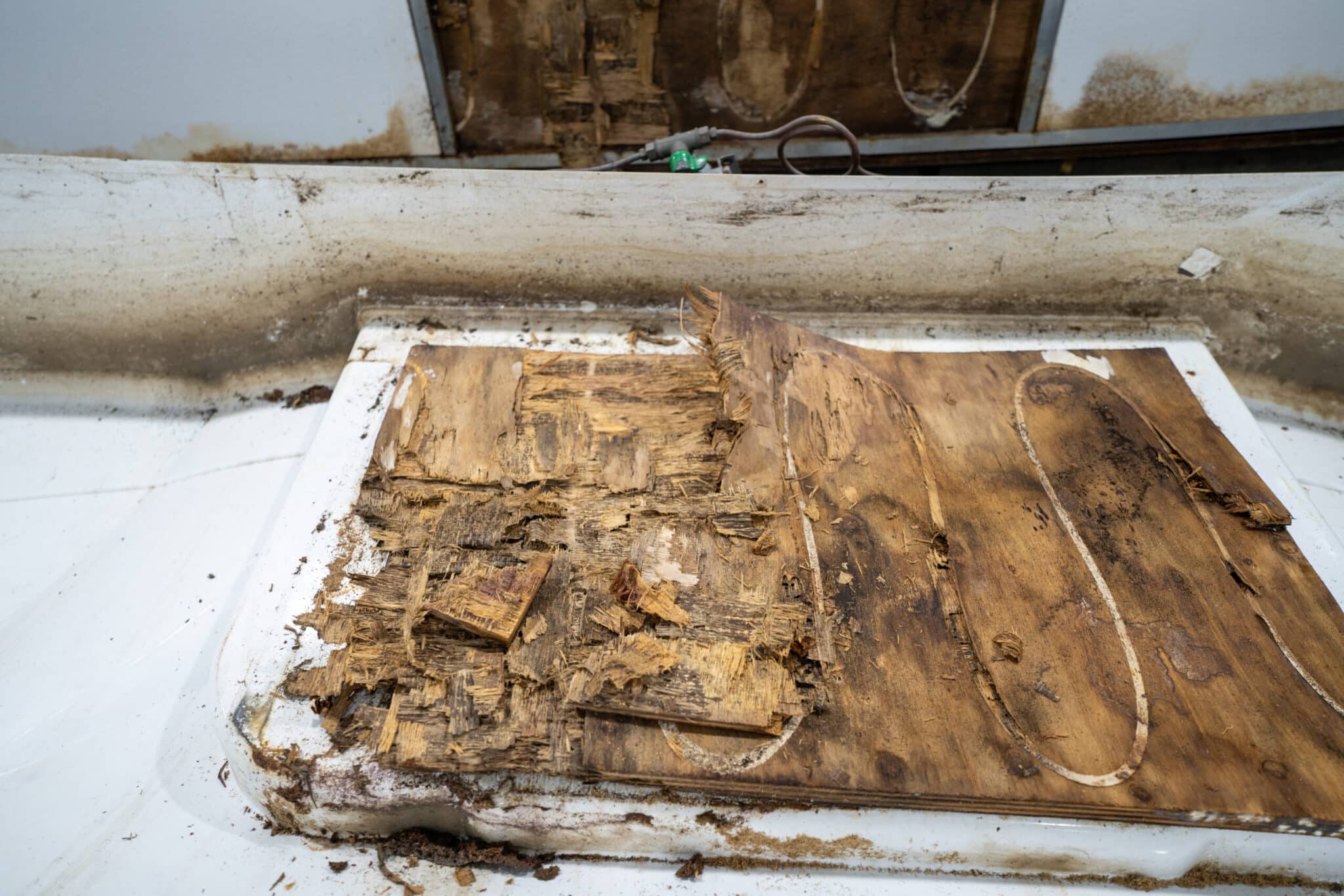
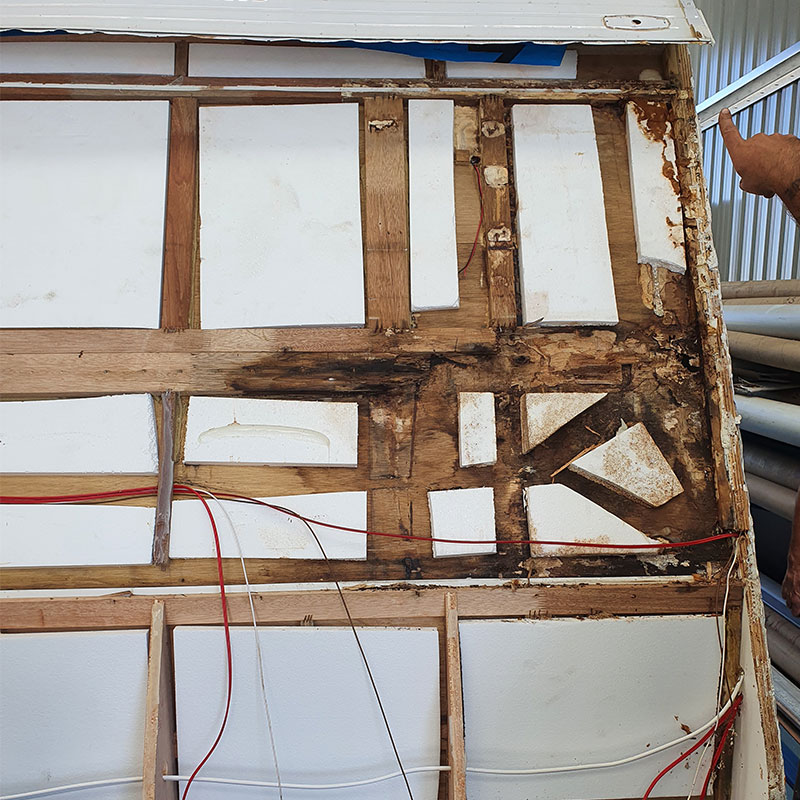
Signs of Water Ingress in a Caravan

1. Dampness or Water Stains

Discolouration on walls, ceilings, floors or around windows can indicate that water has entered the caravan.

2. A Musty Smell

A persistent musty odour may be caused by moisture trapped behind wall linings, cabinetry or flooring.

3. Soft, Swollen or Bubbling Surfaces

Wall panels, timber, flooring or cabinetry that feels soft, swollen or uneven may have been affected by moisture.

4. Mould or Mildew

Visible mould or mildew can indicate an ongoing moisture problem that needs more than surface cleaning.

5. Cracked or Deteriorated Sealant

Gaps, lifting edges and hardened or cracked sealant around exterior fittings can create possible entry points.

6. Water After Rain or Washing

Water appearing after heavy rain or washing the caravan is a strong reason to arrange leak testing and inspection.

Where Can Water Enter a Caravan?

DSC02738 scaled

Water ingress can begin at many points around a caravan, including:

  • Roof joins and roof-mounted equipment
  • Windows and window frames
  • Doors, hatches and storage compartments
  • Corner mouldings and body joins
  • Awning mounting points
  • Lights, vents and cable penetrations
  • Damaged panels or previous repair areas
  • Deteriorated, cracked or incorrectly applied sealant

Water can travel along framing or behind internal linings before it becomes visible. Finding the entry point is therefore an important part of the repair.

How We Investigate Caravan Water Ingress

1. Discuss What You Have Noticed

We start with when the leak appears, where you have seen moisture and whether previous sealing or repairs have been completed.

2. Inspect Likely Entry Points

Seals, joins, windows, hatches, roof penetrations and nearby fittings are checked for visible deterioration or damage.

3. Test for Water Entry

Where appropriate, specialist testing can help identify leaks that are difficult to locate through a visual inspection alone.

4. Assess the Damage

Visible and accessible areas are assessed to understand whether water has affected linings, timber, insulation, cabinetry or flooring.

5. Recommend the Repair

The required work may range from localised resealing to removal and replacement of damaged materials, depending on what the inspection finds.

Why It Pays to Act Early

Limit Further Damage

Continuing water entry can affect a wider area, increasing the amount of material that may eventually need repair or replacement.

Protect the Caravan Structure

Moisture can contribute to deterioration of timber, panels, flooring, fixings and other materials.

Address the Cause, Not Just the Stain

Cleaning or painting over a mark does not stop the water. The entry point must be located and repaired.

Create a Clear Repair Record

Inspection findings, photographs and repair information may also be useful when discussing the issue with a manufacturer, repairer or insurer.

new age before during1

Do Not Wait for the Next Storm to Test the Leak Again

If you have seen dampness, staining or damage, arrange an inspection before more water enters. Tell us where you noticed the problem and upload photographs when requesting your quote.

Frequently Asked Questions

Water ingress is unwanted water entering a caravan through a gap, damaged area, failed seal or penetration in the exterior. It can affect wall linings, timber, insulation, cabinetry, flooring and other materials.

Possible signs include stains, dampness, a musty smell, mould, soft wall or floor areas, swelling, bubbling surfaces or water appearing after rain or washing.

Yes. Water can travel behind linings or along framing before it becomes visible, so the damp area may not be directly below the entry point.

The process may include discussion of the symptoms, visual inspection of seals and exterior fittings, moisture assessment and specialist leak testing where appropriate.

No. The required work depends on the location and condition of the seals and whether damage has spread. Some leaks may need localised repairs, while broader deterioration may require more extensive resealing.

Applying more sealant without preparing the area or identifying the entry point may not provide a lasting repair. The correct method depends on the joint, materials and condition of the existing seal.

Coverage depends on the policy, the cause of the damage and the insurer’s assessment. Maintenance-related deterioration may be treated differently from damage caused by a defined insured event. Check your policy and contact your insurer for advice.

Keep the caravan protected from further rain where practical, photograph the affected areas and arrange an inspection promptly. Avoid covering or altering the suspected entry point before it can be assessed.

AllBrand Caravan Services provides caravan water-ingress inspections and repairs at our Brisbane workshop. Call (07) 3869 2969 or request a quote online.

Book a 15-minute call with our head technician now for free (normally $65) to get started.

Check Out the AllBrand Caravan Services Blog

Get the latest caravan news, tips and practical advice.

No results found.

Watch Our RV Upgrades and Off Grid Solutions Videos

No results found.