Caravan Insurance Repairs Guide
Understand the broader insurance repair process and what can affect assessment and approval.

Caravan insurance repair rectification — Sandgate
Still seeing leaks, cracks, movement or other problems after an earlier insurance repair? AllBrand can assess the current condition, review the available repair history and recommend the next technical step.
Start with the current condition
New damage, wear, movement, maintenance issues or an unrelated fault can sometimes create symptoms similar to the original problem. The useful starting point is to establish what is happening now and compare it with the available repair history.
AllBrand provides technical assessment and repair recommendations. We do not determine legal liability, settle disputes or guarantee that an insurer or previous repairer will fund rectification.
Moisture returns after resealing, panel work or earlier leak repairs.
A repaired fibreglass, panel or structural crack returns or spreads.
Doors, windows, hatches or body panels no longer line up correctly.
Paint, gelcoat, sealant or another repaired finish is lifting, cracking or separating.
Staining, swelling, movement or soft material appears after the earlier repair.
Suspension, chassis, plumbing or electrical symptoms remain near the original repair area.
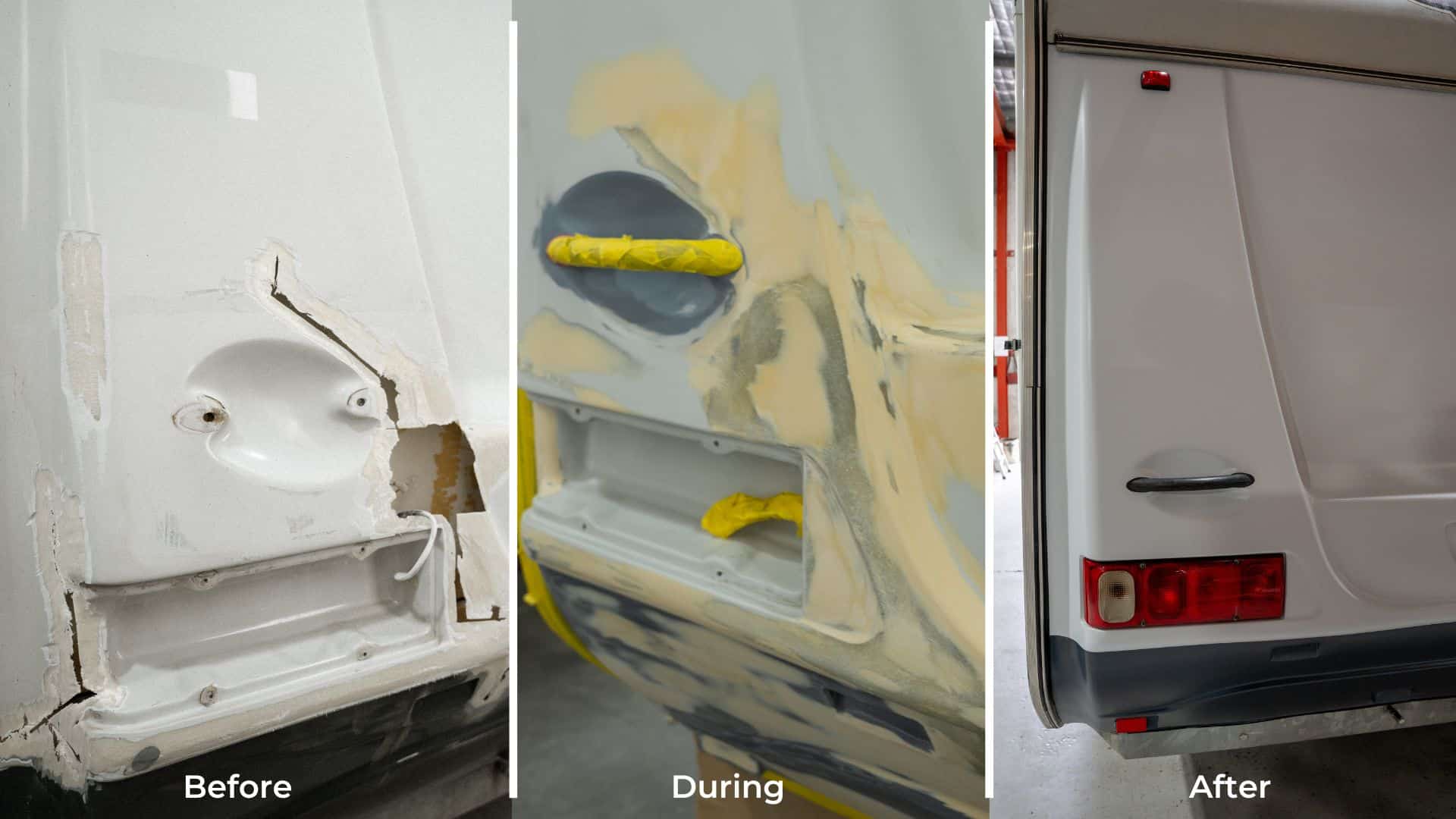
Bring the history with the vehicle
Useful documents include the original claim number, insurer correspondence, approved repair scope, quotes, invoices, photographs and any repair warranty information.
Also document the current symptoms: when they began, what makes them worse, whether they are changing, and any new damage or events since the earlier repair.
A clear assessment process
Provide claim details, previous repair documents, photographs and a clear description of the current problem.
We review the information and advise whether workshop inspection, testing or specialist assessment is the appropriate next step.
We inspect relevant areas, document findings and identify a technically appropriate repair pathway where possible.
Work starts only after the responsible party approves the scope and payment pathway, or you approve a private quote.
We focus on the current symptoms, vehicle condition and available documents rather than making assumptions about responsibility.
Specialist pressure testing may help investigate recurring leaks and difficult-to-find exterior entry points.
Caravan, fibreglass, electrical, mechanical and fabrication specialists can assess cross-trade problems.
Related framing, panel, fibreglass, paint, plumbing and running-gear work can be coordinated where authorised.
AllBrand is part of McArthur Industries, serving the Brisbane community since 1973.
Our Sandgate workshop accommodates a wide range of recreational vehicles, subject to size and construction.
Payment & responsibility
Our role is to assess the current vehicle condition, document relevant findings and explain a technically appropriate repair pathway. Questions about contractual responsibility, consumer law, compensation or insurer disputes may require the insurer, original repairer, a dispute-resolution body or legal adviser.
The original insurer or repairer may fund eligible work, another claim pathway may apply, or you may choose a private assessment and quote. Confirm authority and payment arrangements before work begins.
Send us the previous repair documents, current photos and a short timeline of the symptoms so we can determine the most useful next step.
Yes, subject to the vehicle, concern and information available. We assess the current condition and can recommend further investigation or repair where appropriate.
Not automatically. The same symptom may result from the original issue, new damage, deterioration, maintenance needs or an unrelated fault.
Usually, yes. Warranty, insurer or consumer-resolution processes may require the original repairer to inspect and respond before another workshop performs rectification work.
That depends on the claim and insurer instructions. Obtain written approval before assuming an assessment or further repair will be covered.
Yes. Relevant seals, fittings, joins and moisture symptoms can be assessed, and pressure testing may be appropriate.
Often, yes, but the failed area and cause need to be understood first. Reinforcement, movement, core damage or preparation issues may need to be addressed.
We can assess relevant suspension, brakes, alignment and structural areas. Repair options depend on the earlier work, current damage, manufacturer requirements and engineering needs.
Discuss the exact purpose and required format before booking. A workshop assessment or repair quote is not automatically an expert legal report.
Where the repair is suitable for our workshop, we can discuss a private quote. Assessment, dismantling and repair authorisations must be agreed before work begins.
Provide the original claim number, approved scope, quotes, invoices, photographs, repair warranty, insurer correspondence and a timeline of the current symptoms.
Insurance & repair guides
Understand the broader insurance repair process and what can affect assessment and approval.
Learn why cracks, core damage and surface finish problems can require deeper investigation.
Review how hidden damage and supplementary repairs can affect an insurance repair scope.
Send us the repair history, current symptoms and clear photos. We can help determine the most appropriate technical assessment and next repair step.