
Dexter Torflex suspension assessment in Sandgate
Caravan Torflex Suspension Repairs Brisbane
Concerned about sagging, unequal torsion-arm angles, reduced tyre clearance or uneven tyre wear? AllBrand assesses Dexter Torflex suspension and related running gear and can help identify the correct repair or replacement pathway.
What Is Dexter Torflex Suspension?
Torflex is Dexter’s rubber torsion suspension axle. A heat-treated steel inner bar is surrounded by rubber cords inside the axle tube. When the wheel and torsion arm move, the rubber is compressed and deformed to provide springing and natural damping without a conventional external leaf or coil spring.
The axle assembly mounts directly to the caravan or trailer frame through brackets. Each wheel operates with independent suspension action, and the compact layout can provide a low-profile installation. Models are manufactured in different load capacities, dimensions, starting angles and brake or hub configurations.
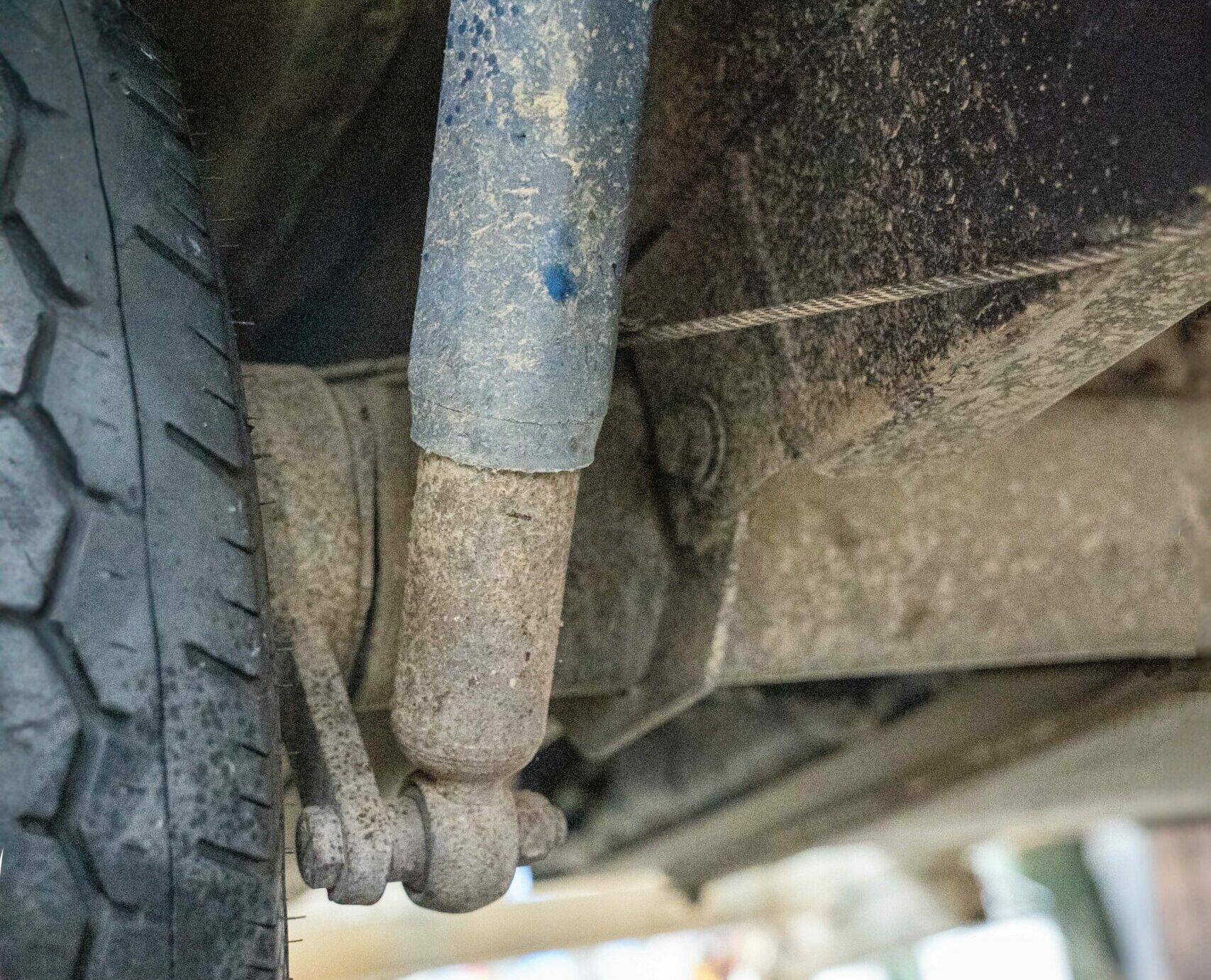
Signs Your Caravan Torflex Suspension Needs Inspection
Reduced or Uneven Ride Height
The caravan sits low, leans to one side or no longer maintains the expected tyre and body clearance.
Different Torsion-Arm Angles
One arm appears to rest at a noticeably different position from the corresponding arm on the other side.
Uneven Caravan Tyre Wear
Rapid shoulder wear, feathering or different wear patterns can indicate alignment, loading or axle concerns.
Harsh or Changed Ride
The caravan feels less compliant over bumps, transfers more vibration or behaves differently from previous trips.
Impact or Mounting Damage
Damage, corrosion, cracking or movement around brackets, arms, spindles or nearby chassis areas needs assessment.
Wheel Position Has Changed
A wheel appears out of position or tyre-to-body clearance has changed following an impact or overloading event.
These signs do not automatically confirm internal Torflex failure. Tyre pressure, loading, wheel bearings, brakes, mounting alignment, bent wheel-end components or chassis damage can produce similar symptoms. The complete axle installation and related running gear should be assessed.
What We Check During a Torflex Suspension Assessment
Axle Identification
Labels, model details, rated capacity and available specifications help establish the exact axle and replacement requirements.
Ride Height and Arm Position
Side-to-side differences, starting position, travel and tyre clearances are considered against the symptoms.
Mounting Brackets and Fasteners
Attachment points, brackets, welds and nearby chassis areas are checked for movement, corrosion or impact damage.
Spindles, Hubs and Bearings
Wheel-end condition and movement may be assessed where they form part of the booked scope or tyre-wear concern.
Brakes and Wiring
Brake type, mounting and visible wiring are considered when identifying a replacement or diagnosing related issues.
Tyres and Wheel Position
Tyre condition, wear patterns and the wheel’s relationship to the body and chassis provide important diagnostic clues.
Torflex Repairs Versus Complete Axle Replacement
What May Be Serviceable
The Torflex suspension unit is self-contained, but associated wheel-end and mounting components may be serviceable depending on the model and condition. Work can include certain brakes, hubs, bearings, seals, wheels, tyres or mounting hardware.
The cause of the problem matters. A tyre-wear concern may originate from bearing movement, impact damage, incorrect mounting alignment or loading rather than deterioration of the internal rubber suspension.
When the Axle Assembly May Need Replacement
The internal rubber cords and torsion components are manufactured inside the axle tube and are not ordinary workshop-service items. If the internal suspension has deteriorated or the arm, spindle or structural axle assembly is damaged, a correctly specified replacement axle may be required.
A replacement must match more than overall width. Capacity, hub face, mounting centres, bracket design, starting angle, brake configuration and wheel pattern all influence compatibility and ride height.
Correct Torflex Axle Identification Matters
Torflex axles are built in multiple series and configurations. An unreadable label or missing records can make identification more involved, so clear photographs and accurate measurements are important. Guessing can result in the wrong wheel position, clearance, load rating, braking setup or ride height.
Where possible, provide the axle serial or identification information before the booking. If that information is unavailable, the caravan may need to be inspected and measured at the workshop.
- Dexter identification or serial label
- Axle capacity and caravan ATM
- Single- or tandem-axle configuration
- Hub face and mounting-bracket centres
- Starting angle and bracket orientation
- Brake size and type
- Wheel stud pattern and hub arrangement
- Current ride height and tyre clearances
Torflex Servicing and Ongoing Inspection
Dexter describes Torflex as a low-maintenance suspension system and calls for periodic inspection of the fasteners attaching the axle to the frame. The sealed rubber suspension itself does not have the same external spring and shackle service points as a leaf-spring arrangement.
However, the rest of the running gear still needs scheduled attention. Brakes, hubs, bearings, seals, wheels and tyres should be serviced or inspected according to the appropriate Dexter information and the caravan manufacturer’s schedule.
Owners should also monitor ride height, arm position, mounting areas and tyre wear for change. Arrange an assessment after a significant pothole or kerb strike, visible mounting damage, unexplained leaning or a major change in towing behaviour.
Rough roads, dust, water, corrosion and heavy use can justify more frequent inspections. Maintenance records and photographs of the axle label are worth keeping with the caravan’s documentation.
Torflex Compared With Other Caravan Suspension Types
Dexter Torflex
A self-contained rubber torsion axle with Dexter-specific series, capacities, dimensions and configuration options.
Other Rubber Torsion Axles
Use a similar broad suspension principle, but product specifications and interchangeability vary by manufacturer.
Leaf Spring Suspension
A familiar mechanical arrangement with external springs, shackles and bushes and comparatively visible service items.
Independent Coil or Air
Uses suspension arms with coil springs or airbags and separate damping and may provide different travel or adjustment characteristics.
There is no single best suspension for every caravan. The correct option depends on the chassis, loaded weight, axle arrangement, roads travelled, clearance requirements, maintenance expectations and parts support.
How a Torflex Suspension Booking Works
1. Send the Caravan Details
Provide the make, model, year, ATM, symptoms and clear photographs of the axle label and installation.
2. Workshop Assessment
We inspect the relevant axle, mounting and running-gear areas and take measurements where required.
3. Recommendation and Quote
We explain the service, repair or replacement pathway and identify the parts and technical information required.
4. Complete Approved Work
Authorised work is completed, followed by the relevant ride-height, clearance and functional checks.
Torflex Suspension and Running-Gear Guides
These AllBrand guides provide useful background before your Torflex assessment.
How to Tell if Your Caravan Suspension Is Worn Out
Learn the warning signs that may indicate changed ride height, damaged components or tyre-wear concerns.
Decoding Your Caravan’s Chassis and Suspension
Understand how the chassis, suspension and running gear work together and why correct identification matters.
Caravan Suspension Damage Insurance Repairs
Learn what to do when suspension damage follows an accident, impact or other potentially insured event.
Caravan Torflex Suspension FAQs
Detailed answers to common questions about Dexter Torflex identification, servicing, lifespan, tyre wear, repairs, replacement and upgrade costs.
What is Dexter Torflex suspension?
Dexter Torflex is a rubber torsion axle system in which a steel inner bar and rubber cords are contained inside the axle tube. The wheel is carried on a torsion arm, and movement of that arm compresses and deforms the rubber to provide springing and self-damping action. The unit attaches to the caravan or trailer frame through mounting brackets. Torflex axles are available in different capacities, dimensions, starting angles, hubs and brake configurations, so the exact model and specifications matter when assessing or replacing one.
Is Torflex the same as rubber torsion suspension?
Torflex is Dexter’s product name for a particular family of rubber torsion axles. “Rubber torsion suspension” is the broader description used for systems that create suspension movement with rubber elements inside an axle assembly. Other manufacturers produce similar concepts, but capacities, internal construction, dimensions, mounting brackets, arm angles and service information can differ. A generic torsion axle should not be assumed to be a direct Torflex replacement. Identification labels and physical measurements are needed before compatible parts or a replacement assembly can be selected.
Does Torflex suspension need servicing?
The sealed torsion assembly itself has few routine suspension service points. Dexter advises periodic inspection of the fasteners attaching the Torflex axle to the frame. That does not make the caravan’s complete running gear maintenance-free. Brakes, hubs, bearings, seals, wheels and tyres still require inspection and servicing according to the applicable manual and caravan schedule. Mounting brackets, ride height, torsion-arm position and tyre wear should also be monitored. Rough roads, impacts, corrosion or a change in handling can justify an additional assessment.
How long does a Torflex axle last on a caravan?
There is no reliable single lifespan for every Torflex axle. Condition depends on axle selection, age, loading, kilometres travelled, road conditions, heat, storage, impacts and whether the caravan has remained within the axle and vehicle ratings. Internal rubber can gradually lose elasticity even when the external tube appears sound. Changes in ride height, arm angle, suspension movement or tyre wear are more useful warning signs than age alone. An inspection and comparison against the correct specifications are needed before deciding whether an axle remains suitable.
What are the signs of a worn or failing Torflex axle?
Possible warning signs include a caravan sitting low or leaning, one torsion arm resting at a noticeably different angle, reduced tyre-to-body clearance, abnormal tyre wear, a harsh ride or a wheel appearing out of position. Damage, corrosion or movement around the mounting brackets also requires attention. These signs do not automatically prove internal axle failure because loading, tyres, bearings, brakes, wheel alignment, impact damage and chassis concerns can create similar symptoms. The suspension and related running gear should be assessed as a complete system.
Can the rubber inside a Torflex axle be repaired or replaced?
The rubber cords and torsion components are manufactured inside the axle tube and are not treated as ordinary workshop-service items. If internal deterioration or damage is confirmed, replacement of the correctly specified axle assembly is generally the appropriate pathway rather than attempting to rebuild the sealed torsion unit. External and wheel-end components—including certain brakes, hubs, bearings, seals or mounting hardware—may be separately serviceable depending on the model and condition. The exact repair must follow available Dexter information and use compatible parts.
How much does it cost to replace a Torflex axle on a caravan?
Replacement cost varies because the axle must match the caravan’s requirements. Pricing can be affected by axle capacity, single- or tandem-axle configuration, hub face, mounting centres, bracket type, starting angle, spindle and hub arrangement, brake size, wheel pattern, freight, availability, labour and any mounting or chassis repairs. A generic axle selected only by overall length may be unsuitable. AllBrand needs the caravan details, axle identification and accurate measurements—and often a workshop inspection—before confirming availability and preparing a reliable quote.
What information is needed to order a replacement Torflex axle?
Useful information includes the Dexter identification or serial label, axle capacity, caravan make and model, ATM, single- or tandem-axle configuration, hub face, mounting-bracket centres, starting angle, bracket orientation, wheel pattern and brake details. Clear photographs of the label, both torsion arms, mounting brackets, hubs and overall axle installation can help with initial identification. Measurements must be accurate and taken safely. Where labels are missing or unreadable, a workshop inspection may be required before a compatible replacement can be specified.
Why is my Torflex caravan sitting lower on one side?
Possible causes include uneven loading, different tyre pressures or sizes, internal torsion deterioration, impact damage, a bent spindle or arm, mounting movement or a chassis concern. Permanent equipment such as batteries, water tanks and appliances can create a substantial side-to-side weight difference. Compare the caravan on level ground in a known loaded condition, but do not work under an unsupported van. Ride height, arm position, weights, tyres, mounting areas and related running gear should be checked before the axle is blamed.
Can Torflex suspension cause uneven caravan tyre wear?
Suspension position and axle alignment can contribute to uneven tyre wear, but other common causes include incorrect tyre pressure, overloading, poor weight distribution, bearing movement, a bent spindle or torsion arm, impact damage and mismatched tyres. Replacing the tyres alone will not correct an underlying axle or mounting problem. Diagnosis should consider the wear pattern, loaded ride height, torsion-arm position, hubs, bearings, brakes and the axle’s relationship to the chassis. Replacement specifications must also preserve the correct wheel position and geometry.
Can a Torflex axle be aligned or adjusted?
The available correction depends on the model, installation and cause of the problem. Some alignment concerns may relate to how the axle is mounted relative to the chassis, while a bent spindle, arm or damaged internal assembly may require axle replacement rather than adjustment. Torflex starting angle and geometry are manufactured into the axle and should not be altered through improvised heating, bending or welding. A workshop assessment is needed to determine whether the issue is mounting alignment, wear, impact damage, wheel-end movement or the axle itself.
Should both Torflex axles be replaced on a tandem caravan?
Not automatically, but both axles should be inspected and identified before a decision is made. Age, capacity, dimensions, starting angle, ride height and braking configuration should be considered so the tandem arrangement remains compatible and carries the caravan correctly. If one axle has failed from impact, the other may still be serviceable; if both are the same age and show similar deterioration or mismatch, replacing both may be appropriate. The recommendation depends on measurements, parts availability and the manufacturer’s technical requirements.
Can Torflex suspension be fitted to an existing caravan?
It may be possible to retrofit Torflex suspension, but it is not a universal bolt-on modification. The selected axle must suit the caravan’s load requirements, chassis structure, mounting area, hub face, wheel and tyre clearances, brakes and desired ride height. Starting angle and bracket position affect installation geometry. Structural work, relocation of underbody equipment or engineering input may be required. In some cases, retaining the original suspension type or choosing another engineered system will be more practical. Suitability must be assessed before an axle is ordered.
Is Torflex suspension suitable for off-road caravans?
Suitability depends on the exact Torflex model, capacity, installation, clearances and the caravan manufacturer’s permitted use. Independent wheel movement and a compact axle can offer practical advantages, but the name Torflex does not mean every installation is designed for severe off-road travel. The chassis, mounting brackets, tyres, brakes, wheel travel and loaded weight must also suit the intended roads. Follow the relevant manufacturer limitations and arrange more frequent inspections after corrugations, impacts, water crossings or other demanding conditions.
Can Torflex suspension increase my caravan’s ATM?
No. Replacing or installing a Torflex axle does not by itself increase the caravan’s legal ATM, axle ratings or payload. Those ratings apply to the complete caravan and depend on the chassis, coupling, brakes, suspension, hubs, tyres, wheels and other components. Any proposed rating change requires a separate technical assessment and the appropriate engineering and regulatory process. A higher-capacity axle should not be fitted as a shortcut around overloading. The caravan must remain within every applicable rating in its normal travelling condition.
Can I tow a caravan with a damaged or sagging Torflex axle?
Do not continue towing if the caravan is leaning severely, a wheel is visibly out of position, tyre clearance has become unsafe, a mounting bracket is loose or cracked, or the caravan has become unstable. Continued movement can worsen damage and affect tyres, brakes, bearings, bodywork, the chassis and towing control. Stop somewhere safe and contact a qualified repairer or recovery provider. Photographs and axle-label details may assist an initial discussion, but they cannot confirm that the caravan is safe to move.
Where can I get Torflex suspension repairs in Brisbane?
AllBrand Caravan Services assesses Dexter Torflex suspension, related running gear and replacement options at 101 Connaught Street, Sandgate QLD 4017, on Brisbane’s northside. We assist caravan and motorhome owners from Brisbane, Moreton Bay, Redcliffe, North Lakes, Brendale, Caboolture and surrounding areas. When requesting an assessment, provide the caravan details, ATM, axle configuration, symptoms and clear photographs of the axle label and installation. A workshop inspection and measurements may be required before repair options, compatibility, availability and pricing can be confirmed.
Caravan Suspension Videos From McArthur Industries
See suspension inspections, servicing and upgrade work from the AllBrand and McArthur Industries team.
Annual Service and Suspension Check
See why running-gear checks remain important even on a low-maintenance suspension design.
A Suspension Problem That Should Not Be Ignored
A practical look at why visible suspension or wheel-position changes need proper assessment.
Caravan Suspension Upgrade
See the scope involved when a caravan requires a more comprehensive suspension solution.
Concerned About Your Caravan’s Torflex Suspension?
Send the caravan details, symptoms and clear axle-label photographs. We will advise whether a workshop Torflex assessment is the right next step.