Hidden Anatomy of Caravan Wall Failure
Learn why water damage can remain hidden behind caravan walls for long periods before obvious symptoms appear.

Caravan water-damage repair specialists — Sandgate
Water entry, hidden moisture and damaged walls, floors, framing and cabinetry assessed for insurance claims and repaired by caravan and motorhome specialists in Sandgate.
Water can travel well beyond the first stain
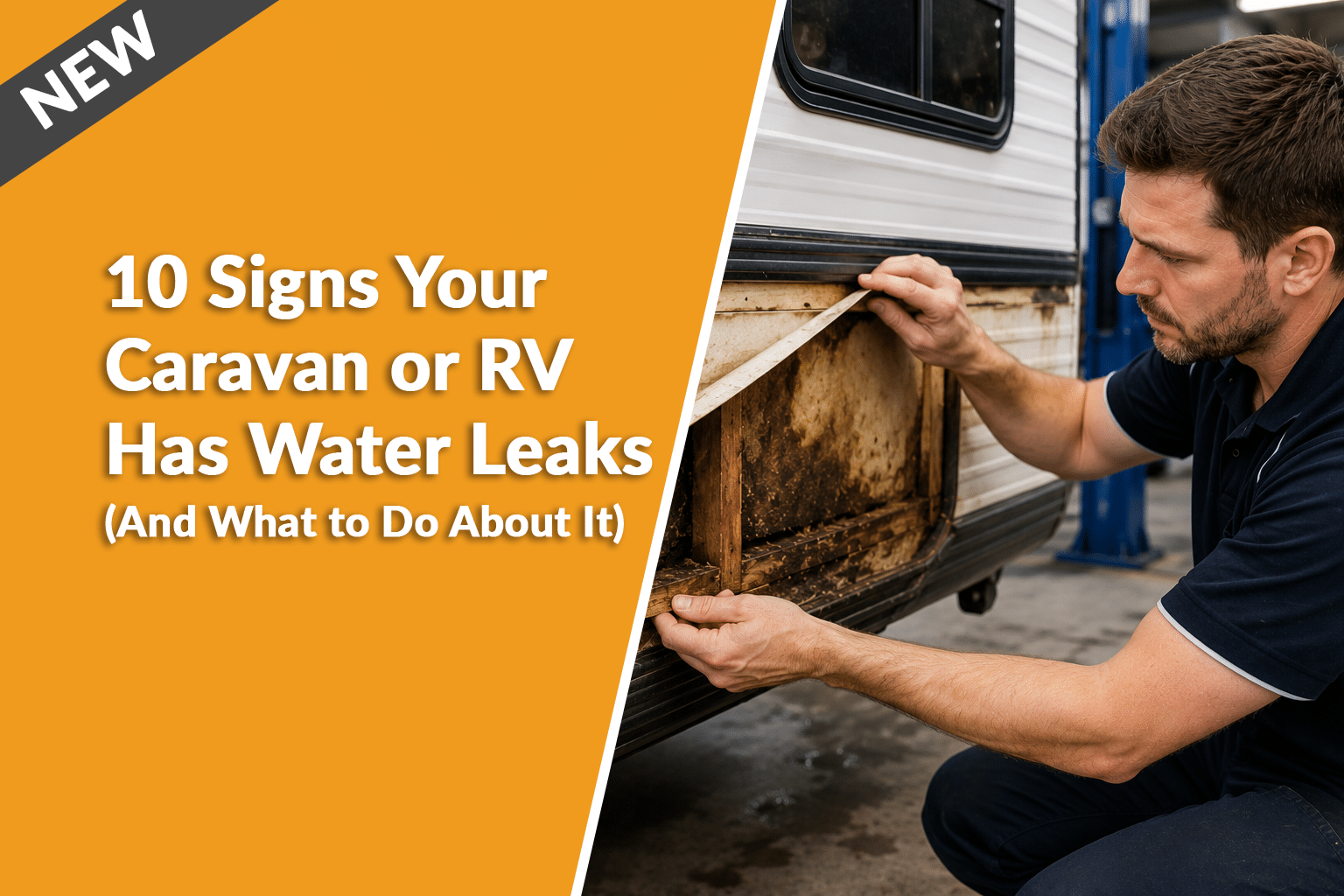
Water can enter through a roof fitting, window, hatch, door, panel join, awning mount, plumbing connection or impact-damaged area. Once inside, it may move through insulation, framing and adjoining panels before becoming visible.
By the time you notice staining, swelling or a musty smell, moisture may have affected timber, wall linings, flooring, cabinetry, wiring or fasteners.
Brown marks, water tracks or colour changes around ceilings, walls, windows, cupboards and joins.
Flooring, walls or ceiling areas that feel soft may indicate deterioration behind the visible lining.
Moisture can cause lining, laminates, cabinetry and composite panels to swell, lift or separate.
Persistent damp odours may be a sign of trapped moisture or affected materials in a concealed space.
Moisture around fasteners, wiring, lights or appliances can create corrosion and operational problems.
Swollen timber, weakened framing or movement may cause doors, windows and cupboards to stop aligning correctly.
Find the source before repairing the damage
Repairing the internal stain without addressing the point of water entry can allow the problem to return. The assessment method depends on the symptoms, construction and suspected source.
This may include visual inspection, moisture readings, pressure testing where suitable, checking seals and fittings, and targeted access behind linings where authorised.
A clear insurance-repair process
Explain when the water damage was discovered, what event may have caused it and obtain a claim number.
Provide the claim number, vehicle details, photographs and information about where and when water was noticed.
We investigate relevant entry points and affected areas and document the proposed repair scope.
After insurer authorisation, we complete the approved repairs and relevant sealing, operational and final checks.
Pressure-testing equipment can help identify entry points that may not be obvious during a basic visual inspection.
Caravan technicians, fibreglass specialists, auto electricians, mechanical technicians and fabricators can coordinate complex repairs.
Our work can extend from leak rectification to damaged framing, panels, floors, cabinetry and finishing where approved.
Our team regularly works with major insurers on eligible water, storm, hail and accident-damage claims.
AllBrand is part of McArthur Industries, serving the Brisbane community since 1973.
Our Sandgate workshop accommodates a wide range of recreational vehicles, subject to size and construction.
Why surface drying is not enough
A fan or dehumidifier may reduce surface moisture, but it does not remove deteriorated material or repair the leak. Water trapped in insulation, timber or a composite panel can continue affecting the structure.
If authorised dismantling reveals related damage beyond the original scope, those findings are documented and your insurer may need to approve supplementary work before additional repairs proceed.
If there is no insurance claim and you simply need an active leak investigated, use our dedicated water-leak detection service.
Common questions about insurance coverage, hidden moisture, pressure testing, structural repairs and water-damaged electrical systems.
It depends on your policy and the cause. Sudden damage from an insured event may be treated differently from gradual seepage, deterioration, failed maintenance or a pre-existing leak. Your insurer decides coverage.
Warning signs include stains, damp smells, soft surfaces, swelling, delamination, corrosion and openings that no longer align. Testing or access behind the lining may be needed to determine the extent.
Often, yes. The repair method depends on construction and how much framing, insulation, lining, flooring or cabinetry has been affected.
Pressure testing is a valuable diagnostic method, but results depend on the vehicle, conditions and leak type. Other inspection or dismantling may also be required.
Ask your insurer first if a claim is involved. Permanent DIY work can obscure evidence or make assessment more difficult. Emergency protection should be safe, documented and consistent with insurer instructions.
Affected material and related damage are documented. The repair may require removal and replacement, but insurer approval may be needed before work beyond the original scope proceeds.
Yes. Moisture can affect wiring, connectors, lights, batteries and appliances. Stop using equipment that appears wet or unsafe and arrange professional assessment.
Timing depends on investigation, drying, insurer approval, parts and materials, hidden damage, repair complexity and workshop scheduling.
Yes. We assess eligible water damage in caravans and motorhomes, subject to vehicle size, construction and workshop capability.
Use our dedicated water-leak detection service for a private leak assessment when there is no insurance claim.
Water damage & leak-detection guides
Learn why water damage can remain hidden behind caravan walls for long periods before obvious symptoms appear.
Review common warning signs and what to do when you suspect an active caravan leak.
Understand the insurance-repair process from discovering the damage through to assessment and repair.
Send us the claim details, caravan information and clear photos of the affected areas. We can help determine the likely investigation and repair scope.