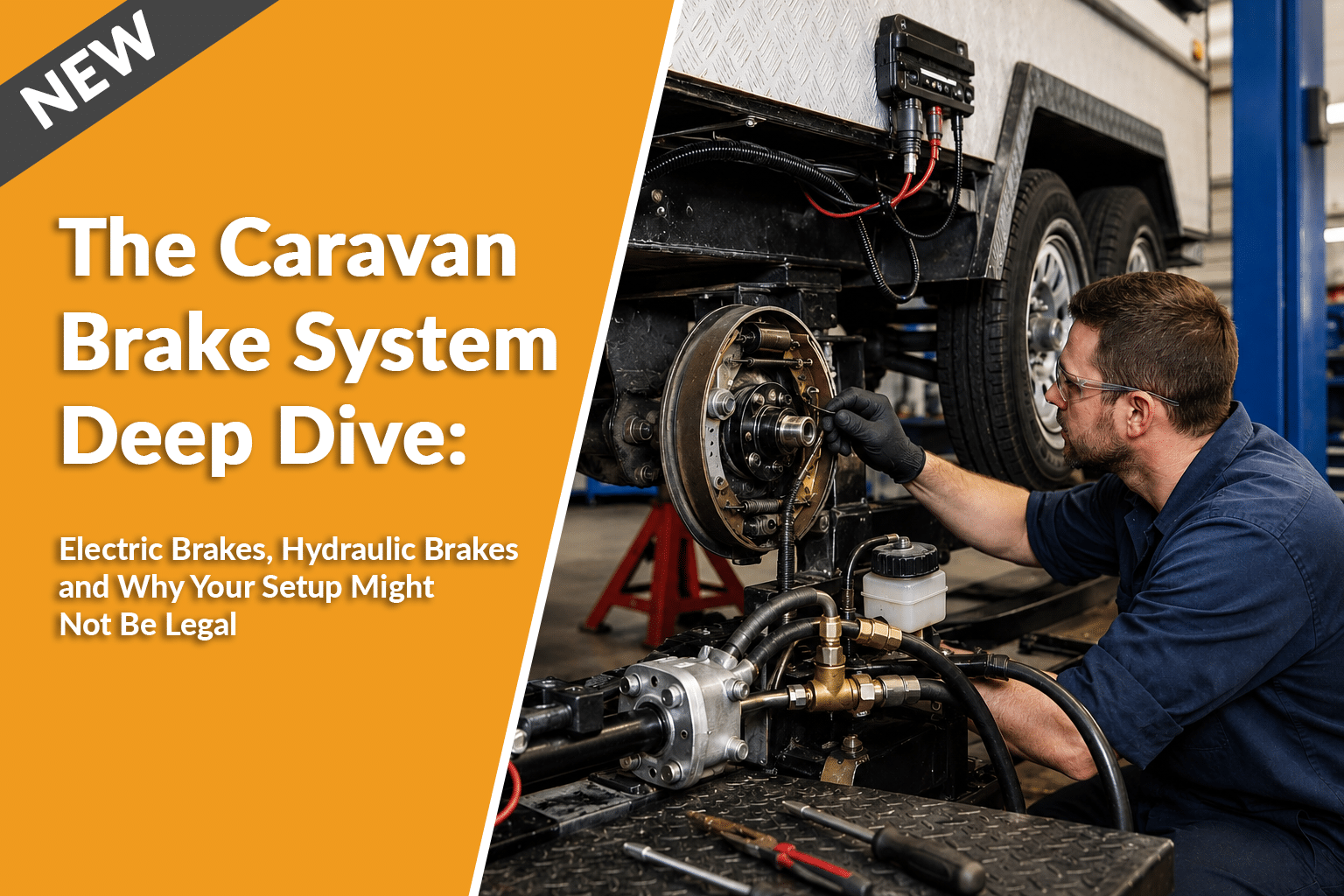
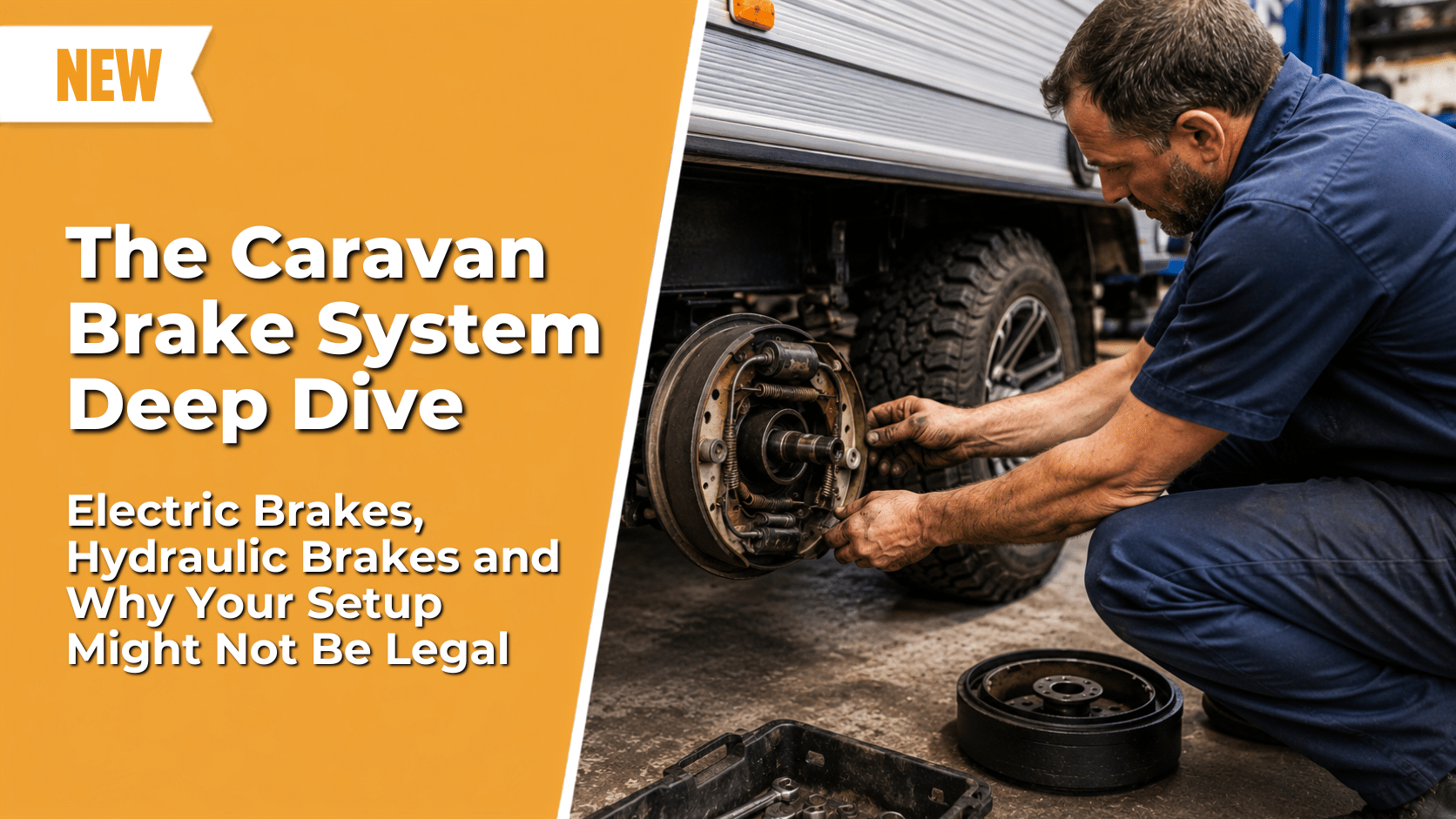
Queensland touring is hard on brake systems. Between long highway runs, stop-start traffic around Brisbane, heat coming off the bitumen and coastal humidity, your brakes are working more than you might realise. You’ve probably noticed caravans are getting heavier too – more batteries, more water, more gear – and that all needs to be pulled up safely.
Tourism Research Australia reports more than 901,000 registered caravans and campervans nationally, a big jump in recent years. That lines up with what we’re seeing in the workshop – more vans, more upgrades, and more brake systems that aren’t quite right.
What catches plenty of people out is this: a caravan can feel “okay” behind the car and still be under-braked, poorly adjusted or not actually compliant. We see this a lot, especially with vans that haven’t had their brake setup properly checked since handover.
Main Problem
Most caravan brake issues don’t show up as obvious failures – they creep in gradually.
A lot of owners tell us, “It tows fine.” And it often does… until you really need it to stop properly.
Maybe the van feels like it’s just slightly pushing the car under braking. Maybe the controller feels inconsistent. Maybe you’ve wound the gain up over time without really knowing why.
That’s where things start to drift away from both safety and compliance.
In Queensland, the responsibility sits with the driver to ensure the setup is safe and legal. National rules are clear:
- Over 750kg GTM → brakes required
- Up to 2,000kg GTM → over-run brakes allowed
- Over 2,000kg GTM → must have a compliant breakaway system
But here’s the part that’s often missed – it’s not just about having brakes fitted. They need to actually work properly, be correctly adjusted, and suit how the van is loaded today, not how it left the dealer.
Causes
In the workshop, brake issues are rarely just one thing. It’s usually a combination of small problems stacking up.
Brake controller calibration is a big one. Factory settings are almost never “set and forget.” Change your load, add lithium batteries, carry more water, or adjust your towing setup – and suddenly the calibration is off.
We see a lot of vans where the gain has just been slowly turned up over time to compensate for something else going on underneath.
Wear and tear is another common factor.
Electric brakes:
- Magnets wear down
- Drums glaze
- Shoes go out of adjustment
- Wiring connections corrode
Hydraulic systems:
- Brake fluid absorbs moisture (especially in QLD humidity)
- Internal corrosion builds up
- Performance becomes inconsistent
Breakaway systems are another one that catches people out. A lot of travellers assume that if the box is there, it’s fine. In reality, we often find batteries that won’t hold charge or systems that won’t actually apply the brakes properly.
And then there’s modifications. Suspension upgrades, wheel changes, battery systems – all great upgrades, but if the braking system isn’t reassessed afterwards, things can fall out of balance pretty quickly.
Symptoms
A lot of these signs are subtle, which is why they’re easy to ignore:
- The van feels like it’s pushing the tow vehicle
- Braking feels weak or delayed
- You need unusually high gain settings
- Brakes feel grabby at low speed
- Uneven braking or slight pulling
- Heat or burning smell from hubs
- Breakaway battery not holding charge
- Excessive handbrake travel
We hear this one a lot: “I just thought that’s how caravans feel.”
In many cases, it’s not – it’s just a brake system that’s slowly gone out of adjustment.
Why You Shouldn’t Ignore It
Brakes aren’t just about stopping distance – they affect the whole towing experience.
When a caravan isn’t braking properly, it puts more load on the tow vehicle, reduces stability and increases driver fatigue. You end up compensating without even realising it – braking earlier, leaving bigger gaps, staying more tense behind the wheel.
That works… until it doesn’t.
From a compliance point of view, it matters too. If something goes wrong and the braking system isn’t up to standard, it can quickly become more than just a mechanical issue.
From what we’re seeing in the workshop, most people don’t intentionally neglect brakes – they just don’t realise how far things have drifted.
How It’s Properly Diagnosed
This is where a proper caravan brake service in Brisbane makes a real difference.
A quick look-over isn’t enough. You need to understand how the whole system is working together.
A proper diagnostic process usually includes:
- Confirming the van’s weight class and brake requirements
- Inspecting electric brake components (magnets, shoes, drums, wiring)
- Checking hydraulic systems (fluid condition, lines, calipers, actuator)
- Testing breakaway battery, charger and switch
- Measuring wear and adjustment accurately
- Checking controller compatibility
- Calibrating the brake controller to the actual towing setup
This is where experience matters.
We see situations where the brakes themselves are fine – but the controller setup is wrong. Or the wiring is limiting performance. Or the system just hasn’t been matched properly after upgrades.
It’s rarely as simple as just “adjusting the brakes.”
Repair or Upgrade Options & Cost Factors
Once the real issue is identified, the right fix becomes much clearer.
For electric systems, that might involve:
- Brake adjustment
- Magnet replacement
- Shoe or drum replacement
- Wiring repairs
- Full backing plate replacement in some cases
For hydraulic systems:
- Fluid replacement and bleeding
- Line repairs
- Caliper or actuator servicing
- Full system refresh if needed
In some cases, an upgrade is the better long-term option, especially for heavier vans or off-grid setups.
That could include:
- Improving brake controller performance
- Upgrading worn systems
- Replacing outdated breakaway units
- Correcting previous modification work
A lot of travellers are finding that once the system is set up properly, towing feels completely different – more stable, more predictable, and far less stressful.
Preventative Advice
The best way to deal with brake issues is to stay ahead of them.
A few simple things go a long way:
- Include brake checks in regular servicing
- Recalibrate the controller when your load changes
- Test the breakaway system properly, not just visually
- Don’t ignore small changes in braking feel
- Service hydraulic brake fluid on time
And probably the biggest one:
Don’t assume it’s right just because it hasn’t failed.
We see too many vans where everything “kind of works” – but isn’t actually working the way it should.
Frequently Asked Questions
Q. How do I know if my caravan brakes are legal in Queensland?
It comes down to weight, brake type and performance. But beyond the rules, it’s about whether the system actually works as intended. That’s where a proper inspection makes things clear.
Q. What should I do if my caravan brakes are not working properly?
If something feels off, trust that instinct. Don’t just wind up the controller gain – get the system properly checked. It’s usually more than one issue.
Q. How often should caravan brakes be serviced?
It depends on how you travel, but if you’re doing regular Queensland touring, it’s worth checking them at least during routine servicing and before longer trips.
Q. Are factory brake controller settings good enough?
In most cases, no. They’re just a starting point. Real-world loading changes everything.
Q. What’s the difference between electric and hydraulic caravan brakes?
Both can work well when set up properly. The key is matching the system to the van and maintaining it correctly.
Q. How do I test a breakaway system properly?
It needs more than a quick check. Battery condition, wiring and actual braking function all need to be verified.
Q. Can worn components really affect braking that much?
Absolutely. Small wear issues add up – and over time, they can significantly reduce braking performance.
On A Final Note
Caravan brake systems are one of those areas where things can feel fine… right up until they’re not.
And that’s what we see most often – not total failures, but systems that have slowly drifted out of adjustment, out of balance or out of compliance.
The good news is, when everything is set up properly, the difference is noticeable straight away. Towing feels calmer, braking feels more controlled, and you’re not second-guessing every stop.
From a workshop perspective, it always comes back to the same thing – treating the braking system as a complete setup, not just a single component.
Because when it’s right, you’ll feel it. And when it’s not, it’s only a matter of time before it shows up.
📞 Call us: 07 38692969
📍 Visit us: 101 Connaught Street, Sandgate Qld 401
📧 Email: [email protected]