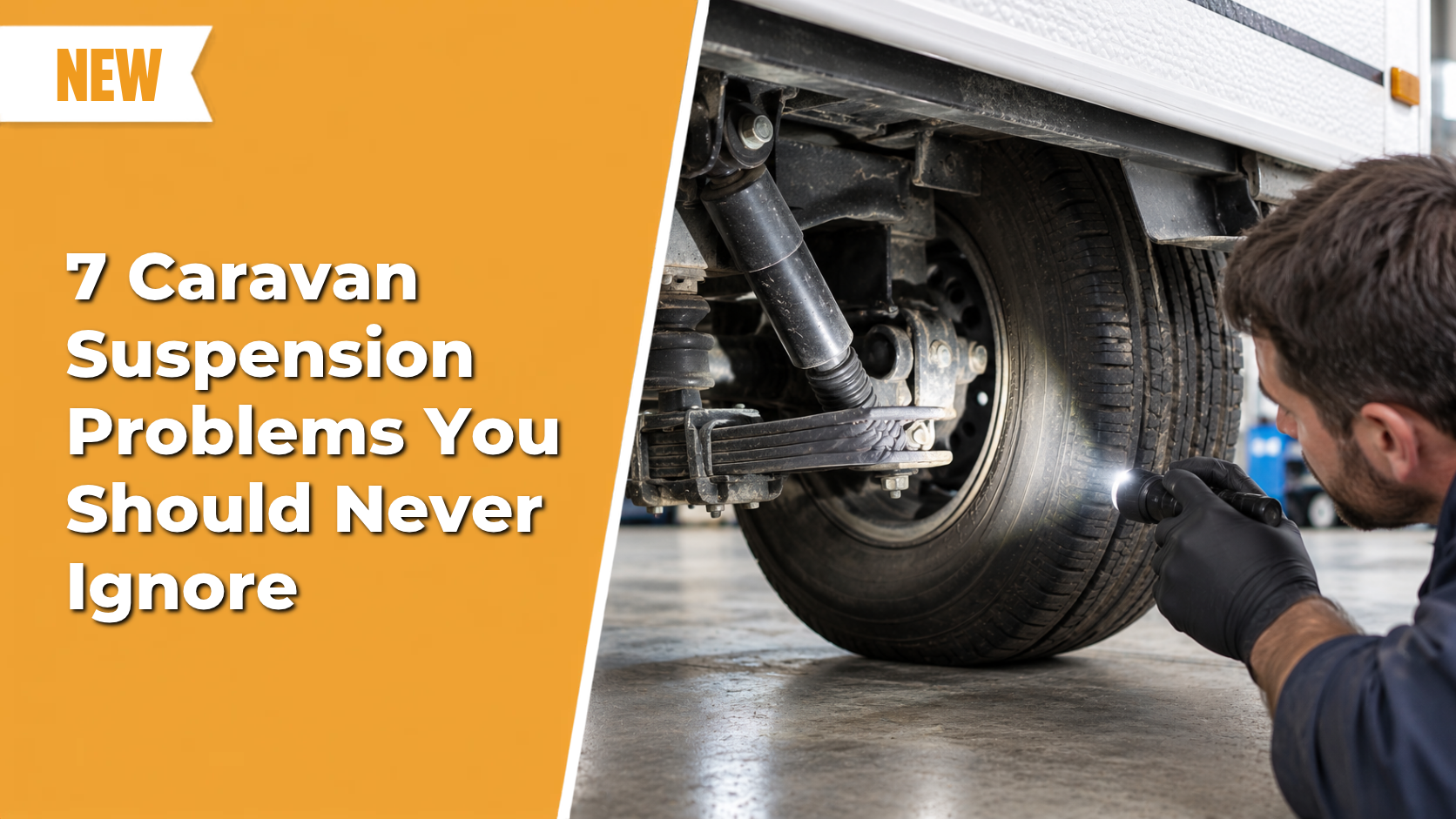
7 Caravan Suspension Problems You Should Never Ignore
Learn seven caravan suspension problems that can affect tyre wear, towing stability and chassis condition—and the signs that warrant professional inspection.

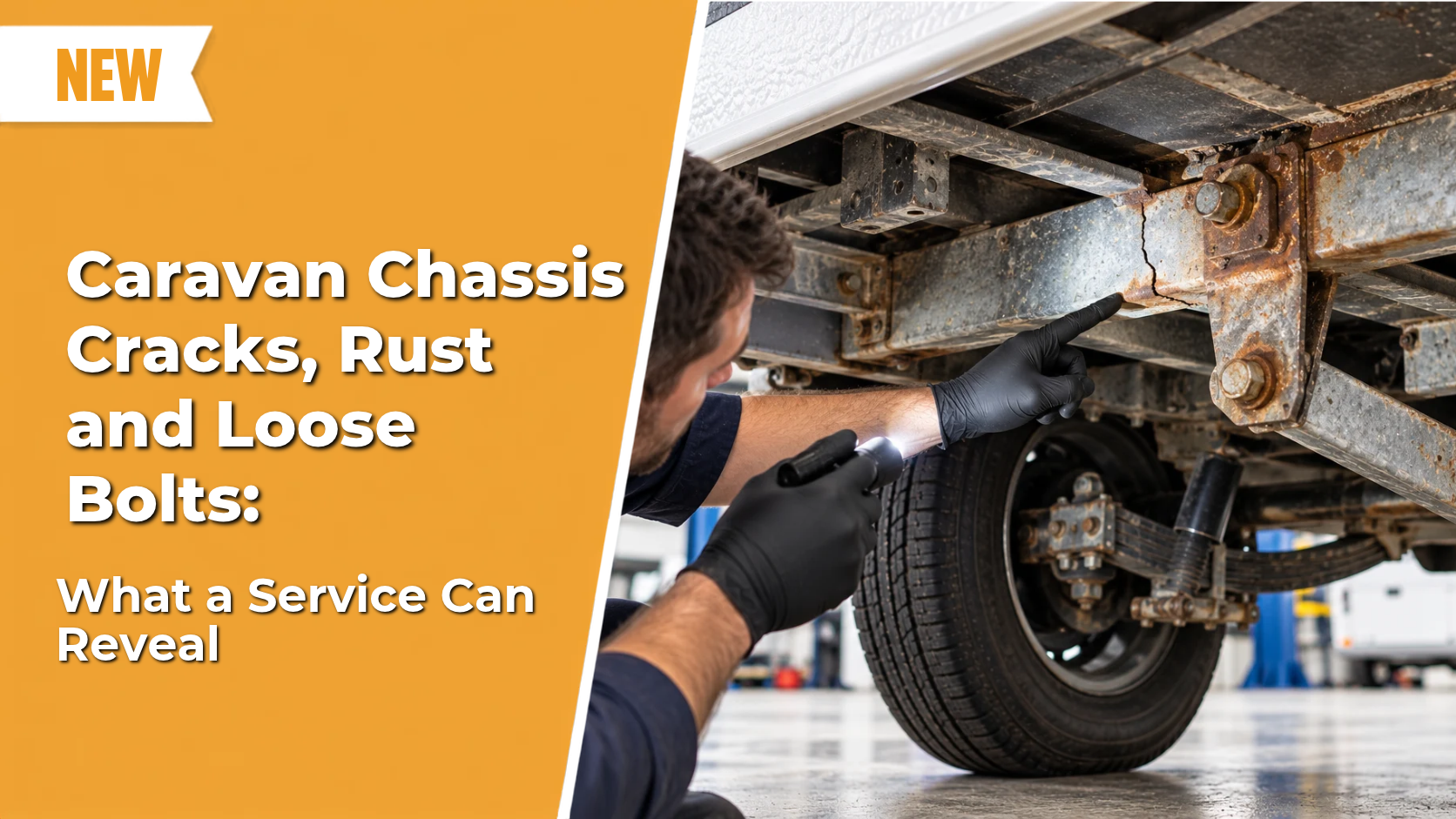
The chassis is the structural foundation connecting the caravan body, suspension, axle, coupling and many accessories. Much of it sits below eye level, where road grime can hide corrosion and small cracks. A routine service provides an opportunity to inspect accessible areas before movement becomes major structural damage.
Not every mark is dangerous, but cracks, loose mounting points and serious corrosion require qualified assessment. Painting over the evidence can make diagnosis harder.
The drawbar transfers towing and braking loads between the vehicle and caravan. Inspect around the coupling mounts, chain attachment points, jockey-wheel clamp, toolbox mounts and transitions where the A-frame meets the main chassis.
Suspension loads concentrate around hangers, brackets, control-arm mounts and crossmembers. Movement may show as cracked paint, rust staining, polished metal, loose fasteners or deformation.
Battery boxes, water tanks, spare wheels, bike racks and toolboxes add static and dynamic loads. Poor mounting, excessive weight or drilling and welding without engineering consideration can create stress concentrations.
A visible weld is not automatically defective, but cracking beside a weld, porosity, undercut, distortion or repeated repair may indicate that loads are not being managed correctly. Structural repairs should suit the chassis material and design.
Fine cracks often begin at corners, holes, weld ends and areas that repeatedly flex. Dirt or rust may make them look like scratches. A technician will consider the location, direction, surrounding deformation and possible cause. Grinding or welding a crack without understanding why it formed can allow it to return.
Light surface corrosion is different from deep pitting, scaling or swelling between joined sections. Coastal storage, wet roads, trapped mud and incompatible metals can accelerate corrosion. Clean surfaces allow better inspection, but avoid aggressive treatment that removes evidence before the area is assessed.
Bolted joints can loosen through vibration, loss of clamping force, incorrect hardware or movement in the connected parts. Rust powder, shiny witness marks and elongated holes suggest movement. Re-tightening may not be enough if the bolt, bracket or hole is damaged.
During a suitable caravan service, technicians can inspect accessible chassis rails, crossmembers, suspension mounts, fasteners, the A-frame and coupling area. They may identify corrosion, cracked coatings, loose hardware, damaged brackets, impact marks or evidence of overloading. Covers, tanks and bodywork can conceal areas, so the scope and access limitations should be understood.
The next step depends on severity and chassis design. It may involve cleaning and corrosion treatment, replacing fasteners, further non-destructive inspection, consulting the manufacturer or an engineer, or completing a properly specified structural repair. Stop towing if a crack, severe corrosion or distorted mount could affect structural integrity.
Not sure what condition your caravan is in? Book a professional caravan service with AllBrand Caravan Services in Brisbane before your next trip.
Many cracks can be repaired, but the method must suit the material, location, loading and cause. Structural work may require manufacturer guidance or engineering input. A simple weld over the visible line may not correct the underlying stress.
Minor surface corrosion can occur, particularly where coatings are damaged, but it should not be ignored. Clean and assess it so pitting, scaling or corrosion between sections is not mistaken for a cosmetic issue.
Possible causes include incorrect torque, unsuitable hardware, damaged threads, joint movement, elongated holes or vibration from another fault. Repeated tightening without diagnosis can conceal worsening damage.
Technicians inspect accessible areas within the agreed scope. Tanks, covers, flooring and bodywork may hide sections. If you suspect damage from an impact, corrosion or modification, request a targeted inspection.
Heavy accessories change total mass and weight distribution and can impose concentrated loads. Confirm the caravan remains within its ratings and that the mounting method and chassis are suitable before installation.
📞 Call us: 07 3869 2969
📍 Visit us: 101 Connaught Street, Sandgate Qld 4017
📧 Email: [email protected]