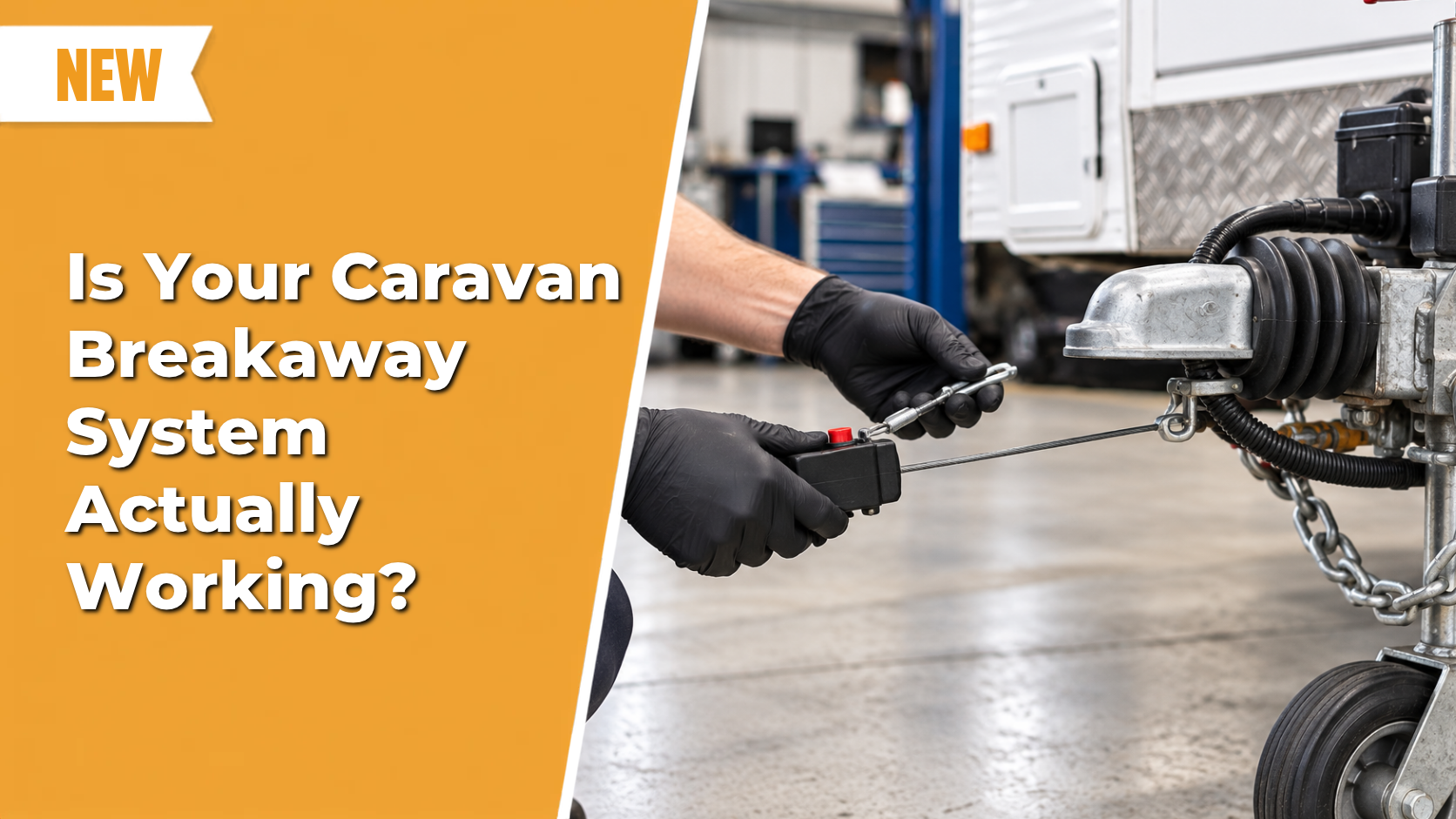
Is Your Caravan Breakaway System Actually Working?
A caravan breakaway system can look fine but still fail. Learn how batteries, switches, cables, wiring and brakes are checked before a towing emergency.

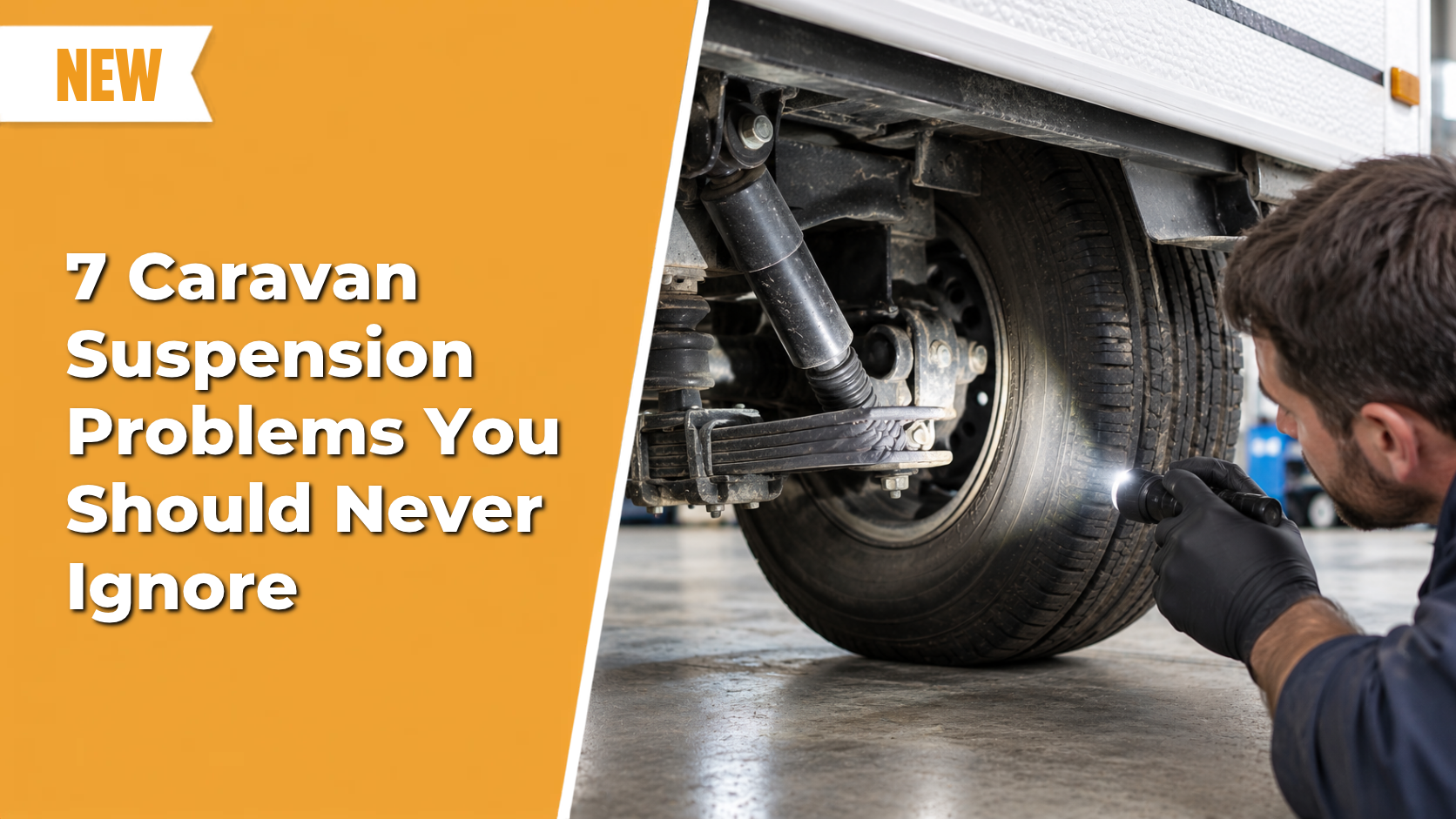
Your caravan’s suspension carries the body, controls axle movement and helps the tyres remain in consistent contact with the road. When it wears, the first sign may be a clunk, a leaning van or an unusual tyre pattern. Ignoring those signs can place additional strain on tyres, brakes, bearings, mounts and the chassis.
Suspension types differ, so the correct inspection and repair procedure must suit the system fitted. These seven problems are common reasons to arrange a professional assessment.
Bushes isolate movement between springs, shackles and mounts. As they wear or split, metal components can move further than intended. Look for cracking, missing material, shiny contact marks, squeaks and visible side movement. A worn bush is inexpensive compared with repairing an elongated mounting hole or damaged bracket.
Leaf-spring systems rely on pins and shackles moving through a controlled arc. Wear can enlarge holes and allow the axle position to shift. Rust-coloured dust, oval holes and uneven shackle angles are warning signs. Replacing one loose item without assessing the matching components may leave the underlying movement unresolved.
U-bolts clamp an axle to the spring assembly. If clamping force is lost, the axle can move relative to the spring. This may affect tracking, damage locating hardware and produce uneven tyre wear. U-bolts must be assessed and tightened or replaced using the correct specifications; simply applying more force is not a safe diagnosis.
A damaged spring may make the caravan sit lower on one side, bring the tyre closer to the body or change how weight is shared. Cracks can begin around stress points and may be difficult to see when loaded. Springs should be matched appropriately, and the reason for failure—age, impact, overloading or another fault—should be investigated.
Where shock absorbers are fitted, leakage, damaged bushes, bent shafts or loss of damping can allow excessive bouncing. This can reduce stability and contribute to tyre cupping and additional stress on the caravan’s contents. A stained shock is not automatically failed, but active leakage and poor control deserve attention.
The strongest suspension component cannot work safely if its mounting point is moving. Cracks around brackets, loose bolts, damaged welds or deformation need prompt professional assessment. Repairs should consider the chassis design and manufacturer requirements rather than adding an unengineered patch.
Worn parts, impact damage, axle movement and geometry problems can make the caravan track poorly or scrub its tyres. Uneven wear on one edge, a van that does not follow squarely or repeated tyre replacement may indicate more than a pressure issue. Alignment measurements are often required after worn components are corrected.
A proper inspection looks at the system as a whole: springs or suspension arms, bushes, pins, shackles, dampers, U-bolts, brackets, fasteners, axle location, tyre wear and adjacent chassis areas. The caravan’s loaded weight and intended use matter because repeated overloading or unsuitable component selection can make replacement parts fail again.
AllBrand services several suspension configurations. Learn more about caravan suspension fitment, repairs and servicing, or include the running gear in your next caravan service.
Not automatically. Upgraded springs or components do not by themselves change the caravan’s legal ratings. Any capacity change involves engineering, component and regulatory considerations. Choose an upgrade for the correct reasons—control, durability or suitability—and obtain qualified advice about ratings.
Not sure what condition your caravan is in? Book a professional caravan service with AllBrand Caravan Services in Brisbane before your next trip.
No. Pressure, loading, wheel alignment, axle condition, wheels and bearings can also contribute. Suspension wear is one important possibility, so the complete running gear should be assessed before replacing tyres.
A broken spring can alter axle position and tyre clearance and may damage other components. Stop in a safe place and obtain professional recovery or repair advice rather than assuming the caravan can be towed normally.
Squeaks may come from dry or worn bushes, spring contact, loose components or other moving points. Some systems require specific lubrication while others do not. Identify the source and follow the manufacturer’s maintenance instructions.
Follow the suspension and caravan manufacturers’ schedules. Include it in routine servicing and inspect sooner after severe impacts, corrugated-road travel, overloading, abnormal tyre wear or any change in handling or ride height.
Not every repair requires identical replacement on both sides, but matching components often share age and workload. A technician should inspect the complete axle and suspension assembly and recommend repairs that preserve balanced operation.
📞 Call us: 07 3869 2969
📍 Visit us: 101 Connaught Street, Sandgate Qld 4017
📧 Email: [email protected]