If you’ve spent any time with your caravan on the road lately around Queensland, you’ve probably noticed the shift. People aren’t moving as fast or as far as they used to.
Between rising fuel costs, busier caravan parks and the realities of long-distance towing in heat and humidity, more travellers are starting to rethink how they move. Instead of big loops and constant driving, we’re seeing a clear trend — shorter travel legs, longer stays, and smarter off-grid setups.
We hear it every day in our Sandgate workshop. Travellers aren’t stopping touring — they’re just doing it differently. And in many cases, they’re actually enjoying it more.
The Main Problem
For years, the classic grey nomad loop meant covering serious kilometres.
Drive a few hundred kays, stay a night or two, then move on.
But in today’s conditions, that approach comes with a cost — literally.
Fuel prices, wear on your tow vehicle, and the strain on your off-grid caravan power system all add up quickly. And when your setup isn’t designed to support longer stays, you end up relying on powered sites or running generators more often than you’d like.
That’s where things start getting expensive.
What’s Changed on the Road?
1. Fuel is obviously a bigger factor than it used to be
Long-distance towing across Queensland — especially into regional and remote areas — isn’t cheap anymore. Even small inefficiencies in how you travel add up over time.
2. Caravan parks are busier (and pricier)
Popular areas around the coast and Brisbane Northside are seeing higher demand, especially during peak seasons.
3. People are staying put longer
Instead of rushing through locations, many travellers are slowing down — staying in one place for several days, or even weeks.
4. Off-grid setups are becoming essential
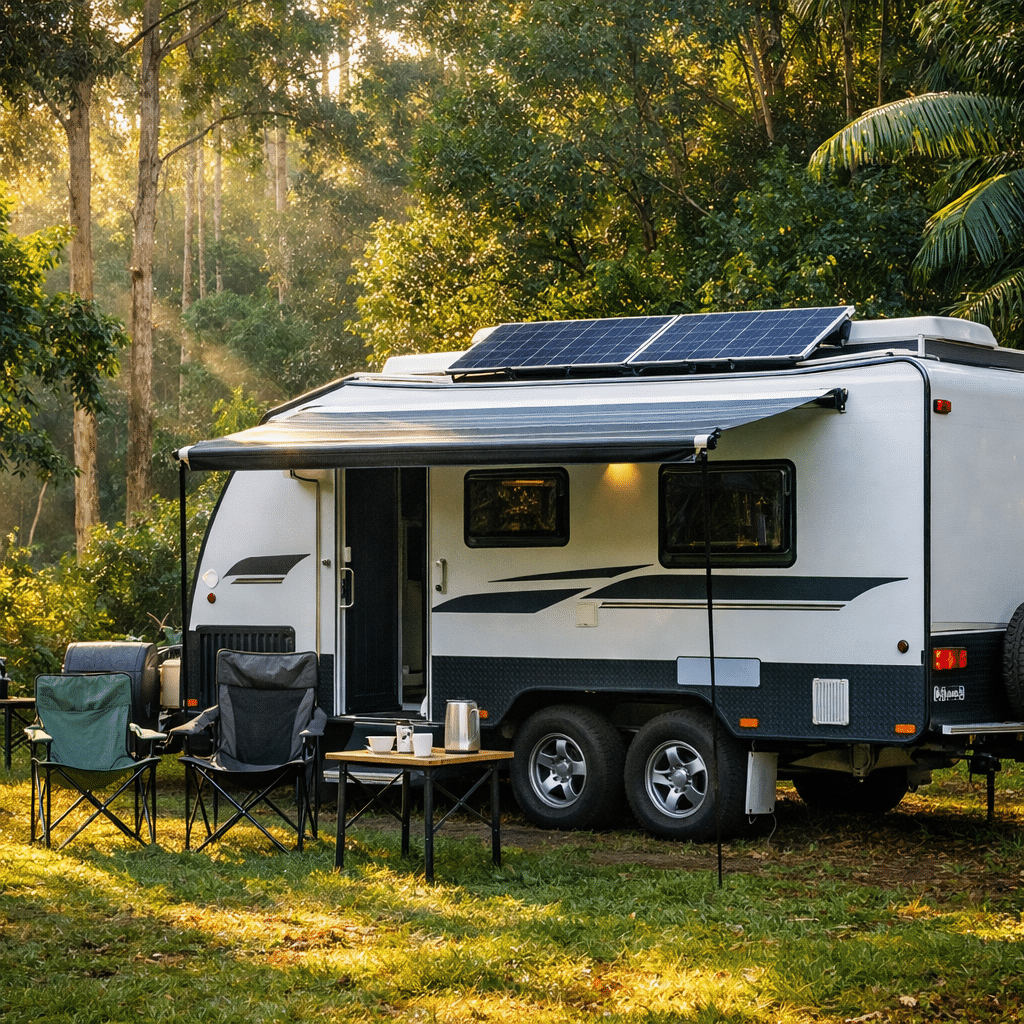
If you want flexibility, your off-grid caravan setup in Australia needs to support longer stays without constant power hookups.
Why the Old Travel Style Is Costing You More
The “move every day” approach creates a few hidden costs:
Higher fuel use from constant towing
More wear on tyres, suspension and braking systems
Increased reliance on powered caravan parks
Greater generator use if your system can’t keep up
Less time actually enjoying where you are
We’re seeing more people come through the workshop saying the same thing:
“We’re travelling more, but enjoying it less.”
That’s usually a sign it’s time to rethink the approach.
The Smarter Way: Shorter Loops, Longer Stays
This shift isn’t about cutting back — it’s about travelling better.
1. Shorter driving days
Reducing daily kilometres means lower fuel use and less strain on both vehicle and van. It also gives your caravan battery setup more time to recover through solar instead of relying on driving.
2. Longer stays in each location
Staying put allows your caravan solar setup to do its job properly. Instead of constantly playing catch-up, your batteries stabilise and your system works more efficiently.
3. Planning in loops, not long hauls
Shorter regional loops — especially around Queensland — are becoming far more practical than big cross-country pushes.
Park-Up Strategies That Actually Save Money
Showgrounds and low-cost camps
Many showgrounds offer affordable stays with basic facilities. They’re often quieter, more relaxed, and far easier on the budget.
Free camps and off-grid stays
With the right setup, free camping becomes a real option — not just a backup plan.
This is where a well-designed off-grid caravan power system really pays off.
Mixing powered and unpowered stays
Instead of relying on powered sites every night, many travellers are mixing it up — a few days off-grid, then a recharge stop when needed.
Where Your Setup Matters Most
If you’re staying longer in one place, your power system becomes the key to comfort.
Solar capacity
A properly sized caravan solar setup is what allows you to stay off-grid without stress.
Battery storage
If your caravan battery isn’t lasting overnight, longer stays quickly become frustrating.
Fridge efficiency
In Queensland heat, fridges are one of the biggest loads. Managing 12V fridge power consumption is critical.
Charging strategy
Your DC-DC charger setup still matters, but less driving means solar becomes your primary recovery source
How It’s Properly Set Up
A good off-grid system for this style of travel needs to be balanced.
We look at:
Solar input vs daily usage
Battery capacity and performance
Charging efficiency
Appliance load
Real-world travel habits
Because someone doing short coastal loops around Brisbane will have different needs to someone heading inland for extended stays.
Upgrade Options & Cost Considerations
Solar upgrades
Often the first step. More solar means less generator use and more independence.
Lithium battery upgrades
A lithium battery caravan setup handles longer stays far better, especially with regular cycling.
DC-DC charger improvements
Important for travel days, even if you’re moving less frequently.
System optimisation
Sometimes it’s not about adding more — it’s about making the existing system work properly.
Simple Ways to Travel Cheaper (Without Missing Out)
Stay longer in each spot
Choose camps that suit your setup, not just convenience
Reduce generator use where possible
Let your solar do the work
Plan routes with shorter distances between stops
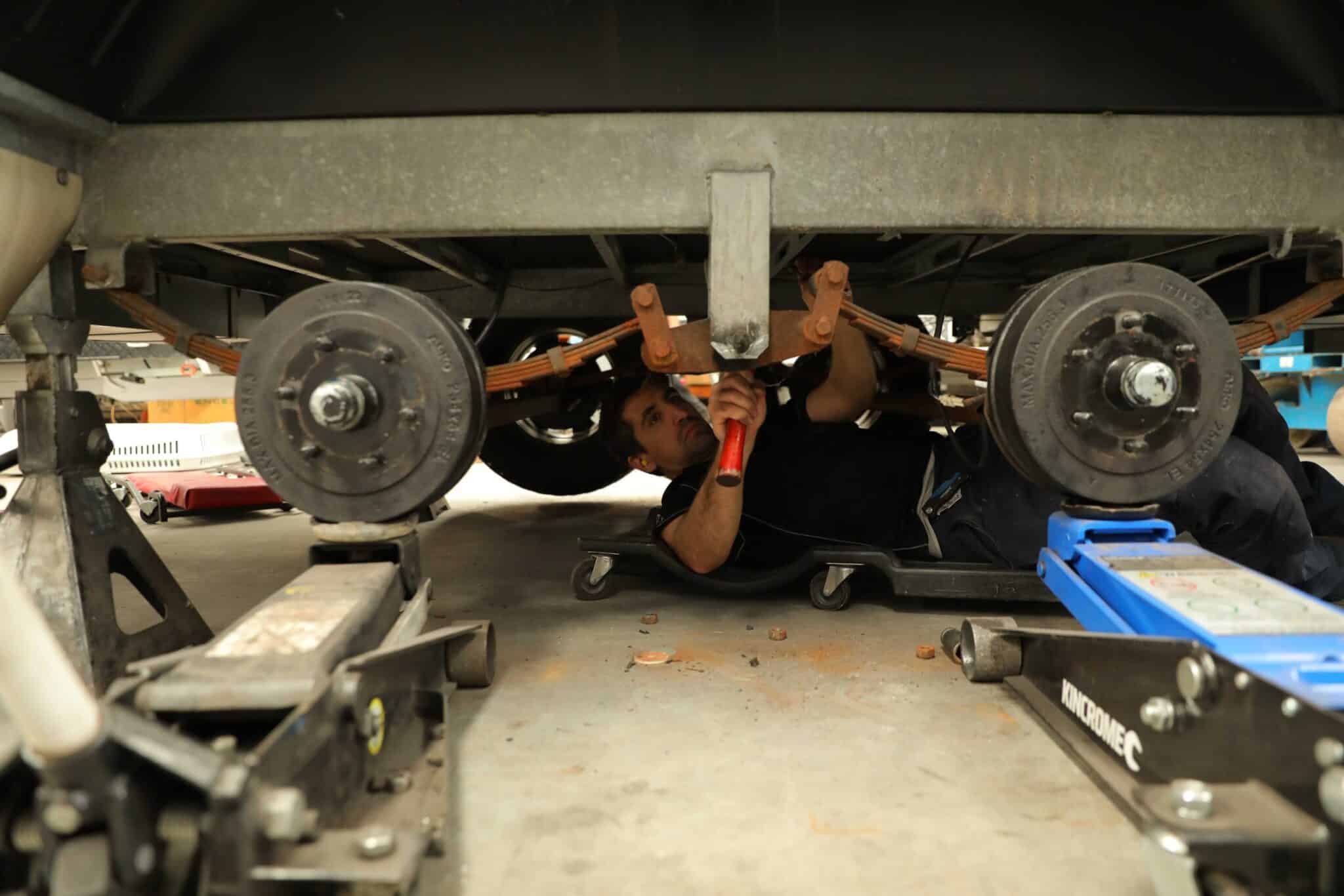
Get your system checked before heading off
In Queensland conditions, this approach not only saves money — it makes the trip far more enjoyable.
FAQs
How long can you stay off-grid in a caravan?
That depends on your setup. A well-designed off-grid caravan setup with adequate solar and battery capacity can comfortably support several days or longer without needing external power.
Are free camps worth it?
They can be, especially if your system supports off-grid living. Many travellers find them quieter and more relaxed than busy caravan parks.
Do longer stays actually save money?
Yes. You reduce fuel costs, lower campsite fees, and minimise generator use — all of which add up over time.
What’s the biggest limitation when staying off-grid?
Power is usually the main factor. If your caravan solar and battery setup isn’t adequate, it limits how long you can comfortably stay.
Do I still need a generator?
Most travellers keep one as backup. But with a good system, you’ll use it far less often.
What’s the best setup for grey nomad travel now?
A balanced system that supports flexibility — enough solar, reliable battery storage, and efficient appliances — matched to how you actually travel.
Final Thoughts
What we’re seeing isn’t a slowdown — it’s a shift.
Grey nomads aren’t giving up travel. They’re just doing it smarter.
Shorter loops, longer stays, and better off-grid caravan setups are making it possible to travel comfortably without the constant pressure of fuel costs and power management.
And in many cases, it’s bringing the enjoyment back into the journey.(
Don’t let small cracks turn into big problems Hairline cracks in your caravan’s walls or panels might seem minor at first—but left unchecked, they can grow into costly issues. These…
Better comfort, all year round Whether you’re chasing summer sun or braving chilly nights on the road, good insulation is the key to comfortable travel in your caravan or motorhome.…