
Have you experienced your caravan swaying from side to side as you’re drive along the freeway? Do you want to know why? Keep reading to find out. This guide will talk about why a caravan sways. How you can use sway control hitch and how to prevent a disaster that has happened to other caravanners.
Why does a caravan sway?
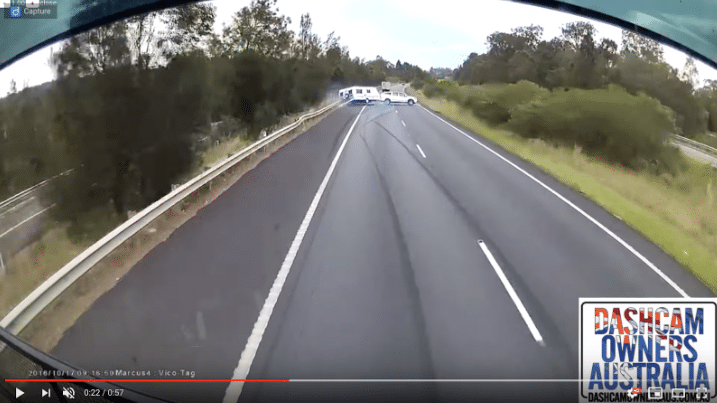
When a caravan sways, it is a stressful situation. Swaying over the road with your full rig is dangerous and likely to lead to an accident or damage to your rig.
There are many different reasons which may cause sway. Often it is a combination of:
- Incorrect weight distribution
- Uneven or wrong tyre pressure
- Suspension Problems
- Towing speed – such as driving too fast downhill
- Side wind
- A slipstream created by larger vehicles
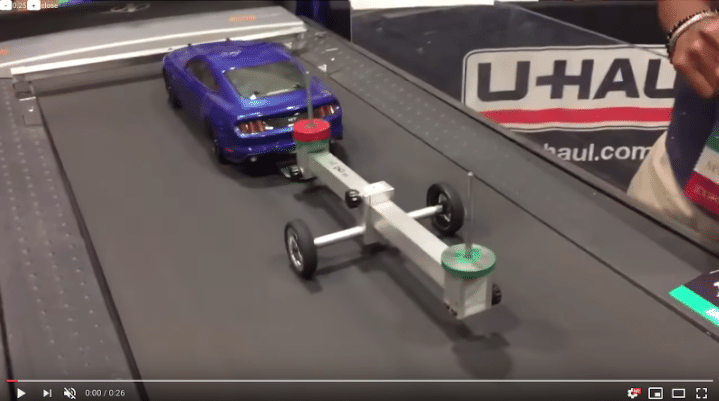
These are all possible causes which are making your caravan sway.
Incorrect Weight Distribution is the number one reason why a caravan sways.
For more information on trailer weight distribution, check out a video on the effect weight distribution can have on caravan swaying.
How to reduce caravan sway?
Are you are experiencing caravan sway? Luckily there are some things you can do to stop it.
To reduce caravan sway when it suddenly occurs, be sure to do the following:
- Driving Downhill Manually use the electric trailer brakes. Doing so will let the caravan slow down your towing vehicle. It will also help to reduce any sway almost immediately.
- Driving Uphill Speed up a bit until you notice that the swaying has stopped. Once there is no longer swaying, slow down. Now continue to drive at a slower speed.
- Driving on Flat Roads Slow down gradually. Do so without using the brakes of the tow vehicle.
If your trailer or caravan is sensitive to swaying, it can cause a very dangerous situation. Not only for yourself and your family, but also for other vehicles sharing the roads with you.
But, you should be aware, that under certain road or weather conditions, it may not always be possible to avoid sway. An example of this is during extreme winds.
Tyre pressure and caravan sway
Maintaining the correct tyre pressure is critical. When towing a caravan, it is even more important.
If your tyre pressure is too high, it can lead to less stability and cause caravan swaying.
How do you know the right tyre pressure for your rig?
1. Check What Type of Tyres You Have on Your Caravan
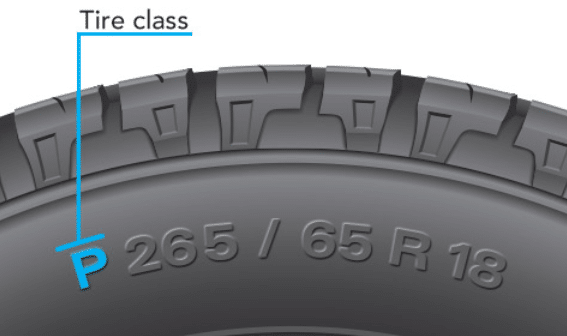
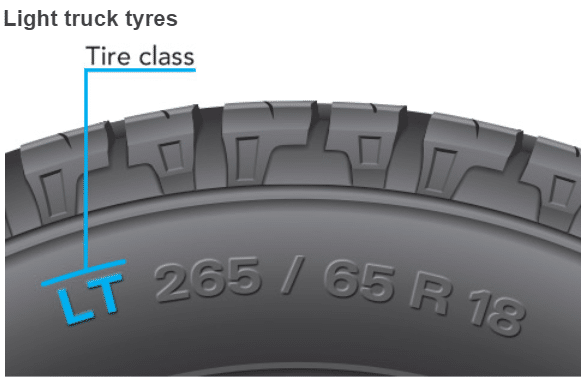
The majority of caravans have light truck tyres. But, there are some which are passenger rated instead. How do you know which you have? Check the sidewalls for a marking to see which type you have.
Light truck tyres will have a prefix or suffix of ’LT’ – e.g. 265/75R16LT
Passenger tyres will have a ‘P’ prefix – e.g. P205/75R14
Passenger Tyres vs Light Truck Tyres
What is the difference between passenger and light truck tyres?
Passenger tyres
- Designed for lighter trucks and SUVs
- Provides traction in wet and dry conditions as well as adequate load carrying capacity
- Provides a quiet and smooth ride
- Are not designed for heavier loads. They should not be used with large SUVs, Vans, or Heavy Duty light trucks
- Should not be used for towing/hauling heavy loads
- Can cause overloading issues if used incorrectly
- Designed for comfort
- Do not perform well under off-road conditions
- Not as puncture resistant compared to Light Truck tyres
- Designed for 3/4 ton trucks, larger trucks, vans and SUVs
- Can support heavier loads, hauling, and towing
- Perfect for tough road conditions and heavy loads
- Rugged and durable
- Does not absorb vibrations, bumps or road noise as well as passenger tyres
- Have thicker and reinforced sidewalls
- Designed for off-road driving and heavy-duty use
- Most mud-terrain and all-terrain tyres are Light truck
2. Check The Recommended Tyre Pressure
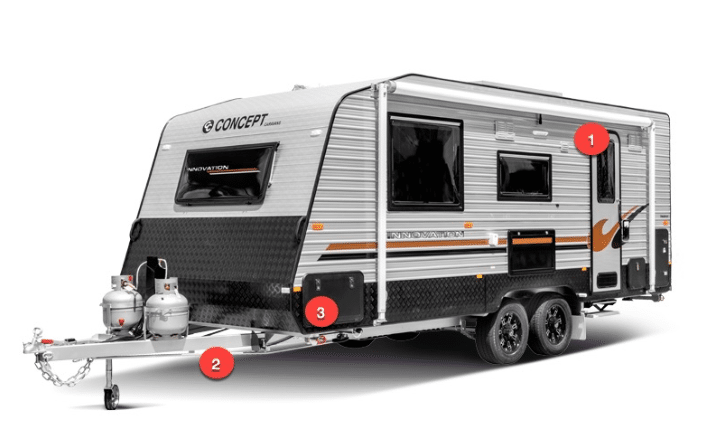
One thing that can greatly contribute to your caravan swaying is if your tyre pressure is uneven, or it is too high or too low. This is why it’s important to check your tyre pressure. Each caravan has a compliance plate which lists a recommended cold tyre pressure for the vehicle. This is fitted in a few possible locations. You will find it either on the front/tunnel boot, inside the entry door, or on the A-frame.
Look for your compliance plate around these areas
- Entry Door
- Trailer A-frame
- Front Tunnel Boot
3. Check Your Actual Tyre Pressure
Before you take your caravan out on a trip, check each tyre with a high-quality tyre pressure gauge. It’s important to make sure the tyres are cold, and they are measured at least two hours after towing the van.
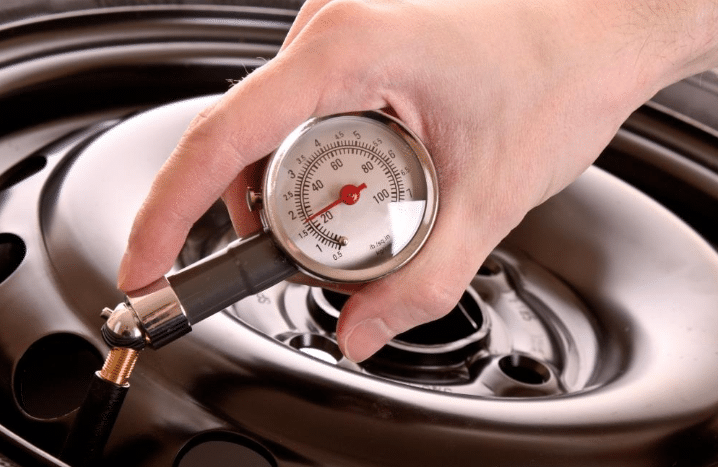
Depending on the result, either inflate or deflate your tyres. Make sure that they match the compliance plate recommendation.
4. Take Your Caravan For A Tow
Go for a drive of at least 30-60 minutes towing your caravan on the highway at a speed of 90 to 100 km/h. Next, re-check the tyre pressure. Before you go on a trip is the best time to do this, and will give the most realistic results with everything loaded.
Before you go, take a reading of the tyre pressure. After you’re on the road for a while, pull over somewhere safe, and check the tyre pressure with your gauge without waiting for the tyres to cool down.
- If you see a rise of 5-6 psi in tyre pressure, then the cold inflation pressure is perfect.
- If there is an increase above 6psi, the cold tyre pressure is set too low
- If there is less than 5-6 psi, then the cold tyre pressure is too high
Now you know what causes caravan swaying and how to reduce it.
But, these are only temporary solutions. It’s now time to move onto how to fix caravan swaying for good with a weight distribution hitch.
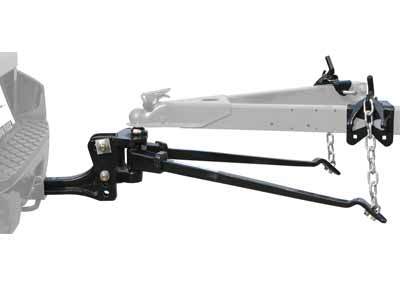
What is a Weight Distribution Hitch?
One of the most common (and confusing) questions most new caravan owners often ask is, ‘do I need a towing hitch’? There are many factors which will determine if you need a towing hitch.
But first, let’s clear up some confusion. What exactly is a weight distribution (or towing) hitch?
There are many different names you may have heard:
- Load levellers
- Stabilisers
- Equalisers
- Hitch
- Weight distribution hitch
- WDH
- Anti Sway Device
But which one do you need, and what is the difference? Despite the different terminology, people often misuse one for another.
Here is what you need to know:
Stabilisers are all used to prevent the caravan from tipping.
Weight Distribution Hitches, Load levellers, and Equalisers prevent the rear of a tow vehicle from sagging when the caravan is attached to the ball. Load levellers and equalisers are more basic. While a Weight Distribution hitch allows for an adjustable ball height. A weight distribution hitch can also be used with larger weights.
It is also common for WDH or hitch to be used as an abbreviation of weight distribution hitch.
Rather than help level a caravan and vehicle, an Anti Sway Device is designed to stop a trailer from swaying.
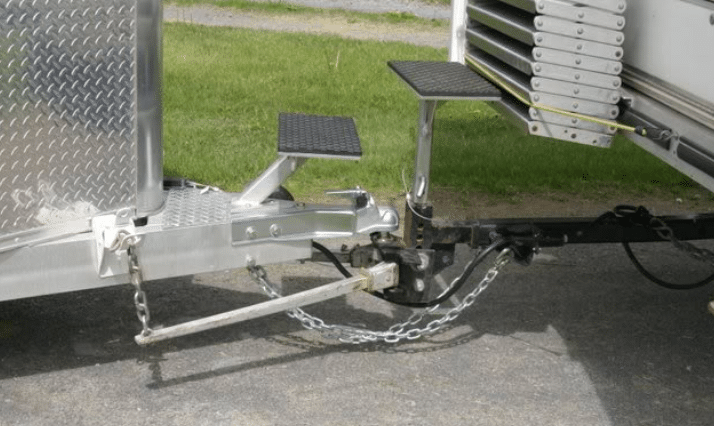
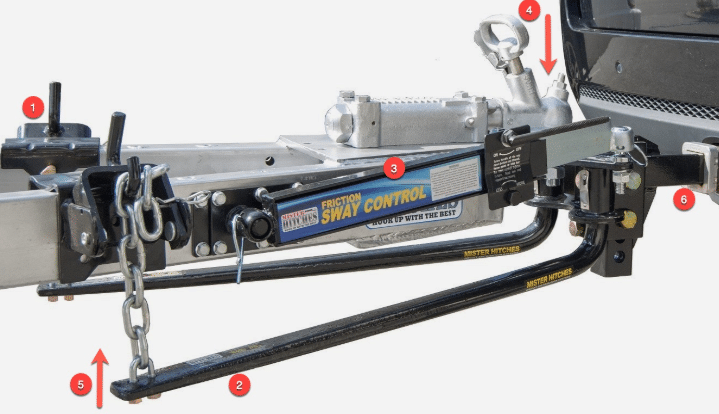
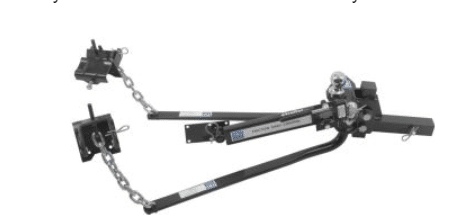
- Sway Control Brackets – Height adjustable to control the amount of weight distribution tension on the sprint arms
- Sprint Arms – Transfers trailer tongue weight evenly to the tow vehicle. These also work with the friction sway control to reduce trailer sway
- Friction Bar Sway Control – Creates opposing pressures to reduce trailer sway
- Downward Pressure from trailer tongue onto trailer hitch ball mount
- Upward Pressure distributes weight and reduces tow vehicle tail sag and sway
- Receiver Hitch
Generally, a Weight Distribution Hitch is used to prevent caravan swaying. But, if there is still some swaying, then it’s also recommended to add an Anti Sway Device to fix the problem.
When you are towing your caravan, does your vehicle experience rear sag or sway on rough roads or at high speeds? If so, then a weight distribution hitch will help correct this. But, if it doesn’t, then you probably don’t need a WDH.
A sway control device is also known as an anti-sway device or caravan anti-sway bars.
How Do Caravan Sway Bars Work
Sway bars for caravans work by helping to control or limit swaying from happening. A weight distribution system may help to evenly distribute the caravan load’s weight. But it won’t be able to prevent swaying which happens because of crosswinds.
Caravan Anti Sway bars mount to a ball next to the hitch ball as well as the tongue of the caravan. The bars go through the brake pads. They then provide resistance between the caravan and tow vehicle. When the vehicle moves, the sway bars move back and forth. The bars move along with the motion of the vehicle, and factor in wind or any other external forces. The moving bars stop the caravan from being able to exert any force on the tow vehicle
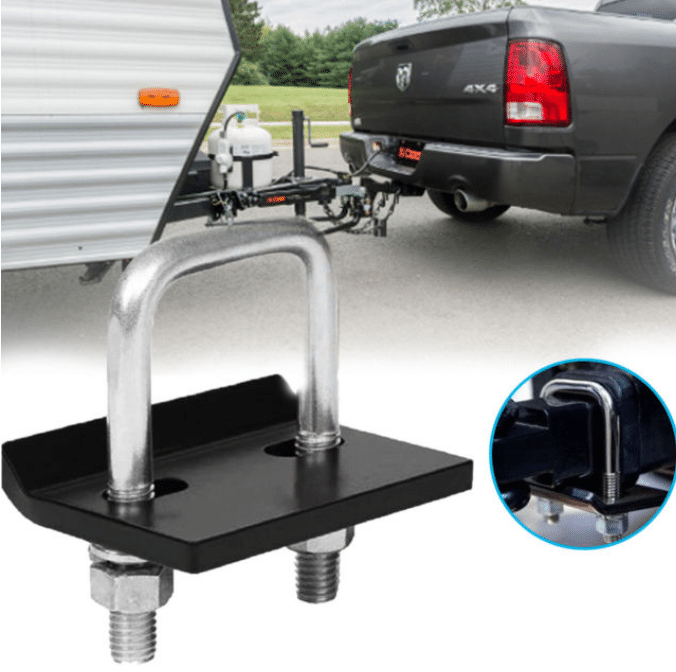
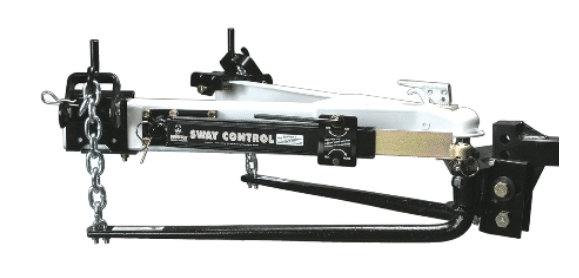
Anti-sway bars then prevent the trailer from applying any force to the tow vehicle. By installing a sway bar, it will reduce your caravan from swaying. It does so by maintaining the balance between your tow vehicle and trailer.
Caravan Sway Bar Types
There are two different types of caravan sway bars available. Each one offers different benefits. One reduces sway once it has started. While the other works to stop sway happening altogether.
Sway Control Hitch to Reduce Sway
A sway control hitch which aims to reduce sway uses friction to stop the caravan from shifting. It works by ‘stiffening’ or causing friction to the coupling which is between the trailer and the tow vehicle. The level of friction applied depends on the towing conditions, and also the trailer weight.
These sway bars prevent swaying from getting worse. But they only start to work after swaying has already started.
Friction sway bars, come in two types: dependent and independent.
- Dependent sway control systems are built into a weight distribution system. They don’t need to be purchased separately.
Independent Sway bars reduce sway. They attach to your weight distribution system and caravan frame.
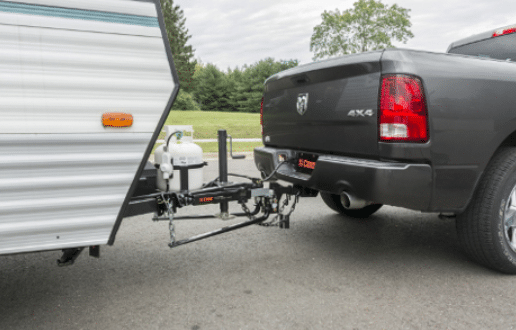
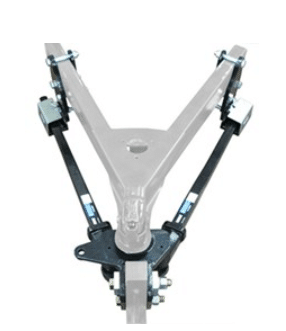
Dependent Sway Bars
Dependent caravan anti-sway bars work to stop sway as soon as it starts. They create resistance which literally forces your trailer to stay in a straight line using friction, and doesn’t even allow the trailer/caravan to sway.
Dependent sway bars rely on a downward force of spring bars. This applies friction to brackets on both sides of the trailer frame.
The only way for a trailer to sway is if the trailer can apply enough force to overpower the resistance of the sway bars. Doing so would make the brackets slide under the spring bars. In a regular towing situation, this is very unlikely to ever happen.
Dependent sway bars have no lift chains. This means they are easier to hook up than independent sway bars. It also prevents spring bars from moving freely.
Quick Tips:
- Dependent sway bars can be used for caravans with hydraulic or surge brakes.
- They do not need to be disconnected to reverse
- If you over tighten or under tighten the sway control device, it won’t cause problems (unlike independent sway bars)
Independent Sway Bars
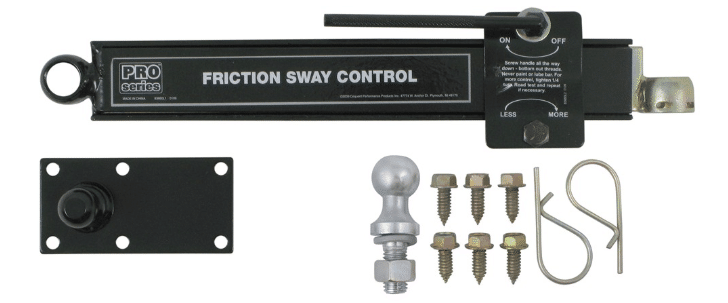
Independent sway bars bolt onto the trailer frame and then hook up to a small hitch ball. Then you need to mount the ball to the system head
The sway bar applies tension which helps keep the trailer in a straight line. It attaches to the caravan frame and the weight distribution system.
The friction pads come into effect anytime your caravan moves out of line. They touch each other and create a resistance. This then helps reduce any more side-to-side swaying from happening.
Quick Tips:
- Independent sway control bars should be removed before reversing. It makes reversing easier, and also prevents any damage from happening to the sway control system.
- When towing in conditions which are wet, icy, or loose gravel, you should turn the on/off sway-control handle counterclockwise. Make sure that you have removed all the tension. Otherwise, in these conditions, it may stop the caravan and tow vehicle from being able to turn.
Friction Sway Bars For Caravans
Friction anti-sway bars are made by two different manufacturers, EAZ Lift and Reese. Each one uses a different mounting. It’s advisable to pair the friction sway control with the manufacturer of the hitch which you have.
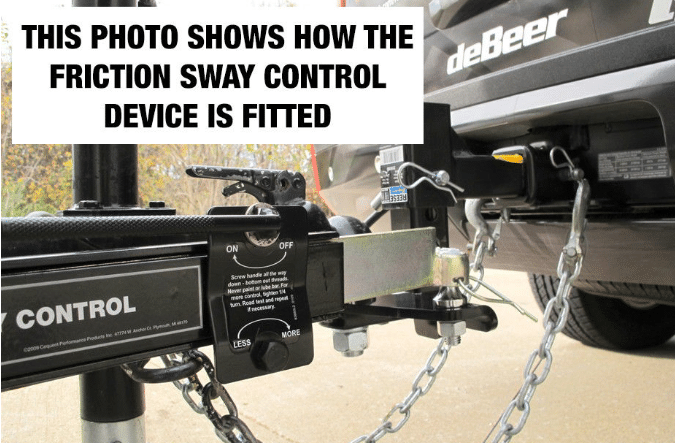
The device attaches to your hitch. It joins on the side of the Caravan’s A-Frame. It has a flat sleet bar which slides between the friction pads and works like brake pads. The pads are able to be loosened or tightened, to offer less or more friction, as required.
How does a friction sway control work? When caravan sway occurs, a steel bar slides between the friction pads. Then the friction slows down the sliding. This then stops swaying from happening.
What happens if you don’t install a friction sway control? Then the sway you are experiencing moving side-to-side may worsen over time if it isn’t corrected ASAP
Quick Tip: A friction sway control device is not able to be used with mechanical override brakes. Doing so will dampen the movement between the caravan and the tow hitch. This greatly reduces the effectiveness of the override brakes.
AL-KO AKS Stabiliser Coupling System
Most coupling systems are designed to provide a rotation around the hitch pin or tow ball which is unhindered. To do so they clamp over the tow ball with too much pressure. Doing so reduces how easy it is to rotate.
The AL-KO AKS system fixes that problem. It is claimed to reduce even minimal movements both horizontally and vertically. It features a maximum loaded trailer weight capacity of 2,500 kg, with a maximum tow ball weight of 250 kg.
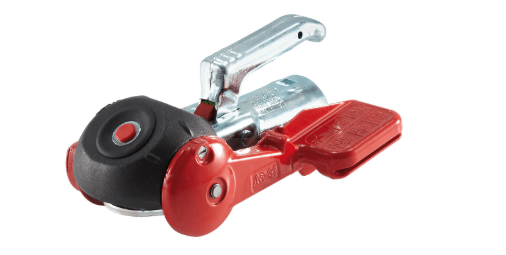
There is also an AKS hitch lock available. This will prevent theft from occurring.
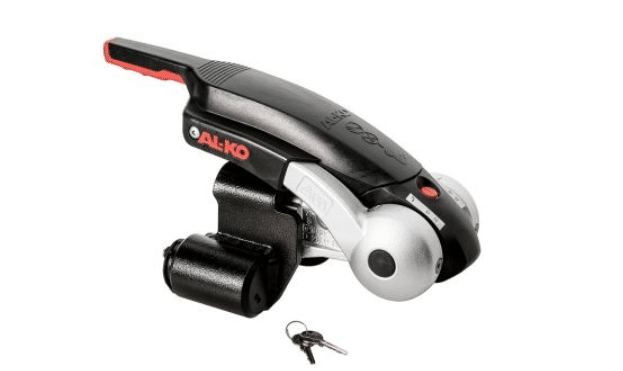
Quick Tip: AK-LO sway bars are not compatible with a hydraulic trailer or surge brakes.
Sway Control Hitch to Prevent Sway
Lots of weight distribution systems have inbuilt sway controls. These systems use many different ways to prevent sway occurring before it has a chance to begin. Such as applying tension or friction. This forces your caravan and tow vehicle to drive in a straight line continuously.
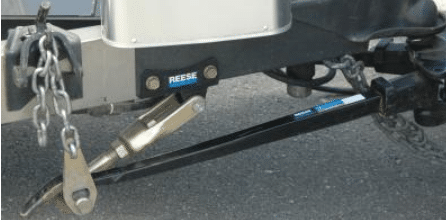
The Reese Dual Cam uses a straight line system and sliding devices known as cams. The spring bars are suspended by the cams. It is called a dual cam as both sides of the A-Frame has a cam.
Once you have installed the sway control system, you don’t need to make adjustments whenever you hook it up. For heavy ball weights, the Reese Dual Cam system is ideal.
They are also regarded as being the best caravan anti-sway bars currently available. They have been designed to make sure the caravan is behind your tow vehicle at all times.
By using this method, it stops swaying from ever occurring.
- The cams self-centre automatically and self-adjust for any situation
- Even when experiencing heavy crosswinds, the cams will lock in position. This will keep the caravan steady
- When you are driving around corners, the cams unlock and slide automatically. This lets you perform full-radius turns
- Anytime you suddenly swerve, the cams seek a straight-line towing angle. This helps it to stabilise the caravan.
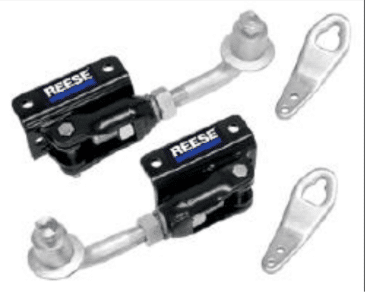
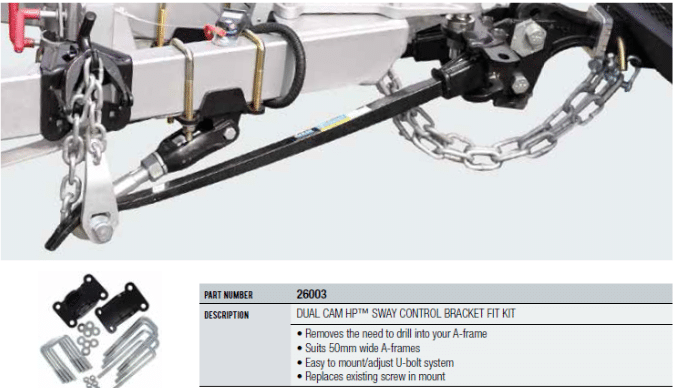
The Reese Dual Cam Sway Control doesn’t have to be disconnected when driving your tow vehicle in reverse.
The controlled placement of the spring bars keeps your system secure. It also allows enough movement to occur for free, easy interaction between your caravan and your tow vehicle.
Quick Tip: Hydraulic trailer or surge brakes are not compatible with the Reese Dual Cam.
Please Note: The dual cam sway control only works with Reese hitches which have a ripple at the end of the spring bars. The Reese Classic or Round Bars which feature the ripple have been sold since 2011.
How To Connect Caravan Sway Bars
Connecting caravan sway bars is a straightforward process. Most people can do it with relative ease.
For step by step instructions, be sure to watch the following instructional video, on how to set up a caravan/trailer to a tow vehicle.
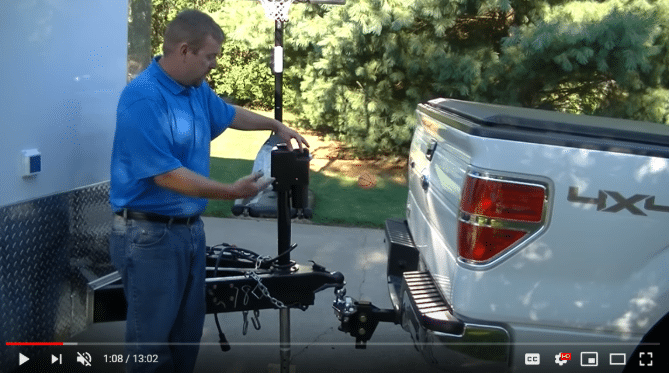
Pro Tip: If you hear a grinding sound, then loosen the sway bar.
How To Fit Caravan Sway Bars
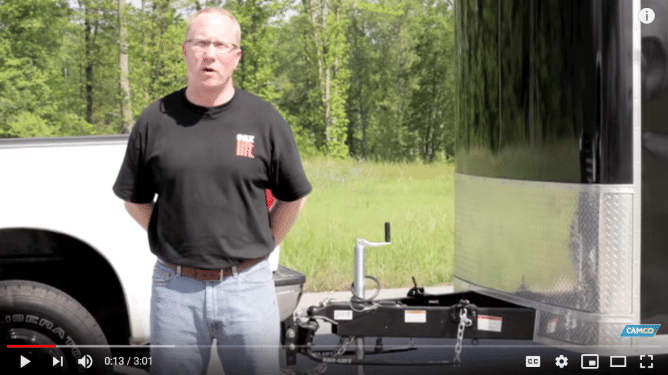
Fitting caravan sway bars is not as difficult as it may seem. The following video demonstrates how to fit caravan sway bars step-by-step. If you are handy with tools or know someone who is, you should find it easy.
Steps
- Position your vehicle and caravan in a straight line on a level surface.
- Mount sway control ball using nut and lock washer to hitch
- Torque to 100 foot-pounds
The hitch head has a mount for the ball. Please note it may be necessary to weld a sway control ball plate into position. To do so, refer to the instruction manual.
- Measure and mark a point to the caravan tongue 24 inches from the centre of the trailer hitch ball to the caravan frame. This will determine the location of the trailer tongue ball plate.
- Align the centre of the ball on the trailer tongue ball plate with the 24-inch mark on the trailer tongue. Next centre punch the six hole locations.
Before Drilling: Make sure the drill will not damage any electrical wires or gas lines. They can be routed inside the frame.
- Drill six holes using an 11/32 in drill bit
- Align the trailer tongue ball with holes on the trailer tongue and install screws
- Hook up the sway control
- Apply a small amount of grease to both sway control balls.
- Place the socket of the slide ball over the sway control ball, and secure with a clip
- Turn the on/off handle counterclockwise until the slide bar can easily slide in the main body.
- Then place the socket of the main body onto the trailer tongue ball
- Secure in place with a clip.
- Next, turn the on/off handle all the way clockwise, the thread should bottom out
Tip: Damage to the sway control may occur during extremely sharp turning manoeuvers. Check by slowly backing the vehicle in both directions into a jackknife position. Have someone watch. Make sure that the sway control does not hit the bumper or frame. Also, make sure it doesn’t become fully compressed or come apart. If any of these situations occur, the sway control must be removed while backing up.
How To Adjust a Sway Control Bar
After you have installed your sway control bar, then you will need to adjust it. You can set the level of friction manually. To do so, you need to use the bolt below the on/off handle.
To have the most optimised setting, you should perform some road tests. Using a loaded caravan will help to simulate real-world usage as much as possible. The day before your trip is the best time to do this, once you have already loaded your caravan.
Before each test increase or decrease the tension. You can do this by turning the adjusting bolt in 1/4 turn increments. The label shows which direction to turn. Do this a few times, until you are happy with the control the sway control hitch provides.
If you have two sway control bars, then each one should be adjusted with the same setting.
Are you unsure on the right sway control hitch for your rig? AllBrand Ccaravan Services is here to help! We are caravan anti-sway bar experts. Call our team today on (07) 3869 2969, or contact us here.