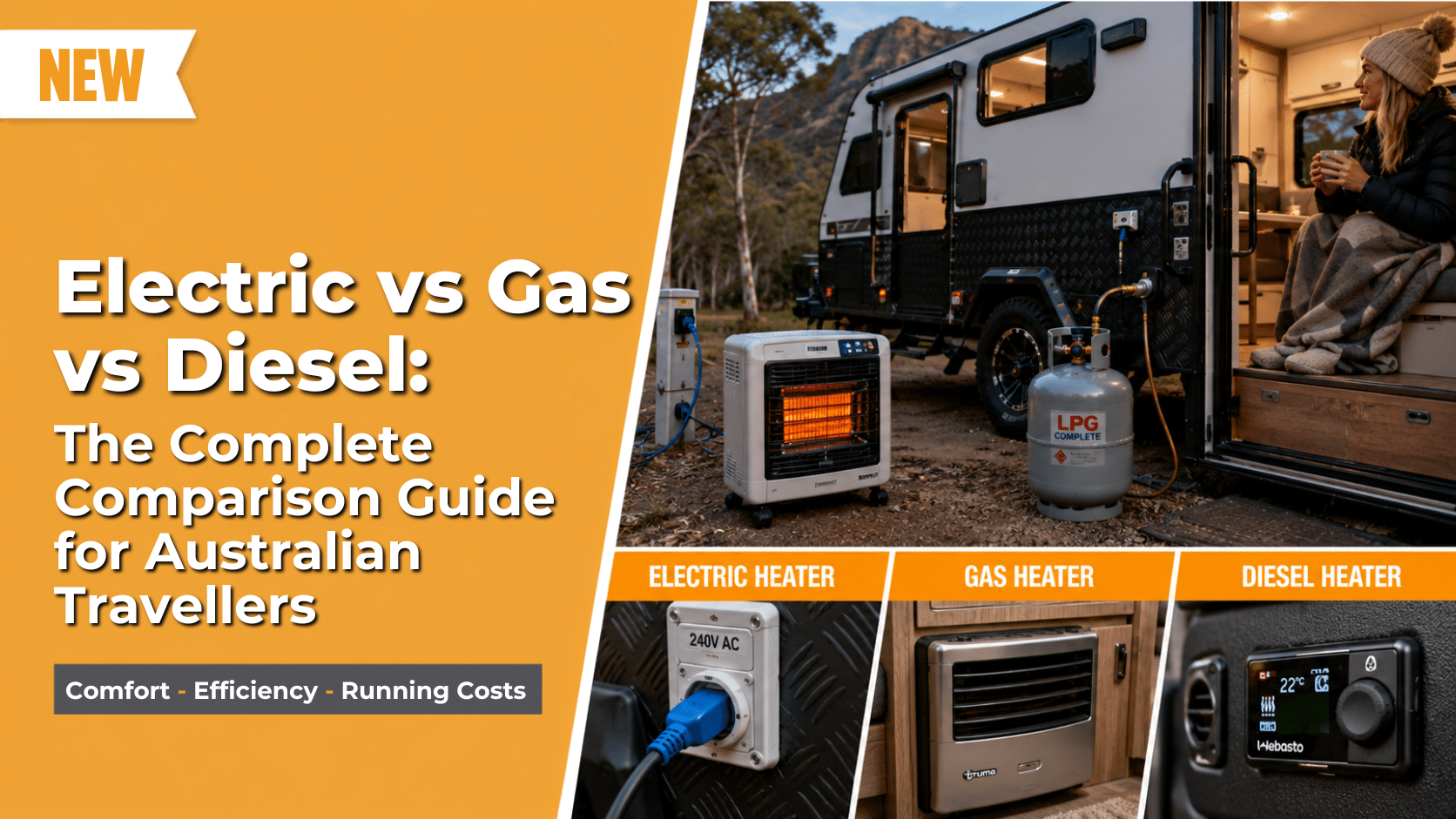
If you’ve ever woken up shivering in your caravan on a chilly Queensland morning, you already know why choosing the right caravan heater matters. But with electric, gas, and diesel heating systems all competing for space (and budget) in your rig, working out which one actually suits your lifestyle can feel overwhelming.
The truth is, there’s no single “best” caravan heater. The right choice depends on how you travel, where you travel, your power setup, and how much you’re willing to spend upfront versus over time. In this guide, we’ll break down each heating option in plain English so you can make a confident decision – and avoid an expensive mistake.
Why Caravan Heating Matters More Than Most Owners Realise
Heating isn’t just about comfort, although waking up warm on a frosty morning in the high country is reason enough. A reliable caravan heater also protects your van. Cold, damp conditions accelerate condensation, which can lead to mould, mildew, and long-term water damage inside cabinetry and wall linings. For caravan owners who travel through southern states in winter, or who like getting off-grid into cooler inland and mountain regions, the right heating system is part of basic van maintenance – not a luxury add-on.
Before comparing the three main heating types, it helps to understand what you’re actually choosing between: a power source (electricity, LPG gas, or diesel) and a delivery method (fan heater, ducted system, or radiant panel). Most caravans end up with a combination of systems, which is often the smartest approach.
Electric Caravan Heaters: Convenient but Power-Hungry
Electric heaters are the simplest option and the cheapest to buy. A portable electric fan heater or panel heater can be picked up for well under $100, plugged into a 240V outlet, and used immediately – no installation required.
Pros of Electric Heaters
Low upfront cost. Electric heaters are by far the cheapest heating option to purchase, and many caravans already have the wiring and power points needed to run one.
Instant heat with no fuel to carry. There’s no propane bottle to refill or diesel tank to top up. As long as you’ve got power, you’ve got heat.
Quiet and low maintenance. Most electric heaters have no moving parts beyond a small fan, meaning very little can go wrong and there’s nothing to service.
Safe operation. Electric heaters don’t produce combustion gases, so there’s no need to worry about carbon monoxide or ventilation requirements in the same way as gas or diesel systems.
Cons of Electric Heaters
Requires mains power or a substantial battery bank. This is the big one. Running an electric heater off your caravan’s battery and inverter will drain even a large lithium battery system within a couple of hours, making electric heating largely unsuitable for off-grid or free camping.
Limited heating capacity. Electric heaters generally struggle to heat larger caravans or motorhomes effectively, especially in genuinely cold conditions.
Dependent on powered sites. If you’re travelling through caravan parks with powered sites, electric heating is fantastic. If you’re chasing remote spots away from the grid, it becomes a liability.
Gas Heaters: The Popular All-Rounder
Gas heaters – typically running on LPG (propane) – have long been the default heating solution for Australian caravans, and for good reason. They strike a balance between affordability, availability, and performance that suits most weekend and occasional travellers.
Pros of Gas Heaters
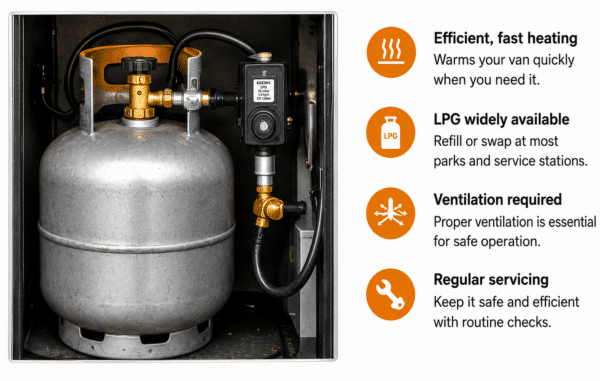
Efficient and fast heating. Gas heaters warm up a caravan quickly, which is ideal for cold mornings when you want heat now, not in twenty minutes.
Fuel is widely available. LPG bottles can be refilled or swapped at most caravan parks, service stations, and rural outlets across Australia, making fuel access rarely an issue.
Quiet operation. Once running, gas heaters operate with minimal noise, which matters when you’re trying to sleep in a small space.
Compact and space-efficient. Gas heating units and ducted systems are designed to fit neatly into caravan cabinetry without eating into your storage or living space.
gas heater
Cons of Gas Heaters
Ventilation is non-negotiable. Gas heaters produce combustion by-products, including carbon monoxide, and require proper ventilation to operate safely. This isn’t optional – it’s a legal and safety requirement.
Ongoing fuel costs add up. While LPG is relatively affordable, a gas heater can consume anywhere from 150g to 500g of gas per hour depending on output, which is significantly more than other gas appliances like your fridge.
Requires licensed installation. Gas heater installation in an Australian caravan must be carried out by a licensed gas fitter, and the system needs to be signed off with a gas compliance certificate.
Regular servicing required. To stay safe and efficient, gas heaters need periodic servicing and inspection – not a job to put off.
Diesel Heaters: Built for Serious Off-Grid Travel
Diesel heaters – often called diesel combustion heaters – have surged in popularity among full-time travellers, off-grid enthusiasts, and anyone heading into genuinely cold climates. They work by burning a small amount of diesel to heat air, which is then circulated through ducting around the caravan.
Pros of Diesel Heaters
Outstanding efficiency in cold conditions. Diesel heaters are built to maintain a comfortable internal temperature even when it’s well below zero outside, making them the go-to choice for snow trips and high-country touring.
Low fuel consumption relative to output. Compared to the heat they produce, diesel heaters are remarkably fuel-efficient, which matters on long winter trips.
Independent fuel source. Many diesel heater installations run from a small dedicated tank or draw from your vehicle’s main fuel tank, meaning you’re not relying on swapping gas bottles.
Strong safety features. Quality diesel heaters include temperature control, timers, and automatic shutdown functions if something isn’t operating correctly.
Cons of Diesel Heaters
Higher upfront investment. Diesel heaters typically cost more to purchase than gas equivalents, and the installation is more involved.
Professional installation is essential. Because diesel heaters require an exhaust system, fuel lines, and careful positioning, this is firmly a job for a qualified technician – not a weekend DIY project.
Takes up more space. Between the heater unit, fuel lines, ducting, and exhaust components, diesel systems generally require more room than a simple gas heater.
Servicing intervals matter. Diesel heaters typically need servicing every 12 to 24 months to keep them running safely and efficiently – skipping this can lead to soot build-up, reduced performance, or failure when you need it most.
How to Choose the Right Heating Setup for Your Caravan
So, electric, gas, or diesel – which one is right for you? Here’s how to think it through:
If you mostly stay at powered caravan parks and want a backup heating option for mild evenings, an electric heater is a low-cost, no-installation solution worth having in the cupboard.
If you’re an occasional traveller who wants reliable, fast heating without a major investment, a gas heater remains a sensible all-round choice – provided it’s installed and maintained by a licensed technician.
If you’re a full-time traveller, snow chaser, or off-grid adventurer who needs serious heating performance independent of caravan park power or gas bottle availability, a diesel heater is built for exactly that job – especially when paired with a solid solar and lithium battery setup for your other power needs.
For many caravan owners, the smartest solution isn’t choosing one system exclusively – it’s having a primary heating source suited to how you travel most often, with a secondary option for flexibility. A caravan with a gas or diesel heater for cold nights, plus an electric heater for quick top-ups at powered sites, covers almost every scenario.
Get Expert Advice Before You Decide
Choosing, installing, or servicing a caravan heater isn’t something to leave to guesswork – particularly when gas and diesel systems involve compliance, ventilation, and safety requirements that protect you and your family on the road.
At AllBrand Caravan Services in Sandgate, Brisbane, our technicians install, service, and repair gas and diesel heating systems for caravans and motorhomes of all makes and brands. Whether you’re upgrading for an upcoming winter trip south or your existing heater needs a check-up before your next adventure, we can help you choose the right system and keep it running safely.
[Request a quote] or call us on (07) 3869 2969 to speak with our team.
—
Frequently Asked Questions
Can I run an electric heater off my caravan’s battery while free camping?
Generally, no – not for any meaningful length of time. Electric heaters draw a large amount of power, and even a substantial lithium battery bank paired with an inverter will typically be depleted within a couple of hours of continuous use. Electric heating is best suited to powered caravan park sites rather than off-grid travel.
Do gas caravan heaters need to be serviced regularly?
Yes. Gas heaters should be inspected and serviced regularly to ensure they’re operating safely and efficiently, and to maintain your gas compliance certificate. Regular servicing also helps identify wear or ventilation issues before they become safety concerns.
How often should a diesel caravan heater be serviced?
Most manufacturers recommend servicing diesel heaters every 12 to 24 months, depending on usage. Regular servicing helps prevent soot build-up, maintains fuel efficiency, and ensures the unit’s safety shutdown features are working correctly.
Is it safe to install a gas or diesel heater myself?
No. Gas heater installation in Australian caravans must be carried out by a licensed gas fitter and signed off with a compliance certificate. Diesel heater installation involves exhaust systems and fuel lines that require professional fitting to ensure safe and correct operation.
Which heater is best for travelling to cold climates, like the snow?
Diesel heaters are generally the best option for genuinely cold conditions, thanks to their efficiency and ability to maintain a comfortable temperature for extended periods. Many full-time and winter travellers pair a diesel heater with a gas heater or electric backup for added flexibility.
It’s probably one of the questions I’ve been asked more than any other over the past couple of years. “What do you think about the Chinese caravans?” Sometimes it’s followed…
If you’ve towed a caravan through Queensland – especially long stretches between Brisbane, the Sunshine Coast, or out toward the inland highways – you’re relying on one of the smallest…
Queensland touring is hard on brake systems. Between long highway runs, stop-start traffic around Brisbane, heat coming off the bitumen and coastal humidity, your brakes are working more than you…
Todd McArthur is CEO of AllBrand Caravan Services and Managing Director of McArthur Industries in Brisbane, with over 30 years of experience in the caravan and automotive industry.