
Caravan suspension specialists in Sandgate
Caravan Coil Spring Suspension Repairs Brisbane
Concerned about sagging coils, uneven ride height, worn bushes, leaking shock absorbers or tyre wear? AllBrand assesses, services and repairs caravan coil spring suspension and can explain whether component replacement or a complete suspension upgrade is appropriate.
What Is Caravan Coil Spring Suspension?
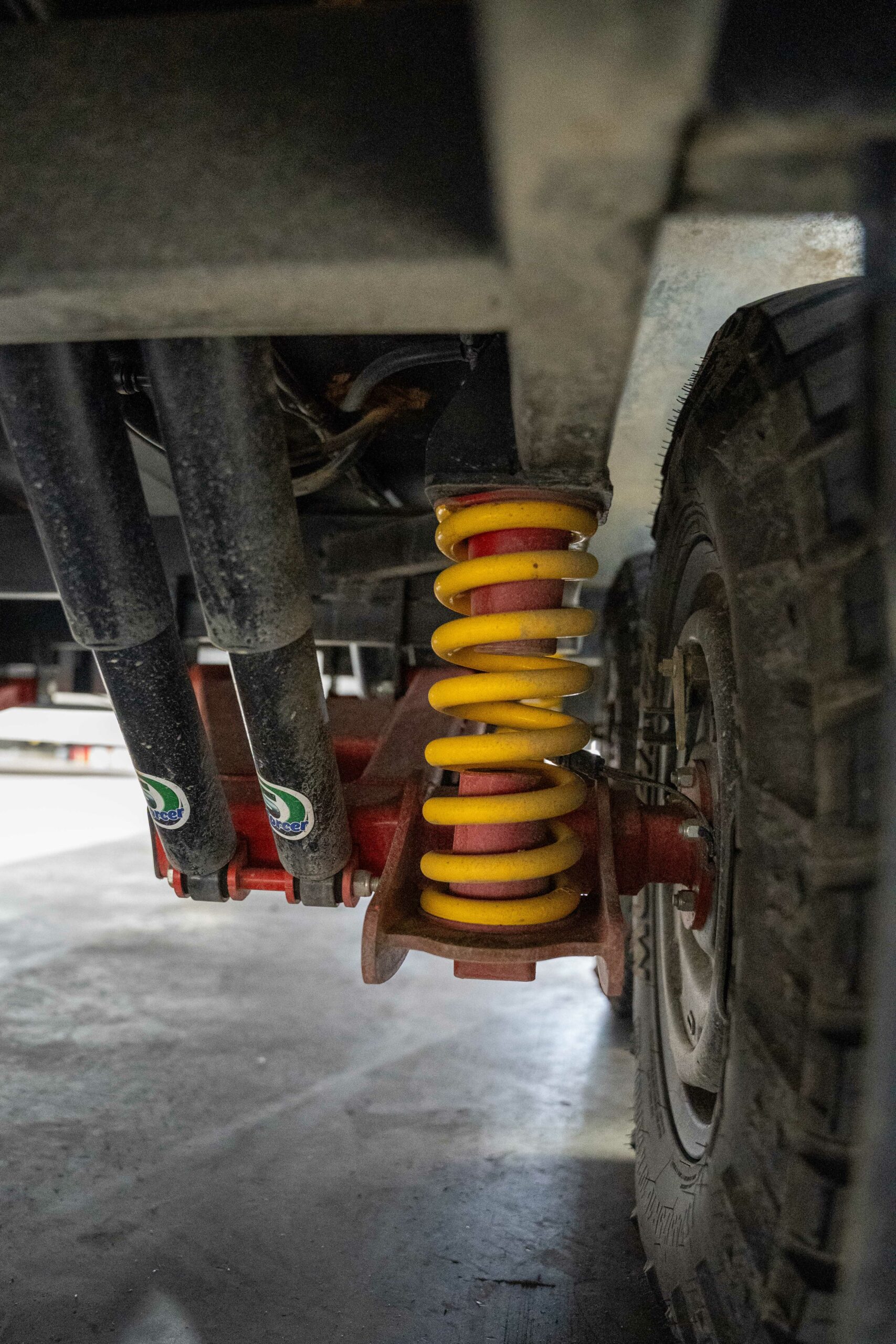
Coil spring suspension uses steel helical springs to carry the caravan’s weight. In many independent caravan systems, suspension arms locate each wheel while separate shock absorbers control how quickly the springs compress and rebound. Bushes, pivots, bump stops, mounting brackets and wheel-end components all contribute to the way the system operates.
The coil itself is only one part of the suspension. Spring rate, installed height, arm geometry, shock absorber valving and available travel must work together. Substituting a taller or heavier spring without assessing the complete design can create new ride, clearance or component-load problems.
Signs Your Caravan Coil Suspension Needs Inspection
Leaning or Reduced Ride Height
One side sits lower, the caravan no longer appears level or clearances have changed under its normal travelling load.
Broken or Sagging Coil Springs
A coil is visibly cracked, has lost installed height or no longer supports the caravan consistently with the opposite side.
Knocks, Squeaks or Clunks
New noises can relate to bushes, pivots, shock absorbers, loose hardware, spring seating or mounting concerns.
Leaking Shock Absorbers
Oil leakage, damaged mounts or reduced damping can allow uncontrolled movement even when the coil remains intact.
Uneven Caravan Tyre Wear
Abnormal shoulder wear, feathering or different patterns between wheels may indicate alignment, loading or suspension issues.
Bottoming or Harsh Towing
Frequent bump-stop contact, excessive rebound or changed towing behaviour warrants assessment before further demanding travel.
These symptoms do not confirm that the coil spring itself has failed. Loading, tyres, wheel alignment, bearings, brakes, shock absorbers, bushes, suspension arms and chassis condition can produce overlapping signs. Diagnosis should consider the complete running gear.
What We Check During a Coil Suspension Assessment
Coil Springs and Seating
We inspect visible spring condition, installed position, ride-height differences and signs of cracking, corrosion or coil contact.
Suspension Arms and Bushes
Arms, pivots, bushes and fasteners are checked for wear, movement, damage and service requirements relevant to the system.
Shock Absorbers
We look for leakage, damaged bodies or mounts and other signs that damping performance may be compromised.
Mounts and Chassis Areas
Spring seats, brackets, welds and nearby chassis structure are assessed for cracking, corrosion, distortion or impact damage.
Ride Height and Alignment
Side-to-side position, wheel clearance, tyre wear and visible toe or camber concerns help guide the diagnosis.
Related Running Gear
Tyres, wheels, hubs, bearings and brakes may be inspected where they form part of the reported concern or booked scope.
Caravan Coil Spring Repairs and Component Replacement
Repairing the Existing Suspension
Where compatible parts and specifications are available, repair may involve coil springs, shock absorbers, bushes, pivots, fasteners, bump stops, mounting components or related running gear. The proposed work depends on what has failed and why.
Replacing the obvious damaged part is not always enough. A broken coil, for example, may be associated with overloading, corrosion, incorrect spring selection, insufficient travel or a damaged mount. We aim to identify the cause so the same fault is less likely to return.
Matching Replacement Components Correctly
Coil springs must suit the system’s specified rate, dimensions and installed height. Shock absorbers must provide the correct length, travel and damping for the suspension geometry. Parts that merely fit into the available space may still be technically unsuitable.
If the original product is obsolete or identification is unclear, further measurement and manufacturer or engineering input may be required before a safe repair pathway can be confirmed.
When Is a Coil Suspension Upgrade Worth Considering?
An upgrade may be considered when the existing system is damaged, no longer supported, unsuitable for the caravan’s verified operating weight or inconsistent with its intended use. Owners may also investigate an upgrade when seeking an engineered independent suspension system with different clearance, alignment or service characteristics.
A complete retrofit can involve structural mounts, suspension arms, coils, shock absorbers, brakes, hubs, wiring and changes to nearby underbody components. It should be treated as a vehicle modification, not simply a spring replacement.
- Confirm the caravan’s actual loaded weight and legal ratings
- Assess chassis structure and available mounting space
- Check tyre, wheel, brake and body clearances
- Consider single- or tandem-axle load behaviour
- Identify parts supply and manufacturer support
- Determine whether engineering or certification is required
- Allow for future inspection and servicing access
AllBrand will not recommend a more complex conversion unless it is appropriate for the caravan, its condition and the way it will be used.
Coil Spring Suspension Compared With Other Caravan Systems
Coil Spring Suspension
Uses steel coils with locating arms and separate damping. Correct spring rate, shock control, geometry and alignment are essential.
Air Suspension
Uses air springs and pneumatic controls to provide pressure and, on some systems, ride-height adjustment or levelling functions.
Leaf Spring Suspension
A familiar mechanical design with visible springs, shackles and bushes. Simplicity and remote parts availability may be advantages.
Rubber Torsion Suspension
A compact axle assembly using internal rubber elements. Replacement depends on accurate capacity, dimensions and arm-angle specifications.
There is no single best caravan suspension for every owner. Chassis design, ATM, actual payload, axle configuration, roads travelled, clearance requirements, maintenance expectations and parts support should guide the decision.
How a Coil Suspension Booking Works
1. Tell Us What You Have Noticed
Send the caravan details, suspension brand if known, symptoms, recent impacts and useful photographs.
2. Workshop Assessment
We inspect the relevant suspension, mounting and running-gear areas to identify the likely cause and repair scope.
3. Recommendation and Quote
We explain the proposed repair, replacement or upgrade pathway, including parts or further technical input required.
4. Complete Approved Work
Authorised work is completed and relevant ride-height, clearance and functional checks are performed before collection.
Caravan Coil Suspension and Running-Gear Guides
These AllBrand guides provide useful background before your suspension assessment.
How to Tell if Your Caravan Suspension Is Worn Out
Learn the signs that may indicate worn bushes, damaged components, alignment concerns or a change in suspension performance.
Decoding Your Caravan’s Chassis and Suspension
Understand how chassis design, suspension and running gear work together and why maintenance matters.
Caravan Suspension Upgrades: Cruisemaster XT
Explore an independent suspension upgrade and the technical factors that should be considered before fitment.
Caravan Coil Spring Suspension FAQs
Detailed answers to common questions about caravan coil suspension costs, servicing, sagging springs, tyre wear, repairs, upgrades and off-road suitability.
What is coil spring suspension on a caravan?
Caravan coil spring suspension uses steel coil springs to support the caravan’s weight while suspension arms locate and guide each wheel. Shock absorbers control the spring’s movement, and bushes, pivots, bump stops and mounting brackets help the system move through its designed travel. Many caravan coil systems are independent, meaning each wheel can react with less direct influence on the opposite side. The exact design varies, so spring rate, installed height, arm geometry, shock absorbers and load rating must suit the particular caravan.
Is coil spring suspension good for caravans?
Coil spring suspension can be a good choice when it is correctly engineered for the caravan’s chassis, loaded weight and intended roads. A suitable system can provide controlled wheel movement, useful ground clearance and serviceable external components. However, fitting coils does not automatically create a smoother, safer or off-road-capable caravan. Shock absorber control, suspension geometry, wheel alignment, tyre choice, weight distribution and maintenance all matter. The best suspension is the complete system that matches how the caravan is actually built, loaded and used.
Is coil spring suspension better than leaf-spring suspension?
Neither design is automatically better for every caravan. Coil suspension is often used with independent arms and separate shock absorbers, which can provide controlled wheel movement and useful clearance. Leaf-spring systems are comparatively simple, widely understood and may be easier to repair in remote areas. The right choice depends on chassis design, ATM, payload, axle configuration, road use, maintenance expectations and parts availability. A conversion should be assessed as an engineered suspension system rather than chosen only because one spring type sounds more advanced.
How much does a caravan coil suspension upgrade cost?
The cost varies significantly because a coil suspension upgrade can involve far more than replacing springs. Pricing may include suspension arms, coils, shock absorbers, bushes, mounting structures, brakes, hubs, wheel alignment, fabrication, labour and any engineering or certification required. Single- and tandem-axle caravans also have different scopes. The existing chassis condition, desired ride height and intended use can affect the job. AllBrand needs the caravan details and normally a workshop inspection before confirming whether an upgrade is suitable and preparing an accurate quote.
Can coil spring suspension be fitted to an existing caravan?
Some caravans can be converted to coil spring suspension, but it is not a universal bolt-on modification. The chassis must be suitable for the new mounting loads and suspension geometry, with enough clearance for the arms, springs, shock absorbers, tyres and full wheel travel. The design must also suit the caravan’s ATM, axle arrangement, brakes and intended use. Ride height, plumbing, entry steps and other underbody components may be affected. Engineering evidence or certification may be required, so feasibility must be assessed before parts are selected.
What are the signs of worn caravan coil suspension?
Warning signs include the caravan leaning, reduced or uneven ride height, frequent bottoming, clunks or squeaks, visible spring damage, leaking shock absorbers, worn bushes, loose fasteners and movement around suspension mounts. Uneven tyre wear, changed wheel position or a caravan that feels less settled after bumps can also justify an inspection. These symptoms can overlap with incorrect loading, tyre pressure, bearing movement, brake issues or chassis damage. A complete suspension and running-gear assessment is needed before deciding which parts require repair or replacement.
Can a caravan coil spring sag or break?
Yes. A coil spring can lose height, crack or break because of fatigue, corrosion, impact, overloading, incorrect selection or operation outside the system’s intended range. A broken end may be difficult to see while the caravan is sitting normally, and sag can also be confused with uneven loading or another suspension fault. Do not simply fit a taller or heavier spring without checking the system. Spring rate and installed height must suit the caravan and work correctly with the suspension travel, shock absorbers, bump stops and opposite side.
Why is my caravan sitting lower on one side?
A low side may result from uneven loading, different tyre pressures, a sagged or broken coil, worn bushes, damaged suspension arms, shock absorber problems, mounting movement or chassis damage. Permanent equipment such as batteries, water tanks and appliances can also create a substantial side-to-side weight difference. Measurements should be taken on level ground with the caravan in a known loaded condition, but do not work beneath an unsupported van. The weights, ride height, springs, mounts and related running gear should be assessed before replacing components.
Can coil suspension cause uneven caravan tyre wear?
Suspension wear or incorrect wheel alignment can contribute to uneven tyre wear, but it is not the only possible cause. Worn bushes, loose pivots, bent arms or spindles, bearing play, incorrect toe or camber, overloading, poor weight distribution, tyre pressure and impact damage can create similar patterns. Replacing tyres alone will not correct the underlying issue. Diagnosis should consider the wear pattern, loaded ride height, wheel position, bearings, hubs, suspension mounts and alignment settings specified for the actual suspension system.
How often should caravan coil spring suspension be serviced?
Follow the caravan and suspension manufacturer’s service schedule because intervals and procedures vary. Inspection may include coils, suspension arms, bushes, pivots, shock absorbers, bump stops, mounting bolts, alignment indicators, wheel bearings, brakes and tyres. New or recently disturbed components may require early torque checks. Corrugated roads, water crossings, dust, impacts, heavy loading and frequent touring can justify more frequent attention. A pre-trip visual check is useful, but it does not replace scheduled servicing or measurements performed by a competent workshop.
How long do caravan coil springs and shock absorbers last?
There is no fixed lifespan that applies to every caravan. Coil springs and shock absorbers are affected by kilometres travelled, caravan weight, road conditions, corrosion, heat, impacts, maintenance and whether the system has operated within its designed travel. A spring can retain its appearance while losing height, and a shock absorber may develop a leak or reduced damping before it fails completely. Condition, measurements and towing symptoms are more useful than age alone. Components should be inspected as a complete system rather than replaced according to a generic timetable.
Is coil spring suspension suitable for an off-road caravan?
It can be when the entire suspension system is engineered and rated for the caravan and the terrain it will encounter. Off-road suitability depends on the arms, coils, shock absorbers, bushes, mounts, bump stops, wheel travel, ground clearance, tyres, brakes and chassis—not simply the presence of coil springs. More suspension travel or ride height does not automatically make a caravan safer. The loaded weight, clearances and manufacturer’s operating limits must be respected, with more frequent inspections after corrugated, dusty or high-impact travel.
Can I tow with a broken coil spring or damaged caravan suspension?
Do not continue towing if a coil is broken, the caravan is leaning severely, a wheel is out of position, tyre clearance is unsafe, a mount is loose or cracked, or the van has become unstable. Continued movement can damage tyres, brakes, bearings, bodywork and the chassis and may reduce towing control. Stop somewhere safe and contact a qualified repairer or recovery provider. Photographs can help with an initial discussion, but they cannot confirm whether the caravan is safe to move or identify hidden damage.
Where can I get caravan coil spring suspension repairs in Brisbane?
AllBrand Caravan Services provides coil spring suspension inspections, repairs, servicing and upgrade assessments at 101 Connaught Street, Sandgate QLD 4017, on Brisbane’s northside. We assist caravan and motorhome owners from Brisbane, Moreton Bay, Redcliffe, North Lakes, Brendale, Caboolture and surrounding areas. When requesting an assessment, provide the caravan make, model, year, ATM, axle configuration, suspension brand, symptoms and clear photographs. A workshop inspection may be required before the cause, repair scope, parts availability and price can be confirmed.
Caravan Suspension Videos From McArthur Industries
See suspension inspections, servicing and upgrade work from the AllBrand and McArthur Industries team.
Caravan Coil Spring Suspension
An introduction to coil spring suspension and its application beneath a caravan.
Annual Service and Suspension Check
See why bushes and running-gear checks form an important part of routine caravan maintenance.
Caravan Suspension Upgrade
A practical look at the scope involved in a more comprehensive suspension retrofit.
Concerned About Your Caravan’s Coil Suspension?
Tell us what has changed and send any useful photographs. We will advise whether a workshop coil spring suspension assessment is the right next step.