Caravan Insurance Claims: What You Can Claim, What You Can’t, and the Hidden Factors Most Caravan Owners Miss
Insurance Repair
Why Caravan Insurance Claims Confuse So Many Owners
Arraning Caravan insurance repairs sound simple on the surface: something goes wrong, you make a claim. But in reality, it’s rarely that straightforward.
At AllBrand Caravan Services in Sandgate, we regularly see caravans after damage has occurred—storm damage, water ingress, impact damage—and one pattern stands out:
Many owners don’t realise how insurance interprets damage until after the fact. The confusion usually comes from one key issue:
Owners think in terms of damage. Insurers assess in terms of cause. That difference is where most misunderstandings happen.
Important Disclaimer
This article is general information only and does not constitute financial or insurance advice. Every insurance policy is different
Coverage depends on individual terms, conditions, and exclusions. For advice specific to your situation, contact your insurer or a licensed insurance professional. AllBrand Caravan Services does not provide insurance advice—we focus on caravan inspections, servicing, and repairs.
How Caravan Insurance Claims Actually Work (In Practice)
Let’s go deeper than the basics. When a claim is assessed, insurers aren’t just asking “what’s damaged?”—they’re asking:
1. What Exactly Caused the Damage?
This is the most important question. For example:
A dent in a panel → could be hail, impact, or long-term stress
Water damage → could be storm-related or seal failure
The outcome can depend entirely on how the cause is classified.
2. Was the Event Sudden or Gradual?
Insurance is typically built around sudden, identifiable events.
Tree falls during storm → clear event
Seal slowly deteriorates over 2 years → gradual
Even if the damage looks similar, the classification changes everything.
3. Was the Caravan Maintained Reasonably?
Insurers may consider:
Condition prior to the event
Whether known issues were addressed
General upkeep
This doesn’t mean perfection—but obvious neglect can complicate claims.
4. Can the Timeline Be Established?
Timing matters more than most people realise. Questions often include:
When was the caravan last used?
When was damage first noticed?
Did it occur during a known event?
This is why documentation (photos, dates, usage history) becomes important.
What Is Commonly Claimed — Detailed Breakdown
Let’s unpack each major claim category more deeply.
Accidental Damage
This is one of the most straightforward categories—but still nuanced. Typical scenarios:
Reversing into a pole or fence
Clipping a structure while towing
Misjudging clearance under a carport
Why these are often accepted:
The event is identifiable
It occurs at a specific time
It’s not part of normal wear
However, complexity can arise if:
Damage appears inconsistent with the reported event
There are signs of previous impact
Storm and Weather Damage
In Queensland, this is one of the most relevant categories. Common examples:
Hail dents across roofing and panels
Awnings torn or bent by strong winds
Water entering during heavy rainfall
At AllBrand Caravan Services, we often inspect caravans after severe weather events, and one key pattern appears:
The distinction between storm damage and pre-existing vulnerability is critical. For instance:
A brand-new seal failing during a storm may be viewed differently to
An older, deteriorated seal allowing water in
Theft and Break-Ins
These claims are usually clearer—but still depend on context. What’s typically assessed:
Was forced entry evident?
Were security measures in place?
Where was the caravan stored?
For example:
Locked, secured caravan stolen → different risk profile
Unsecured caravan left in open area → may be assessed differently
Fire Damage
Fire claims often involve deeper investigation. because determining the origin of the fire is essential:
Electrical fault
External fire source
Accidental cause
These claims can involve:
Expert assessments
Detailed reports
What Is Often Not Covered — And Why Insurers Draw the Line
Understanding why something isn’t covered is just as important.
Wear and Tear
This is not just a technical exclusion—it’s a fundamental principle.Examples:
Rubber seals drying out
Paint fading
Metal corrosion
Why it’s excluded:
Insurance is not designed to cover inevitable ageing.
If it did, it would effectively become a maintenance plan.
Mechanical or Appliance Failure
When something stops working internally:
Fridge fails
Battery degrades
Pump stops functioning
These are generally considered operational or maintenance issues, not insured events
Unless they are directly linked to something like:
Fire
Electrical surge
Impact damage
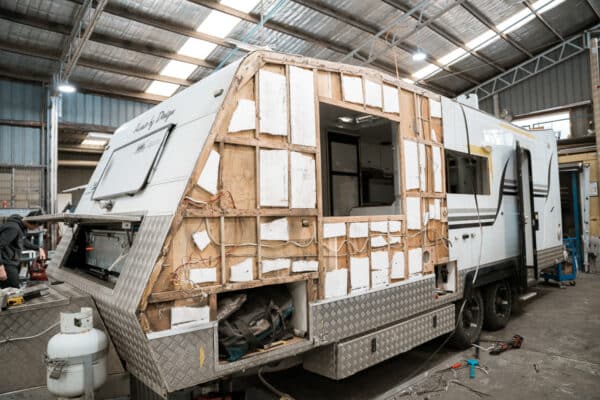
Gradual Water Damage
This is one of the most misunderstood areas. At AllBrand Caravan Services, we frequently see:
Soft flooring
Internal swelling
Hidden structural damage
Often, this has developed over time.
Why it matters:
Gradual damage = maintenance-related
Sudden ingress = event-related
That distinction is often the deciding factor.
Undeclared Modifications
Modern caravans often include upgrades:
Solar systems
Lithium batteries
Custom cabinetry
The issue isn’t the upgrade—it’s whether it’s:
Documented
Declared
Recognised under the policy
If not, it may not be factored into claim assessments.
The Grey Areas: How Claims Are Interpreted
This is where experience really matters.
Mixed-Cause Damage
Example:
A storm hits. But seals were already compromised. Now the question becomes:
How much damage came from the storm?
How much was already present?
This can lead to partial outcomes or more complex assessments.
Delayed Discovery
Caravans often sit unused for periods. So when damage is discovered:
It may not be clear when it occurred. There may be no single identifiable event This makes classification more difficult.
Towing Incidents Involving Others
These situations can involve:
Vehicle insurance
Caravan insurance
Third-party liability
Responsibility and coverage can overlap.
Advanced Factors That Influence Claim Outcomes
These are the details most people don’t think about.
Agreed Value vs Market Value
This affects how much is paid, not just whether something is covered.
Agreed value → predetermined amount
Market value → fluctuates with the market
If upgrades aren’t reflected, they may not influence payouts.
Accessories vs Contents
Not all items are treated equally:
Built-in systems → may be accessories
Loose items → may be contents
Each may have:
Different limits
Different conditions
Storage and Environmental Risk
Where the caravan is kept can influence:
Exposure to weather
Theft risk
Environmental damage
This becomes particularly relevant in:
Coastal areas
Storm-prone regions
Event vs Deterioration
This is arguably the most important concept in claims.
Insurance responds to events—not ongoing processes. Understanding this distinction helps explain many outcomes.
How Claim History Can Affect Your Future Cover
Even when claims are valid, they can influence how insurers view risk.
Possible impacts include:
Premium adjustments
Changes to excess
Policy renewal considerations
This varies widely depending on:
Insurer
Claim frequency
Type of claims
Common Mistakes That Lead to Claim Issues
From real-world observations, these patterns come up often:
Assuming Coverage Without Checking: Policies differ more than people expect.
Poor Documentation: Without clear evidence, claims become harder to assess.
Ignoring Early Warning Signs: Small issues can shift from “event” to “wear and tear” over time.
Lack of Understanding Around Cause: Focusing on damage instead of cause leads to confusion.
Frequently Asked Questions About Caravan Insurance Repairs
Can I claim any damage to my caravan?
Not all damage will be treated the same under a caravan insurance policy. In most cases, claims are assessed based on whether the damage was caused by a specific, sudden, and unforeseen event, rather than something that developed gradually over time. For example, impact damage from a collision is typically considered differently from long-term wear or deterioration. The outcome will depend on how the cause of damage is interpreted in relation to your individual policy wording, so it’s important to review your policy or speak with your insurer for clarification.
Is storm damage always covered?
Storm damage is one of the more commonly claimed categories, particularly in regions like Queensland, but it is not automatically covered in every situation. Insurers generally look at whether the damage can be directly linked to a defined weather event, such as hail or high winds, and whether the caravan was in a reasonable condition beforehand. For instance, damage caused by a severe storm may be assessed differently if there were pre-existing issues like worn seals or structural weaknesses. Each claim is considered based on its specific circumstances and policy terms.
Should I make a claim for minor damage?
Deciding whether to make a claim for minor damage depends on several factors, including your policy excess, claim history, and the nature of the damage. In some situations, the cost of repair may be close to or below the excess, which could influence your decision. Additionally, some caravan owners consider how multiple claims might affect future premiums or policy terms. Because every situation is different, it’s generally best to review your policy details and discuss your options directly with your insurer before proceeding.
What’s the biggest factor in claim approval?
One of the most important factors in how a caravan insurance claim is assessed is the ability to clearly identify the cause and timing of the damage. Insurers typically look for evidence that the issue resulted from a single, definable event rather than gradual deterioration. Supporting documentation—such as photos, timelines, and descriptions of what occurred—can play a significant role in helping establish this. While policy wording ultimately governs the outcome, clarity around how and when the damage occurred is often central to the assessment process.
Not Sure What’s Caused the Damage?
If your caravan has been affected by:
A storm
Impact damage
Water ingress
Or an unknown issue
Getting a professional inspection can help you understand what you’re dealing with.
👉 Book an inspection or contact the team to learn more.
Final Thoughts
Caravan insurance claims aren’t just about damage—they’re about interpretation.
At AllBrand Caravan Services, we see firsthand how damage develops, how causes differ, and how small issues can become major problems over time.
Understanding:
Cause vs condition
Event vs deterioration
Timing and documentation
can help you avoid surprises and make more informed decisions.
Final Compliance Note
This article is for general informational purposes only and does not constitute financial or insurance advice.
For advice relating to your specific insurance policy or claim, consult your insurer or a licensed insurance professional.
At AllBrand Caravan Services, we’re dedicated to keeping your caravan safe, comfortable, and road-ready. We provide full gas system inspections, leak testing, and carbon monoxide safety checks to give you complete peace of mind before you travel.
Don’t let small cracks turn into big problems Hairline cracks in your caravan’s walls or panels might seem minor at first—but left unchecked, they can grow into costly issues. These…